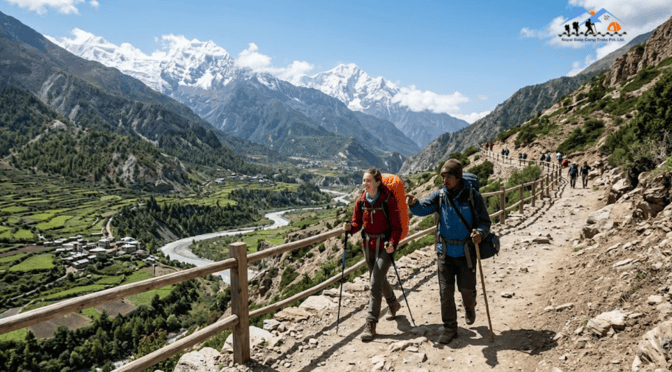
The Tsergo Ri Trek, also known as Tserko Ri, is one of the best high-altitude treks in Nepal, reaching an amazing summit of 4,984 meters, all within Langtang National Park.
Unlike Everest or Annapurna, this trail is very quiet, immersive and close to local Tamang and more culturally Tibetan-influenced communities.
At the top of Tsergo Ri, you will see a complete 360° of Himalayan peaks, glacier views, icefall valleys and seemingly never-ending snow ridges, all accessible without any technical climbing.
The trek starts in Syabrubesi, passes through forested valleys and continues climbing past teahouse villages like Langtang and Kyanjin Gompa up a steep, rewarding summit push to Tsergo Ri.
With proper acclimatization and training, it’s a trek that any fit individual can enjoy without the need for ropes, crampons or mountaineering certificates.
And with Nepal Base Camp Treks, a Nepali-owned, safety-first agency with + years of experience guiding in Langtang, you can trek with total confidence knowing your acclimatization, permits, logistics and safety aspects are handled by experts who know the trail better than anyone else.
What Makes the Tsergo Ri Trek Unique?

There are several trekking routes throughout Nepal; however, a handful of treks take you to nearly 5,000-meter summit without requiring climbing.
That is the first thing that makes Tsergo Ri Nepal unique.
You do not need ice axes, ropes or mountaineering skills.
All you need is good fitness, the right acclimatization and a good guide who knows the trail.
However, this is only the beginning.
- A 5,000-meter Summit Achievable in Under a Week
Most high-altitude treks in Nepal take 10-14 days to complete.
With Tsergo Ri, you can be standing above the clouds in 6-7 days from Kathmandu.
There are no flights. No long queues are waiting for the permit. There is no heavy tourist route.
This is why so many experienced trekkers call it “Nepal’s best short high altitude trek“.
- Incredible 360° Himalayan Views (No Oxygen Mask Needed)
From the summit, the world opens up to a 360-degree panorama of the Langtang Himal range, which includes:
| Visible Peaks | Height |
| Langtang Lirung | 7,227m |
| Dorje Lakpa | 6,966m |
| Langshisa Ri | 6,427m |
| Yala Peak | 5,520m |
| Shishapangma (Tibet) | 8,027m |
You will also see Langtang Glacier Basin, Icefall valleys and a complete snow skyline into Tibet and the Upper Himalayas
These types of views are what people expect from Everest.
- An Experience That Feels Authentic and Local
Langtang Valley was once described as “the nearest Himalaya wilderness to Kathmandu”, and it does still feel that way.
No luxury hotels, no busloads of tourists and no plastic-like trails.
You stay in tea houses run by families, eat yak cheese from Kyanjin Gompa, walk through prayer walls or mani stones, listening to real stories from local people who have lived here full-time.
If you are tired of commercial treks, this is the antidote!
- The Perfect Trek for Fit Beginners + Challenge Enthusiasts
Tsergo Ri is one of the few treks that can actually appeal and work for two completely different types of trekkers.
For first-time high altitude trekkers, they will be happy to reach that point without technical climbing skills, while being immersed in the local culture.
For experienced trekkers, it’s a genuine trek that reaches a nearly 5,000-meter summit without the hassle of an expedition.
If you can walk 5-6 hrs a day, you can do this trek with the right amount of acclimatization and a good guide.
Where Is Tsergo Ri Located?

Tsergo Ri is located deep within Langtang National Park, in the northern part of Nepal, just below the border of Tibet.
Tsergo Ri Nepal, is the highest non-technical viewpoint in Langtang Valley, at an elevation of 4,984 meters (16,350 ft) above sea level.
Most trekkers will typically reach this viewpoint as a day hike from Kyanjin Gompa, the last inhabited village in the valley.
Before the ascent of Tsergo Ri altitude, the trek path passes through Langtang Village, Lama Hotel and Syabrubesi.
Syabrubesi is where you will start the trek, as it is the last trailhead accessible by road.
Tsergo Ri offers fantastic and rare photography spots, from the yak pastures of Langtang Valley to the glacial views from the summit.
Tsergo Ri Trek Altitude Profile – From Syabrubesi to Summit
While climbing the Tsergo Ri height, you will steadily move from Syabrubesi (1,550 m) through the Langtang Valley trek, continuing towards the Tserko Ri summit, which lies at 4,984 meters.
This gradual Langtang elevation gain is set up to help your body acclimate safely before heading for high altitude above 4,000 meters, where there are risks of altitude sickness.
Let’s break down the altitude information further.
Day-by-Day Route and Elevation Chart
The Tsergo Ri trek itinerary deliberately takes a steady altitude change through the Langtang Valley, allowing trekkers to acclimatize naturally, before the final push to the 4,984m summit.
This is a full tea house trek, unlike camping expeditions.
This means sleeping in warm lodges, eating freshly cooked food and carrying only a light daypack, while your porter carries all the heavy gear.
Let’s look at the route and altitude.
| Day | Route | Altitude |
| 1 | Drive from Kathmandu to Syabrubesi | 1,550 meters |
| 2 | Trek to Lama Hotel | 2,380 meters |
| 3 | Trek to Langtang Village | 3,430 meters |
| 4 | Trek to Kyanjin Gompa | 3,870 meters |
| 5 | Acclimatization day and optional hike to Kyanjin Ri | 4,773 meters |
| 6 | Summit Tserko Ri and back to Kyanjin Goma | 4,984 meters |
| 7 | Return to Langtang Village or Lama Hotel | – |
| 8 | Reach Syabrbesi and drive back to Kathmandu | 1,300 meters |
Total Trek Duration & Route Overview
You can complete the Tsergo Ri trek in around 6-8 days, depending on your acclimatization schedule and pace.
You will follow the Langtang trail that follows the Langtang Khola River, goes through Tamang villages with beautiful views, climbs into open alpine terrain and reaches Kyanjin Goma, awaiting your long summit day.
Type of trek: Tea-house trek (guesthouses, local food, no camping)
Difficulty: Moderate to challenging (due to altitude; not due to technical-terrain)
Route style: Out-and-back trail, starting and ending at Syabrubesi
Best for: Fit beginners, altitude trekkers, small group treks, solo trekkers with guides
Highlights: Langtang Village, Kyanjin Gompa, yak pasture, glaciers, panoramic summit
If you can walk for 5-6 hours a day and practice reasonable acclimatization, this trek is fully doable without mountaineering skills.
Kyanjin Ri vs Tsergo Ri: Which Should You Choose?
If you are unsure whether to hike Kyanjin Ri or Tsergo Ri, the choice really depends on your time and your body’s ability to acclimatize to the altitude.
Here is a straightforward comparison to help you make your decision:
| Viewpoint | Altitude (in meters) | Duration | Difficulty | Who is it suited for |
| Kyanjin Ri | 4,773 m | 2-3 hours | Moderate difficulty: Shorter and steadier ascent | Beginner high altitude trekkers |
| Tserko Ri | 4,984 m | 6-8 hours | Challenging: Longer, steeper and rockier | Trekker aiming for the 5,000-meter summit |
If you’re looking for a shorter, easier acclimatization walk with some incredible scenery and moderate difficulty, then Kyanjin Ri (4,773m) is for you.
If you are fully acclimatized and up for a longer, steeper climb to the highest viewpoint of the Langtang Valley trek, then you will want to choose Tsergo Ri Nepal (4,984m).
A simple rule: Do the Kyanjin Ri trek on your acclimatization rest day to prime the lungs for altitude and then attempt Tsergo Ri the following morning for the well-known 360° view of Langtang Lirung, Dorje Lakpa, Langshisa Ri, Yala Peak and the glacier basin.
Acclimatization & Altitude Sickness on the Tsergo Ri Trek

The Tsergo Ri trek is among the most beautiful high-altitude treks in the Langtang Valley; however, the ascent from Kyanjin Gompa to the summit of Tsergo Ri takes your body to the point of thin air, where altitude sickness is the major concern.
This trek is not difficult, as you don’t require ropes or technical climbing, but its difficulty is due to the elevation and oxygen level in the air.
That is the reason there is an acclimatization day in Kyanjin Gompa as a standard practice to allow the body to acclimatize before the final ascent.
Trekkers who skip this day are the same trekkers who do not reach the summit.
How do you acclimatize properly on the Tsergo Ri Trek?
The following are the best practices to acclimate to the Tserko Ri trek.
- Use the principle of “climb high, sleep lower.”
- Drink 3-4 liters of water a day (hydration prevents AMS)
- Utilized day 5 to take a warm-up hike to Kyanjin Ri 4,773m
- Walk at a slower pace, because speed is not your friend at high elevation
- Eat high carbohydrates; dal bhat, porridge, potatoes, noodles, etc
- Do not take or drink alcohol, and sleeping pills over 3,000m
- Take Diamox if prescribed by a doctor
What Altitude Sickness Looks Like on the Trail?
Altitude sickness can arise as low as Langtang Village (3,430m) and will start to become common after Kyanjin Gompa if you are not prepared.
Here’s a list of the possible warning signs you may encounter:
- Consistent headache or pulsating pressure
- Nausea, diminished appetite or vomiting
- Dizziness or a “heavy” feeling while you walk
- Shortness of breath while resting
- Sleep disturbances or sudden fatigue
- Tightness in the chest, coughing or disorientation (signs of severe AMS)
If symptoms improve after resting and hydrating, you may be able to continue hiking.
If symptoms worsen, the only safe course of action is to descend, not to push through.
At Nepal Base Camp Treks, our guides are trained to monitor for AMS, pace your ascent and arrange for evacuation if necessary.
Fitness & Difficulty Level
The Tsergo Ri trek is often categorized as a moderate-to-challenging trek, not due to ascending heights or climbing, but because you will need strong lungs and steady pacing to climb to 4,984m.
If you can walk 5-6 hours a day with a pack, and climb steep sections at high altitude, this trek is certainly possible for you, even for first-time trekkers.
Unlike Everest Base Camp or Manaslu Circuit, the Langtang Valley trek has a shorter approach, fewer steep stair sets and much lower daily mileage.
The exception would be your final push to summit Tsergo Ri, which is one of the most difficult single days in the region.
If you want detailed information, check out our Langtang Valley trek difficulty blog.
What Kind of Fitness do you Actually Need?
- You should be able to walk for 6-8 hours a day with breaks.
- Take breaks and drink water when feeling tired, but you shouldn’t need to rest for long periods of time.
- You should be comfortable doing continuous uphill climbs on rocky and sandy terrain.
- You should possess good cardiovascular fitness – hiking, jogging, cycling and stair training will all help you gain this fitness level.
- You will not need prior climbing experience for this trek forward.
- A positive mindset and some patience are necessary, as altitude favors a slow and steady trek.
If you can hike uphill for 2-3 hours at sea level without losing your breath or experiencing exhaustion, then you are likely on track.
The real “difficulty” will start as you climb above 4,500m and every step will feel heavier with thin oxygen.
Even though Tsergo Ri doesn’t call for technical climbing, it’s helpful to have some mountaineering basics including pacing at altitude, using trekking poles, and layering correctly to make your summit day a lot more pleasant.
Trekking Permits & Regulations for the Tsergo Ri Trek
The trek for Tsergo Ri falls within the boundary of Langtang National Park; therefore, it is a requirement for every trekker to carry two documents with them while trekking: the Langtang National Park Permit and the TIMS card.
These documents will be monitored and checked multiple times while trekking on the route.
First, just after the beginning at Dhunche and then again close to Lama Hotel, while trekking on the route without proper documents may result in a fine or being stopped on the trail.
There is no separate climbing permit because Tsergo Ri Nepal is a non-technical trekking peak.
You can purchase the permits in Kathmandu before your trekking trip or you can have a trekking agency arrange them for you, which is the simplest way to skip the lines and paperwork.
| Permit | Required For | Cost | Where Obtained |
| Langtang National Park Permit | Park entry & checkpoints | NPR 3,000 | Nepal Tourism Board / Entry Gate |
| TIMS Card | Trekker registration & safety tracking | NPR 1,000–2,000 | Tourism Board / Trekking agency |
If trekking with Nepal Base Camp Treks, both permits are arranged for you ahead of time and you will not need to visit any offices on your own.
For those who want a complete breakdown of the price, documentation and where to obtain, there is a complete guide here: Langtang Trek Permits & TIMS Requirements Explained.
Mindfulness & Meditation in the Mountains
The Tsergo Ri Trek is not only a physical adventure, but it is also one of the more peaceful and spiritually enriching trails in Nepal.
Once you transition to the upper Langtang Valley, you will not hear any sounds of roads or settlements, but will also hear prayer flags blowing in the wind and will be enveloped in mountain silence and the flow of the Langtang Khola beside you.
This is a natural environment for mindfulness, meditation and slow walking awareness.
Many trekkers stop not only for acclimatization, but also for mental recalibration — an attribute that separates the Tsergo Ri trek from other, more rushed, mainstream, and commercial routes, such as Everest Base Camp.
Best Meditation & Reflection Sites on the trek
| Location | Why its Special |
| Kyanjin Gompa Monastery | Morning bells, incense and chanting monks |
| Langtang Village Memorial Area | Calm area paying respect to the victims of the 2015 earthquake |
| Yak meadow below Kyanjin Ri | Open wide views, soft breezes and ideal for silent sitting |
| Tsergo Ri viewpoint at sunrise | 360° views and the entire Himalayas turn gold |
| Riverside trail between Lama Hotel and Ghoretabela | Forest soundscape and the natural rhythm of inhalation and exhalation |
Essential Packing Guide for the Tsergo Ri Trek
The Langtang weather varies significantly on the Tsergo Ri trek, as you transition from the green, forested lower trail towards the windy summit at 4,984m, which is why having the proper trekking gear is vital.
Footwear Essentials
The trail above Kyanjin Gompa has a steeper and rockier path, so it is important to have boots with ankle support and good traction.
So, this is not a hike you can do in sneakers or running shoes, especially near the summit, where the rocks can be loose.
Also, do not forget to pack a pair of lightweight sandals or slippers for the evenings you will be at the lodge.
Clothing Layers & Accessories
While warmer than other treks in the region, the temperatures will range from warm afternoons in Langtang Valley to colder temperatures.
In the winter or if you try early morning summit attempts, the temperatures can drop below freezing.
The good approach to apparel is a 3-layer system.
The base layer should wick moisture away, the mid-layer must be insulating and the top layer must be windproof.
It is best to also include a fleece or down jacket, an extra thermal top, a comfy pair of trekking pants, a warm hat, a buff, gloves and UV-blocking sunglasses.
Additional Essentials to Pack
While teahouses have water, food, and places to sleep, you’ll need a few other essentials:
- 2L bottle or hydration bag (there will be water sources, but not always filtered)
- Water purification tablets to purify water.
- Headlamp (essential if you start the summit before the sun rises)
- Basic first aid and altitude medication (Diamox or your prescription)
- Reusable items for more eco-friendly trekking (no single-use plastics)
- Trekking poles (they will be really helpful on the steep descent)
For a complete breakdown of what you will take for the season, see the full Langtang trek packing list further into the guide.
Flora, Fauna and Local Life Along the Trail
An unforgettable part of the Langtang Treks, including the Tsergo Ri trek, is the way the scenery changes every few hours you walk.
You begin in lush subtropical forests, then walk through hillsides filled with rhododendrons and gradually move into the rocky, glacier-fed highlands above Kyanjin Gompa.
As this trail is in Langtang National Park, this restricted area is a biodiversity hotspot and remains a largely intact natural and cultural environment.
Some types of flora you will walk through include rhododendron forest, pine and oak forest, bamboo belts near the Lama Hotel (where there are red pandas) and alpine shrubs at over 3500m.
The spring is like a natural garden along the trail and the fall offers dramatic views of snow peaks and golden pasture lands.
Wildlife that is often seen includes Himalayan Tahr, blue sheep, langur monkeys, musk deer and Himalayan monal.
And yes, there are real chances (if you are lucky) of seeing a red panda, one of the few places in Nepal where that is a truly reasonable chance.
Snow leopards also reside within, though they are rarely seen.
Beyond the astounding flora and fauna, the trek allows you to meet the communities of Tamang and Sherpas, yak herders, villages made of stone and trails lined with prayer flags that transform your hike into a cultural experience.
Overall, Nepal Base Camp Treks practices sustainable trekking, ie, supports local teahouses, reduces plastic use on the trail and encourages that each trekker abides by the principles of Langtang National Park.
Ideal Time for Trekking Tsergo Ri
Spring (March-May) and autumn (September-November) are the best times to trek to Tsergo Ri.
Both seasons are characterized by clear skies and stable weather, providing optimum visibility of the mountains.
Spring comes with blooming rhododendrons, moderate temperatures and dry trails, making it the best time for first-time trekkers at high altitudes.
Autumn brings crisp air, epic long-range Himalayan views and the most favorable conditions for a sunrise from the summit.
Winter challenges even the experienced trekkers with snow, so packing the proper cold-weather gear is important, as it is common for temperatures at Tsergo Ri’s altitude to drop below -15°C.
The monsoon season (June-Aug) is the absolute worst time to trek, with landslides, cloud cover, and forests full of leeches.
If you want good weather but fewer people, also the most rewarding views of Langtang Lirung, October and April are the months you should trek to Tsergo Ri.
Last Thoughts – Touch the Sky at Tsergo Ri Altitude
Standing at the summit of Tsergo Ri (4,984m) is nothing less than a slice of life.
You will stand in the heart of the Himalayas, with a 360° view of the entire Himalayas and it is almost too surreal to believe.
The silence, the prayer flags, the broad peaks of snow-capped mountains and the thin air all remind you in that moment why people would travel 8,500 miles just to stand in what seemed like a lifetime for a single second.
Whether you want to trek the Langtang Valley, hike Kyanjin Ri and Tsergo Ri or simply want to experience high-altitude treks in Nepal, the Tsergo Ri trek provides all Nepal adventure, challenge and peace all at once.
If you are ready to make this dream into a real trek, reach out to Nepal Base Camp Treks, who will help you plan every step of the way from permits to porters and organize your perfect summit day.
The trail is waiting. Your summit moment is waiting.
Are you ready to begin your journey?
Drop us a note and we will help you plan your Tsergo Ri trek, exactly how you would like to do it.