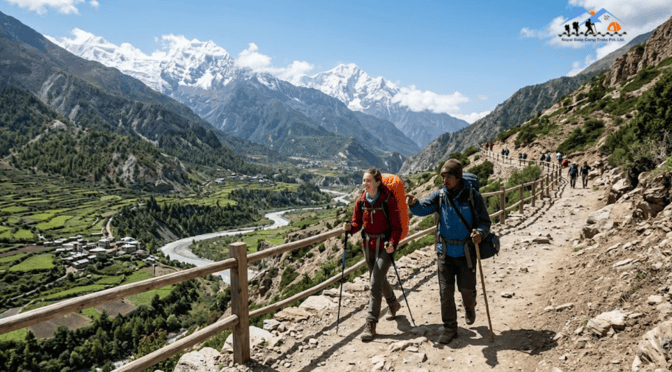
Hello, trekker!
Are you fed up with pricey plane flights to Everest Base Camp or the popular crowded trails of Annapurna?
How would you feel about knowing an amazing National Park lies within only a few hours’ drive from Kathmandu, where playful red pandas roam ancient forests and traditional villages greet you with unparalleled hospitality?
That’s the Langtang National Park. You’re about to learn of Nepal’s best-kept secret.
This is not just another place to trek; this is the birthplace of authentic mountain culture and untouched wilderness.
This is where mountain dreams become reality without missing a beat with your travel budget or duration of stay.
Langtang National Park – Brief introduction

Langtang National Park is one of the most beautiful locations in the Nepalese Himalaya and the closest national park to Kathmandu.
First developed in 1976, it was Nepal’s first ever Himalayan national park and today it is 1,710 square kilometers of valleys, forests, rivers, glaciers and glorious mountain passes.
Due to its close distance to the Kathmandu Valley, the National Park is the most accessible gateway to the Himalaya.
Many people wonder what Langtang National Park is famous for, but that is simple.
Langtang National Park was established to protect the rich biodiversity and the valley, which is most popular for the Langtang Valley trek.
The trek takes you through yak fields, past Buddhist monasteries and mountain villages and into high alpine pastures with stunning views of Langtang Lirung, 7246 metres.
Langtang National Park contains some of the world’s rarest wildlife.
Various animals inhabit the Park, including red panda, Himalayan tahr, snow leopard, musk deer and over 250 species of birds.
With the conservation area full of spectacular flora and protected natural habitats, it is a model for conservation and eco-tourism.
Beyond natural attractions, the hospitality of the Tamang people and their rich culture are something to be experienced.
Trekkers experience cultural interactions, mountain living and yak cheese in Kyanjin Gompa, making Langtang National Park a perfect bio-cultural adventure, community experience and successful maintenance of natural beauty.
Langtang National Park Highlights
Trekkers frequently ask what it is about Langtang National Park that makes it special from other parks.
Here are a few highlights that bring together nature, culture and adventure:
- Langtang Valley – the heart of the park, with stunning glaciers, wide meadows and well-known mountain views, including the amazing Langtang Lirung.
- Langtang Lirung (7,246 m) – the highest peak in the park and one of the major peaks visible on most trekkers’ itineraries.
- Gosaikunda Lakes – sacred alpine lakes of both spiritual and scenic highlights.
- Red panda habitat – one of the best spots in Nepal to see the rare, endangered red panda.
- Yak herding and Tamang culture – a unique mountain culture with monasteries, prayer flags and the possibility of tasting local cheese made in a traditional process.
- Rich biodiversity – rich flora diversity and over 250 identified bird species. A paradise for eco-tourism.
Where is Langtang National Park Located?

Langtang National Park is in the northern Himalayan belt of Nepal, spanning the districts of Rasuwa, Nuwakot and Sindhupalchok.
The park is located not far from the Kathmandu Valley, bordering the Tibetan border, highlighting such contrasts between the Nepalese and Tibetan landscapes.
Langtang National Park location is unique because it offers trekkers a chance to visit a wilderness area, while also being accessible without lengthy domestic flights.
This national Park is about 51 kilometers straight from Kathmandu, but it is a unique adventure with quirky touristy roads to get there.
In under a day, you can leave the city and enter a peaceful environment with valleys, glacial rivers and the beautiful glacial mountain views of Langtang Lirung.
The legendary Langtang Valley is at the center of the park, a natural basin formed by glaciers and has sacred sites and traditional villages.
From here, you can hike to high mountain passes, pristine lakes and big meadows, all while getting a good idea of trekking routes from one area.
How to Reach Langtang National Park from Kathmandu
To reach Langtang National Park, you have to take a bus ride or a private jeep from Kathmandu to Syabrubesi or Dhunche.
The road journey will take about 7 to 8 hours, depending on the road conditions and traffic.
You will drive through villages, terraced fields and rivers before taking your first step into the Himalayas.
The cheapest option is the public bus that leaves daily, but you might lose comfort.
For a comfortable road journey, you can take a private jeep, which can be costly.
If you book with us, Nepal Base Camp Treks, we will arrange everything from your transportation to Langtang trek permits, so that you don’t have to worry about trekking logistics.
Langtang National Park Trails and Trekking Routes Overview
One of the most rewarding treks in Nepal is the Langtang National Park trek that blends mountain scenery, cultural interactions and solitude.
Additionally, this trek feels quiet and authentic, unlike the busier trails of Everest Base Camp and Annapurna Base Camp.
The ark is built around Langtang Valley, which acts as a gateway into glaciers, rivers and alpine meadows.
You can get a trekking route overview from the central valley, as different trails spread out in all directions.
Some take you on short hikes, while others lead you to higher, remote areas or holy lakes.
You will hike through beautiful rhododendron forests and bamboo groves to the high ridges and yak pastures where you will get stunning views of Langtang Lirung.
Whether you are looking for a beginner-friendly trek or want some challenge, there is a trail waiting for you in the Langtang region.
Most Popular Treks in the Park
The Langtang Valley trek is the most popular trekking route in this region, which takes you through traditional villages to reach Kyanjin Gompa.
From there, you can do additional hikes to viewpoints like Kyanjin Ri or Tserko Ri, where you witness sunrise views over glaciers and snow peaks.
There is also the Gosaikunda trek, which is highly popular, leading you to the sacred lakes revered by Hindus and Buddhists alike.
Additionally, you get the option of the Helambu trek and the Tamang Heritage trail, which offer authentic mountain life and local cultural experiences.
Trekking Logistics and Permits
Trekking inside Langtang National Park requires some preparations.
There are teahouses along the trail providing food and lodging, so you won’t have to haul camp gear and you can recover each night.
Most treks start from Syabrubesi, with your permits and entry obtained before entering the park.
Two documents are required: your Langtang National Park permit and your TIMS card (Trekkers Information Management System).
The Langtang National Park fee is currently NPR 3,000 for foreigners (exclusive value-added tax), plus a TIMS card, which costs about NPR 2,000.
As of 2025, all trekkers also need to get a licensed guide.
With your trekking logistics, permits, guides and accommodation arranged for you by Nepal Base Camp Treks, you know that any trekking experience will be safe and enjoyable.
All about Flora and Fauna in Langtang National Park

Langtang National Park is one of Nepal’s richest biodiversity areas.
The park ranges across a wide range of elevations, from subtropical forests to alpine meadows and icy glaciers.
This amazing diversity of flora supports rare plants, some of which are endemic and a wide variety of local fauna, making Langtang a living natural museum.
Flora Diversity of Langtang National Park
Vegetation tends to change in structure and density as the elevation increases.
The lower elevations tend to be more forested, while the higher valleys bloom with alpine flowers in the spring months.
- Subtropical forests of sal, oak, and chir pine.
- Temperate forests of rhododendron, maple and alder.
- Bamboo groves, a preferred habitat for red pandas.
- Alpine shrubs and wildflowers at the highest elevations.
- Numerous medicinal herbs and plants, used by local communities.
Wildlife in Langtang National Park
Trekkers consistently ask about the wild animals found in Langtang National Park, so here’s a pretty impressive list of local wildlife you may encounter:
There are 40 species of mammals and over 250 species of birds in the park.
Some of the wildlife species include:
- Red panda – a timid, endangered and iconic of the Langtang.
- Snow leopard – elusive ghost of the Himalayas.
- Himalayan tahr – wild mountain goat seen on rocky terrain.
- Musk deer – populating the forest and alpine area.
- Himalayan black bear – occasionally spotted in mid-hill forests.
- Langur monkeys and rat macaques – abundant in the lower forest area.
- Bird species – Himalayan monal (the national bird of Nepal), tragopan and many pheasants.
Endangered Species and Conservation Efforts
Many of these species, including the red panda and the snow leopard, are listed as endangered species.
These animals and their habitats are being protected with strict conservation measures.
The Conservation teams, funded from trekking permits from trekkers and enforced by government enforcement, protect these animals.
As trekkers trek responsibly with locally approved trekking operators, they are contributing to eco-tourism and wildlife conservation.
Langtang National Park Weather and Best Time to Visit
The Langtang weather can change rapidly due to variations in altitude.
From warm valleys at 800 meters to icy peaks above 7,000 meters, you will find each season to be different.
That’s why understanding the seasonal weather is crucial in your trek preparation.
The best time for most trekkers to visit Langtang National Park is generally in spring and autumn.
In these seasons, the skies are clear, the trails are dry and the forests are colourful.
Seasonal Overview
Spring (March to May)
This is the most popular trekking season.
Rhododendrons and wildflowers fill the forests, there are mild temperature ranges and crystal clear mountain views.
The best time for photography and wildlife spotting.
Summer/Monsoon (June to August)
Most of the trails will remain muddy/slippery due to a lot of rain.
There will be leeches in the lower forests and some roads will be affected by landslides.
Otherwise, the valleys look lush and green and the waterfalls are at their fullest.
Autumn (September to November):
This is the second-best trekking season for Langtang National Park.
Clear skies, cool nights and the most stable weather, offering the most reliable opportunities to reach high vantage points (e.g., Tsergo Ri or Gosaikunda).
Winter (December to February):
It is cold, snowy and very quiet.
The lower trails will open, but the higher tracks and mountain passes will generally be filled with snow.
Winter is best for trekkers wanting peace and solitude.
What to pack according to the Season
Every trek in Langtang National Park requires the right equipment. Packing appropriately can ensure comfort and safety in the possible changes of mountain conditions.
Spring/Autumn: Trekking boots, layers of clothes, a lightweight jacket, rain covers, a sunhat and sunglasses.
Summer/Monsoon: Waterproof jacket/pants, quick-dry clothes, insect repellent and suitable walking boots.
Winter: Down jacket, thermals, gloves, woolen hat and a sleeping bag rated for -10 °C.
Any season: trekking poles, personal hygiene items, a refillable water bottle, water purification tablets and a basic first aid kit.
Cultural Interactions in the Langtang Region
Although trekking in Langtang National Park is focused on mountains and nature, it ultimately is about people.
The Langtang Valley is the home of the Tamang people, whose culture has a deep connection with that of Tibet.
As trekkers travel through the villages, they are exposed to this local culture through the people, the architecture, the food, the festivals and the wonderful hospitality.
This combination of culture and nature is what distinguishes the Park.
At the centre of a mountain culture are the monasteries with colourful prayer flags, the stone walls with carvings of mantras and the aspects of daily village life.
There is also the experience of yak herding in high pasture.
Yaks provide milk for butter and cheese, which trekkers can try when at Kyanjin Gompa.
These examples give you access to a way of life that has been unchanged for centuries.
Sustainable and Responsible Travel
It is a privilege to trek in Langtang National Park, and an important responsibility to preserve both the natural environment and the cultural traditions of the area.
Support local livelihoods and reduce negative impacts with ecotourism.
Here are some easy ways trekkers can be responsible while traveling:
- Bring reusable bottles and water filtration systems so you don’t buy plastic bottles.
- Dispose of your waste fairly (pack out what you pack in).
- Be respectful of local culture by dressing modestly and asking the local people before taking photos.
- Support local people and businesses by staying in teahouses and buying local village products.
- Check your trekking permits and park rules to ensure that you are following them and supporting conservation legally.
- Travel with licensed guides who know the trails, the local culture and safety requirements of the area.
- Conserve resources like firewood, propane or kerosene by using the facilities provided for heating and cooking.
Langtang National Park After the 2015 Earthquake
In April 2015, a large earthquake struck Nepal, which devastated the Langtang Valley.
Whole villages were buried under avalanches from the surrounding peaks and hundreds of lives were lost.
The cursed disaster left deep scars on the region, yet it recognized the extraordinary strength and resilience of a community and region.
Since that time, Langtang National Park has continued to rebuild itself.
Villages like Langtang and Kyanjin Gompa have been rebuilt with stronger shelters, additional new lodges and most recently repaired monasteries.
Trekking routes have been reopened, and tourists again walk on the paths of tragedy, now renewed and restored.
For trekkers visiting Langtang today, it is beyond an experience of beautiful nature and mountain culture.
It is an experience that supports families rebuilding their lives after the curse of destruction.
Entry Fees, Permits & Regulations
Every trekker entering Langtang National Park must have two permits: the park entry permit and a TIMS card.
These permits are checked at Dhunche, Syabrubesi, and along the treks.
The Langtang National Park permit fee is NPR 3,000 (approximately USD 27) for foreigners and NPR 1,500 for SAARC nationals plus VAT.
Nepali citizens pay NPR 100.
Permits are available from the Nepal Tourism Board in Kathmandu or at the entry point to the park.
The second requirement is a TIMS card (Trekkers’ Information Management System).
The TIMS card fee is NPR 2,000 for most trekkers and approximately NPR 1,000 for SAARC nationals.
TIMS records are intended to help with trekker safety and rescue management.
Since 2025, solo trekking is banned and licensed guides are required to trek in Neal.
Trekking in Langtang National Park also means abiding by the park rules: no disturbing wildlife, no litter and remaining on marked trails.
With Nepal Base Camp Treks, you can be assured that all permits and logistics are settled well in advance, leaving you to do what you came to do: trek and enjoy!
Safety and Travel Guidelines for Trekking
Trekking safely in Langtang National Park is a matter of proper preparation.
Below are our recommendations for keeping your trek fun and safe.
Use a certified guide – Starting in 2025, the Nepalese government will make a guide a requirement for treks in Nepal since he/she help with navigation, knowledge of the local culture and safety.
Acclimatize to altitude – Attitudes affect different people differently, so make sure to schedule rest days in Langtang Valley.
Bring the essential trekking items – This includes appropriate footwear, layers of warm clothing and the appropriate sleeping bag for the season.
Know about mountain weather – Weather changes can happen quickly, especially at high passes and glaciers in the Himalayas.
Stay in Teahouses – Teahouses are the safest places to sleep and eat local food and they will help you in emergencies.
Respect the Park – This means to stay on trails, not disturb wildlife, carry a valid trekking permit and use it at checkpoints for tracking.
Langtang National Park FAQs
What is Langtang National Park known for?
Langtang National Park is known for the Langtang Valley trek, the rare red panda, beautiful glaciers, sacred lakes such as Gosaikunda and rich Tamang culture.
How can I get there from Kathmandu?
You can get to Langtang by road in about 6–8 hours. Buses or jeeps will go as far as Syabrubesi and Dhunche, which are the main access points to start a trek (see Blog 10 for details).
What animals can I see in Langtang National Park?
The park is home to red pandas, Himalayan tahr, snow leopards, musk deer, monkeys and 250 species of birds (see Blog 9 for a complete guide).
Do I need to get permits for Langtang National Park?
Yes. Trekkers must also get a Langtang National Park entry permit (NPR 3,000 for foreigners) and a TIMS card. Since 2025, a licensed guide will be mandatory to hire each time.
Final Thoughts – Why you should travel to Langtang National Park
Langtang National Park is Nepal’s closest Himalayan escape, only hours from Kathmandu.
Yet it is immense, with soaring peaks, glaciers, sacred lakes and true mountain culture.
While made famous by the Langtang Valley trek, it is breathtaking in its own right and without the price tag or crowds like Everest and Annapurna.
While in Langtang, trekkers will experience temperate forests and sunny meadows, observe rare wildlife like the red panda and experience lush cultural interactions within the Tamang Villages.
When traveling with Nepal Base Camp Treks, we take care of all the arrangements from permits to guides, logistics and so forth, so you can focus on enjoying your trek.
If you are looking for adventure, culture and stunning views all in one trip, then Langtang is your best option.
Start your trek with Nepal Base Camp Treks today!