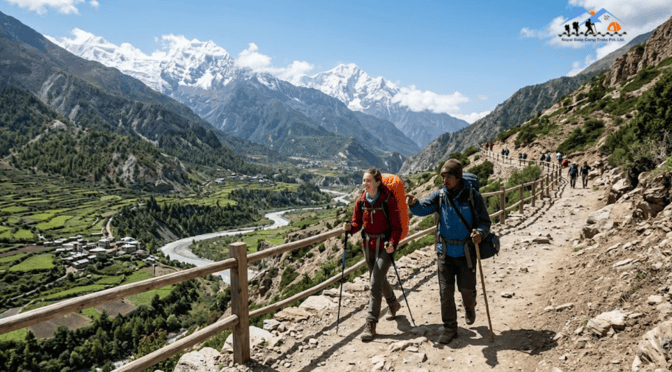
There are limitless trekking options in Nepal, but very few offer the combination of a short duration, incredible mountain views and gradual difficulty as found with the Mardi Himal trek itinerary.
It’s worth repeating – the Mardi Himal trek is one of the most flexible trekking itineraries in Nepal.
You can do it in a super-fast 3-day hike from Pokhara or spend a balanced 5 or 7 days or even turn it into a 12-day trek where you soak in some cultural villages and add in some extra rest days.
Why is this flexibility so important?
Because no two trekkers are the same.
Some trekkers only have a handful of days in Nepal, while others desire the complete experience with the luxury of taking their time to enjoy every view of the Annapurna range.
In this guide, you’ll find:
Information on which Mardi Himal trek itinerary may fit your holiday best.
Practical details related to the distance, altitude, cost and permits, etc.
Tips to avoid altitude sickness and how to maximize your trek with the weather.
How Nepal Base Camp Treks can assist you in selecting the best plan and look after everything from permits to tea house bookings.
So if you are chasing a fast track up to the mountain views or you want the full Mardi Himal Base Camp experience, then this article can help provide the best itinerary for you.
Why Choose Mardi Himal Trek?

The Mardi Himal trek is an undiscovered treasure for anyone thinking of trekking in Nepal.
For less than a week, you’ll stand face to face with the majestic Annapurna range, walk amongst colourful rhododendron forests and enjoy trails that feel silent compared to busier trails, such as the Annapurna Base Camp.
For many trekkers, one of the charms of the trek is reaching the ridge just outside of Mardi Himal Base Camp, where your views extend from Dhaulagiri all the way to Machapuchhre (Fishtail).
It’s the type of view that makes an arduous journey worthwhile.
Why is the Mardi Himal Trek Special?
- Less crowded trails: If you want peace while walking, you’ll find tranquility in Mardi Himal and its smaller crowds during the Annapurna Base Camp trek.
- Rhododendron forests: These woody-stemmed trees will put forth red and pink blooms along the trail in spring.
- Mountains you see while walking: You’ll be able to witness the beautiful Annapurna range every day you hike from the lower ridge to High Camp.
- One-of-a-kind Base Camp experience: This trek is short, takes you close to 4,500 m at Mardi Himal Base Camp, and is still a fun little trek.
Fun fact: Machapuchhre, the famous “Fishtail Mountain,” is the only peak in the world that is unclimbed and not because of technical climbing or difficulties, but because of local beliefs.
Who Is The Best Fit for this Trek?
The Mardi Himal trek is:
- Beginners wanting their first trek in Nepal.
- For short holiday trekkers who have only 3 to 7 days.
- Great for families or their group, where marked trails and tea house accommodations are preferred.
- Safe for solo travelers – with friendly trails & no heavy tourist crowd.
No matter your style of travel, there is a Mardi Himal trek itinerary to suit you.
How to Select the Best Mardi Himal Itinerary for You?

All trekkers are different. Some trekkers prefer a short 3-day trek from Pokhara, while others are looking for a more leisurely 12-day cultural loop.
The right Mardi Himal trek itinerary for you depends on your level of fitness, available time and travel objectives.
If you plan a trek that’s too short, you’ll miss a lot of the views.
If you plan a trek that’s too long, you’ll spend more days trekking than you may have available.
So, it helps to understand the primary variables to consider before deciding.
Primary Variables to Consider
Which factors really matter when considering planning your trek?
- Fitness Level: A 3-5 day trek means you will be walking long hours every day. If you’ve never been hiking before, a 7 or 9-day plan may be easier to pace.
- Days available: A short vacation? Consider a 3-5 day option. A week? The 7-day effort is perfect. An extra set of days? Perhaps a 12-day trek with some cultural pit stops along the way.
- Budget: While shorter treks will be more cost-effective, you’ll also have fewer days of recuperation. On the other hand, the longer trek will have more accommodation nights in the tea houses and generate higher costs, but will also develop better experiences.
- Altitude tolerance: The high point of this trek is over 4,000 m. If being sick from altitude sickness is a concern, you may want to consider a longer itinerary with buffer days, which helps acclimatize and reduces possible sickness.
- Group Type: For families or first-time adventurers, 7 days works very well. If you are fit enough for multi-day trekking adventures, the express 3-day trek can be manageable.
Recommended Duration from Trekker Profile
We’ll give you some guidelines that might help you relate your trek style to an itinerary for Mardi Himal trek.
3-Day Mardi Himal Trek Itinerary Express Trek: Most suitable for seriously fit trekkers or local travelers who have very little time.
5-Day Scenic Trek: Suitable for short vacationers on a holiday in Nepal, India or the touristic areas bordering China.
7-Day Standard Trek: Ideal for the average trekker; offers a comfortable pace, adequate acclimatization and a variety of highlights.
9-Day Trek: Includes a rest day and provides greater opportunity to take photographs and do side hikes.
12-Day Cultural Trek: Most suitable for slow-paced travelers. This option allows for a stay in a village, additional cultural venues and the option to do a loop route in the Annapurna region.
Still don’t know which option to choose, our team of trek design experts at Nepal Base Camp Treks can get you a plan that suits your days, budget and comfort.
Short Itineraries: Mardi Himal Trek in 3 to 5 Days

Are you short on time but still looking for stunning Himalayan landscapes?
The Mardi trek from Pokhara is one of Nepal’s best short treks.
You can put together an itinerary that will get you up to High Camp, then to Mardi Himal Base Camp and back to Pokhara in just 3 to 5 days, creating memories you will never forget.
If you are visiting Nepal and have limited time, these options are fast and straightforward.
3-Day Express Trek Plan (Pokhara to Pokhara)
This 3-day plan is the absolute minimum itinerary for Mardi Himal trek.
Ultimately, it sounds a lot more intense than it really is.
You should consider this option if you have a short number of days available for trekking and you are traveling with a good degree of fitness.
For the 3-day express trek, the plan is:
Day 1: Drive from Pokhara to Kande → trek through forest to Forest Camp → continue trekking to Low Camp
Day 2: Trek to High Camp (≈3,580 m) → acclimatization walk in the afternoon
Day 3: Wake early and hike to Mardi Himal Base Camp (≈4,500 m) → return back to High Camp → trek down to Siding → probably back down to Kande, and then drive back to Pokhara
Note: Long hours hiking (6-8 hrs/day) and steep ascents will be involved, so it is not recommended for first-time trekkers.
5 Day Scenic Trek
The benefit of the 5-day Mardi Himal trek itinerary is that you have enough time to take the highlights without pushing yourself too hard.
This trek is great for Nepali and Indian travelers with limited holiday time.
Day 1: Drive from Pokhara → Kande → trek to Deurali
Day 2: Trek to Forest Camp, onward to Low Camp
Day 3: Trek to High Camp (3,580 m)
Day 4: Sunrise hike to Mardi Himal Base Camp → return hike to High Camp to sleep
Day 5: Descend to Siding village → return drive to Pokhara
Pro Tip: The 5-day itinerary is much better because there is more time to take breaks and photographs.
Full Experience: Mardi Himal Trek (9-12 days)
If you have more than a week in Nepal, the longer timeframe Mardi Himal trek is a great option.
There is no rush up and down, allowing you the time to take breaks, explore and experience the Annapurna region’s culture.
This is the version that most photographers, slow travellers, and first-time trekkers prefer, as it strikes a balance between experiencing the high mountains and seeing local Gurung villages, staying in warm tea houses, as well as buffer days to be safe from altitude sickness.
9-Day Itinerary (with buffer/rest day)
The 9-day Mardi Himal trek itinerary is essentially the classic 7-day itinerary with an extra day for rest or side hikes.
This buffer is great if weather delays your trek, or if you want to just take it easy.
Day 1: Kathmandu → Pokhara (drive or flight)
Day 2: Drive to Kande → trek to Deurali
Day 3: Trek to Forest Camp
Day 4: Trek to Low Camp (≈3000 m)
Day 5: Rest/acclimatization day or side hike for photos
Day 6: Trek to High Camp (≈3580 m)
Day 7: Sunrise hike to Mardi Himal Base Camp (4500 m) → return to High Camp
Day 8: Descend to Siding village → drive to Pokhara
Day 9: Return to Kathmandu
So why choose NBCT? Their itineraries ensure well-planned rest days, allowing you to experience the journey without the concern of Mardi Himal trek altitude and minimizing fatigue.
12 Day Itinerary with a Cultural Extension
Do you want to mix mountains with culture?
This 12-day Mardi Himal trek itinerary adds beautiful detours through villages like Landruk and the famous Australian Camp.
Your Mardi Himal trek will now be more than a hike; it is going to be a cultural experience.
Day 1: Kathmandu → Pokhara
Day 2: Pokhara to Phedi → walk to Dhampus
Day 3: Walk to Landruk village (a traditional Gurung settlement)
Day 4: Walk to Forest Camp
Day 5: Walk to Low Camp
Day 6: Walk to High Camp
Day 7: An early morning trek to Mardi Himal Base Camp → and return to High Camp
Day 8: Optional rest day or photography trek
Day 9: Walk to Siding village
Day 10: Walk to Australian Camp
Day 11: Head back to Pokhara
Day 12: Pokhara → Kathmandu
This version is ideal if you are looking for a nice, relaxed pace, cultural exchange and extra nights in villages where you can enjoy the hospitality and mountain traditions of the local people.
Some trekkers even go as far as to compare this loop with other popular treks like the Annapurna Base Camp trek or the Mohare Danda trek.
However, the uniqueness of the Mardi Himal trek itinerary will be the base camp experience, close up, without all the heavy crowds.
Mardi Himal Trek Distance, Altitude & Map (All Options)
A very common question trekkers will ask: “What is the distance of the Mardi Himal trek and what is the altitude we will get to?”
Here is the short answer:
Total distance: ≈ 40-50 km (depending on your route)
Highest point: Mardi Himal Base Camp at 4,500m
Average walking time: 4-6 hours a day
The good news is that the altitude is gained gradually.
You start from the lowland near Pokhara (822m), and steadily walk through forests and ridges to High Camp (3,580m) and finally to Base Camp (4,500m).
That is why the trek is classified as moderate.
You do not need mountaineering skills, but must be involved in some self-pacing, to avoid altitude sickness.
Key Points of Altitude on the Mardi Himal Trek
Pokhara: 822m
Kande (starting point): 1,070m
Deurali: 2,100m
Forest Camp: 2,550m
Low Camp: 3,050m
High Camp: 3,580m
Mardi Himal Base Camp: 4,500m
Altitude Tips You Should Know
- Walk like a tortoise, especially over 3000m.
- Drink 3-4 liters of water every day.
- Avoid alcohol, sleeping pills and the like at high altitude.
- Follow all the instructions from your guide – note that NBCT guides are trained to notice the early signs of altitude sickness.
Trek Map
Typical itineraries will follow the same main itinerary route:
Kande → Deurali → Forest Camp → Low Camp → High Camp → Mardi Himal Base Camp → Siding → Pokhara.
The longer itineraries ( 9-12 days) may include Dhampus, Landruk, or Australian Camp, essentially adding a cultural loop to your mountain route.
Pro Tip: You can always get a map (digital or paper), but when trekking with Nepal Base Camp Treks, your guide will navigate for you so you can enjoy what you see.
Cost Breakdown for Each Itinerary Option
The affordable cost of the Mardi trek is a big reason that trekkers select this option.
It’s much more affordable than Everest Base Camp or Annapurna Circuit, with just as many incredible mountain views.
The cost is primarily based on your itinerary length (3, 5, 7, 9, or 12 days), your choice of transportation (tourist bus vs. flight to Pokhara) and whether you trek with an experienced and knowledgeable guide or not.
Here is a breakdown so you know what to expect:
Approximated Cost per Itinerary
3-Day Mardi Himal Trek itinerary (Pokhara to Pokhara): USD 300–400 (Express; no flights, basic tea houses, limited included meals)
5-Day Trek: USD 450–550 (Includes more meals, permits and potential porter support)
7-Day Trek (Kathmandu to Kathmandu): USD 600–700 (Most popular; price vs experience)
9-Day Trek: USD 650–750 (Buffer/rest day, slower pace, more nights in tea houses)
12-Day Trek with cultural extension: USD 750–850 (Full package—villages, Australian Camp and other cultural points)
For actual numbers, check out NBCT’s Mardi Himal Trek Cost page, where all pricing is itemized per person and by group size.
What Does the Package Price Include?
Your package price through Nepal Base Camp Treks includes:
- Permits: ACAP (Annapurna Conservation Area Permit) and TIMS card.
- Transport: Kathmandu-Pokhara (tourist bus or flight) and local jeep transfers.
- Meals: You will have 3 meals a day on trek (breakfast, lunch and dinner).
- Accommodation: Local tea houses and lodges.
- Guides & Porters: Officially licensed, insured and experienced.
- Support: 24/7 support, basic medical kit, taxes, etc.
What’s Not Included?
- Personal gear (jackets, trekking poles, sleeping bags) that can be rented in Pokhara.
- Hot showers, charging, or Wi-Fi at tea houses (which typically have small fees).
- Travel insurance (which is strongly recommended).
- Tips, gratuities, and gifts for your guides and porters.
Pro Tip: Plan to budget an additional USD 100-150 for personal expenses, comfort upgrades, or souvenirs during the trek.
Permits and Packing List
Before setting off on your trek, there are a few things you need to do first: obtain permits for Mardi Himal trek and appropriate gear.
If you miss either of these, it could be a hassle for your adventure.
If you book with Nepal Base Camp Treks, NBCT, then you won’t have to worry about permits and logistics.
This means no wasting your day at government offices and hassle with the paperwork.
Permits required for Mardi Himal Trek
As a first rule of thumb, every international trekker doing the Mardi Himal trek is required to have permits to trek; specifically:
Annapurna Conservation Area Permit (ACAP):
Price NPR 3,000 (≈ USD 25), foreigners
Price NPR 1,000 (≈ USD 8), for SAARC nationals.
Pay for conservation and trail maintenance.
TIMS Card (Trekkers’ Information Management System):
Price NPR 2,000 (≈ USD 17).
To keep track of trekkers for protection and emergency support.
You will be checked for both permits at various points along the trail. If you don’t have these permits, you likely will not be allowed to continue.
Where do I get this?
Kathmandu, Nepal Tourism Board office.
Pokhara; ACAP counter at Damside.
Pro Tip: If you book the trek with NBCT, your guide will have permits, TIMS, etc., ready when you arrive, so no need to wait in line or hassle.
Mardi Himal Trek Packing List
The weather is fickle on the trail: you’ll start in warm forests and end near snow!
Making a smart packing list for Mardi trek will make the journey easier and safer.
Must have essentials:
- Trekking boots (waterproof, broken-in)
- Warm layers (fleece, down jacket)
- Lightweight shirts & trekking pants
- Lightweight rain jacket/poncho
- Gloves, warm hat/beanie, sunglasses
- Sleeping bag (NBCT will arrange rentals in Pokhara)
- Headlamp with spare batteries
- Water bottles or hydration bladders
- Sunscreen & small 1st aid kit
- Optional add-ons:
- Trekking poles (helpful for the descents)
- Portable charger/power bank
- Energy bars/snacks
- Lightweight sandals (for tea houses)
Packing Light Tip: You will walk for 4-6 hrs daily to cover the distances. Try to travel with a backpack under 10 kg and if you hire a porter, you can let them carry the heavier gear!
Best Time to Do Each Itinerary (Weather Tips)
You can complete the Mardi Himal trek itinerary anytime, but your experience will depend on what season you choose.
The weather, trail conditions, and availability of tea houses can vary drastically.
The two best times to do the Mardi Himal trek are Spring (March–May) and Autumn (September–November).
Spring (March to May) – Rhododendron Magic
Best for: 5-day, 7-day, or 9-day itineraries.
Highlights: Forests bloom with striking red and pink rhododendron flowers.Generally clear skies in the morning and mild temperatures at other times.
Extra Tip: This time of year is the best for photographers, as it is possible to capture lush green valleys and tundra-like white snow-peaks.
Autumn (September to November) – Autumnal Gold
Best for: Any itinerary (from 3 to 12 days).
Highlights: Crisp air, stable weather and mountain views that can’t be beaten.
In that time, you will reach mountain ridges up to Mardi Himal Base Camp (4,500 m), without worrying about downpours, rain or snow.
Extra Tip: This season overlaps many Nepali festivals like Dashain and Tihar, and you may be lucky enough to witness a cultural festival in the villages.
Monsoon (June to August) – Green, but Wet
Best for: Short Mardi Himal trek itinerary (3 or 5 days).
Highlights: Trails can be very lush and green during monsoon season, but be prepared for rain with potential leeches, cloudy skies and some tea houses may close for business during the height of the monsoon.
Extra Tip: If you do trek at this time, stay lower – i.e., Forest Camp and Low Camp.
Winter (December to February) – Cold & Quiet
Best for: 7-day itinerary or shorter.
Highlights: Trails are tranquil, mountains are covered in snow and there are very few trekkers around.
Challenges: Freezing nighttime temperatures at High Camp and snow can block sections of the trail at Base Camp.
Extra Tip: Bring some extra warm gear (down jacket, liner for sleeping bag).
Guided vs. Independent Trekking Itinerary
Many trekkers ask if the Mardi Himal trek is still possible without a guide.
The answer is no.
As of 2023, independent trekking is no longer permitted in the Annapurna Conservation Area.
If you’re a foreign trekker planning on trekking at higher altitudes like Mardi Himal, a licensed guide is a must.
Independent Trekking – No Longer Allowed
Formerly, visitors would land at Tribhuvan International Airport, obtain permits and make the lengthy road trip from Kathmandu to Pokhara, then trek on their own.
They trekked from low camp to High Camp, but many had to navigate the trails, fight against altitude sickness and deal with crowded tea houses.
That is why the Mardi Himal trek without a guided experience has been limited, for safety reasons.
Guided Trekking – The Safer, Smarter Choice
Guided trekking is now mandatory and completely recommended.
With Nepal Base Camp Treks, you don’t have to worry about a thing – airport pickup, permits, transfers and tea house bookings, it’s all arranged.
Your guide will ensure safe pacing while climbing at high altitudes, manage your climb and take you on the breathtaking experience of the Mardi Himal Base Camp (4,500 m).
While you’re on the trek, you can enjoy the incredible scenery, especially a view of the Annapurna range, which you’ll dominate your trip.
Conclusion: Choosing a Mardi Himal Trek Itinerary
The great thing about looking at a Mardi Himal trek itinerary is that it is flexible for you; whether you want a shorter, 3-day express version or a 12+ day trek.
Every trek starts with your arrival at Tribhuvan International Airport, your drive from Kathmandu to Pokhara and then your trek from Camp to High Camp.
Once you get up high, it will feel like a trek, but once you stand at the Mardi Himal Base Camp, with the best views of the Annapurna range, it will all be worthwhile.
You are required to trek with a guide, so that you will have a memorable, safe and enjoyable experience.
Booking with Nepal Base Camp Treks means you are not only booking your trek, but you are tapping into 20 years of local experience, a caring guide and the benefit of a hassle-free trek!
If you are ready to plan your itinerary for your trek to Mardi Himal, let’s discuss what we can do together and create a memory that you will treasure for a lifetime!