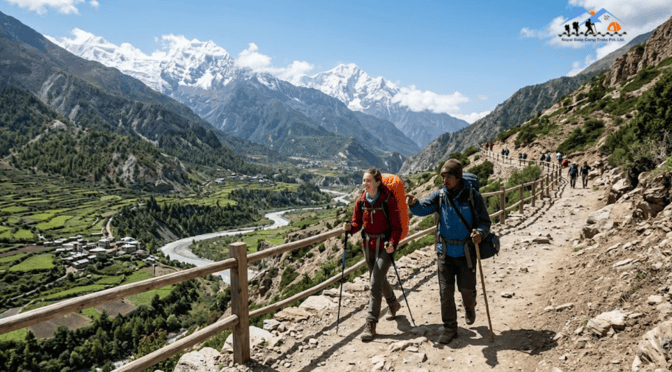
The best time for Mardi Himal trek is essentially when the weather and trail conditions suit your style of adventure.
The objective of this guide is to clearly define each season, such as spring, summer, autumn, and winter, so you know what to expect.
From colourfully blooming rhododendrons in March, to snowy ridges becoming dead drops in December, each season tells a different story of the Himalayas.
Whether or not you’re a novice trekker or seasoned mountaineer, this weather guide by Nepal Base Camp Treks should help you perfect your plan for your adventure in Mardi Himal.
Why Timing Matters for Mardi Himal Trek
The best time for Mardi Himal Trek means more than just comfort; it dictates your entire experience.
Weather dictates what you see, how difficult the trail feels and whether or not you will be safe.
So, you must create your itinerary for trek in Mardi based on the season you want.
In good weather, for example, you can walk comfortably on dry trails, enjoy crisp mountain views and travel planning will be seamless.
When you have bad weather, the trail becomes slippery, the peaks are obscured by clouds and trekking challenges increase.
Each season showcases a new face of the Himalayas: flowers, snow, rain or golden forests.
Did you know? The Mardi Himal trek route climbs from warm forests at 1,800m to icy ridges above 4,500m, and so you can go from t-shirt weather to cold in just two days!
Mardi Himal Trek Season Overview – Overview of What to Expect Each Time of Year
Each season of the Himalayan treks will be unique.
Some months bring flowers and sunshine and others will test your will with rain or snow.
Following is a detailed overview of what to expect each season on the Mardi Himal trek:
Spring (March to May) – Rhododendron Bloom & Clear Skies
The most vibrant and best time for Mardi Himal trek is in the spring season.
View: Bluebird days provide the best chances to see Machhapuchhre (Fishtail), Annapurna and Hiunchuli.
Trail Conditions: The trail is comfortable, safe and dry. Good for families or first timers.
Highlights: The woods are painted with colors. The trail is full of life with Rhododendrons, orchids and other flora and fauna.
Crowds: There are too many tourists these days, expect crowded trails and booked teahouses.
Fact: Nepal boasts over 30 species of rhododendrons and the April trek is a painter’s paradise.
Summer/Monsoon (June to August) – Green Landscape but Treacherous Trails
This period of the year is known as the “monsoon,” when the landscape takes a very different look.
The hills are primarily green and the skies are usually broody in appearance.
Views: Most of the mountains will be visible only during the early morning. Expect to see clouds covering them at all times, with only brief, occasional clear skies during the early morning.
Trail Conditions: Slippery and muddy, with leeches in the jungle section. There are also potential landslides in some sections.
Highlights: Waterfalls at every turn, the forest looks alive with all the different greens and during monsoon rains, the rivers flow roaring.
Crowds: Practically no trekkers around. Perfect for you folks who want to have an off-the-beaten-path adventure and the chance to trek off the beaten path!
Tip: Don’t forget to obtain your Mardi Himal trek permit. Additionally, bring waterproof shoes, a poncho and salt, as leeches can be a problem.
Autumn (September to November) – Best Period for Perfect Weather
This season ranks as the best time for Mardi Himal trek if you enjoy clear skies and unobstructed views.
Views: The mountains look closest at this time and they are as clear as you will ever have; no haze at all, just nice mountain views.
Trail Conditions: Easy to walk on. Fewer hazards compared to summer or winter.
Highlights: Golden forests, villages full of people celebrating the Dashain and Tihar Festivals.
Crowds: This is the most crowded trekking time in Nepal by far, so teahouses will be full quickly.
Winter (December to February) – Snowy Trails & Solitude
Winter is a quiet time of year as well as the one that has higher Mardi Himal trek difficulty.
Views: Snow-capped summits sparkle in crisp blue skies. Views are the best of the year.
Trail Conditions: Snow and ice above 3,000 m – some teahouses will likely be closed due to poor traffic.
Highlights: Beautiful, serene walking, few trekkers and spectacular snowy views.
Crowds: Extremely few. Ideal for trail runners who want to enjoy solitude amidst mountain trails.
Fact: Interestingly, the Mardi Himal summit view (4,500m) during January is colder than a deep freezer, but it is when stars start twinkling at their best.
Temperature & Weather Patterns on Mardi Himal Trek
The Mardi Himal trek temperature and weather change rapidly due to the varying trail from low hills to high ridges.
When starting your trek, you will walk through warm forests and by the end, you stand on icy viewpoints over 4,000 meters.
Temperature Chart by Elevation
| Season | Daytime (Lower trails) | Nighttime (Lower trails) | Daytime (Higher trails) | Night (Higher trails) |
| Spring | 15 to 20°C | 7 to 10°C | 5 to 10°C | -5 to -2°C |
| Autumn | 18 to 25°C | 15 to 18°C | 8 to 12°C | 4 to 10°C |
| Monsoon | 12 to 20°C | 5 to 9°C | 4 to 8°C | -2 to -6°C |
| Winter | 5 to 12°C | 0 to 5°C | -2 to 4°C | -10 to -5°C |
Best Months for Mardi Himal Trek: Month-by-Month Guide
When you’re researching the best time for Mardi Himal trek, looking at the wider seasons is informative, but there is a better experience by selecting the right month.
March to May – Ideal for Scenery
Spring brings Mardi Himal alive.
In March, you will find crisp air and the higher ridges may still have snow.
By April, the forests are transformed with rhododendrons and orchids in red and pink, transforming the trail into a work of art.
In May, the flowers are still blooming, the weather is more summery with longer days, but light haze and evening rains tell you the Monsoon is on its way.
Best For: Nature lovers and photographers.
September to November – Best Overall Conditions
Autumn is the best trekking season in Nepal, also making it the best time for Mardi Himal trek.
If you look to trek in September, you will have the advantage of fresh post-monsoon forests and clear skies.
Possibly the best month of all time to trek, October, you will have golden hills, exceptional views of the Annapurna and the vibrant and colourful celebrations of Dashain and Tihar.
November has still clear skies but colder nights, especially if you are on the High Camp.
Best For: First-time trekkers and cultural enthusiasts.
December to February – Cold Yet Clear Views
In winter, Mardi Himal is transformed into a remote, snowy paradise, quiet for weeks consecutively.
Days spent in the sun are brighter and crisper, but the nights will drop below -10°C at High Camp.
January is bloody cold and the schools are really clear, but you will likely be the only one on the trail.
By February, there was less cold, but there were still very few fellow trekkers around.
Best For: Experienced trekkers and budget travellers.
June to August – Green but Wet
The hills become overflowed with greenery in the Monsoon season, roaring waterfalls and dramatic clouds.
Very few clear views can be found, but the trail will be quiet, sometimes alone.
You can expect muddy trail conditions, leeches in the jungle and the occasional slide.
Ideal for: Adventurers looking for the solitude of the wild, away from people.
Choosing the Right Season Based on Your Trekking Style
The best time for Mardi Himal trek is based not just on the weather, but on the type of traveler you are.
Every season in Nepal brings a new experience, be it cultural celebrations, peaceful snowy trails or vibrant forests.
By knowing your style, we can align the Mardi Himal trek best season, depending on your goals and make the best out of your journey.
For Beginners
For first-time trekkers, Autumn is the best time for Mardi Himal trek.
The stable weather pattern in autumn creates the best opportunities to navigate your first trek with more comfort and safety.
Warm temps, clear skies, and sharp-looking mountain landscapes are all ideal for helping you navigate a big trek.
The well-marked trails with busy teahouses create opportunities to deal with trekking factors, such as altitude adjustment or your daily trek duration, when it gets tough and challenging.
Tip: Double-check your Mardi Himal trek packing list: sleeping bag and a warm, insulated jacket are not luxuries in winter.
For Off-the-Beaten-Path Seekers
If you enjoy trekking during the off-seasons, summer (monsoon) or winter are two times for you to trek.
In the summer, the jungle is alive and thriving, and in the winter, it is breathtaking when the ridges are covered in snow.
These two seasons also have the added benefit of seeming more raw; however, they also present more risk: slippery trails, leeches, snow and closed teahouses.
Tip: Hiring a guide is a great way to have a safer trekking experience.
For Photographers & Nature Lovers
The spring is the best time for a Mardi Himal trek if you are interested in vegetation and wildlife.
You will see rhododendron blooms, birds in their nests and enough daylight to make side trips.
While you will likely have other trekkers on the same trail, it will not be crowded and you will have views like none other for your travel journal or camera.
Tip: Build in one extra day into your travel itinerary, ideally spend the extra day in an area that has great sunrise views and you can enjoy the views without needing to rush.
For Budget Travelers
If you are conscious of the cost for Mardi trek, winter is the prime time for travelers.
Winter is the low season when lodging is less expensive, and there are fewer trekkers, offering you a better chance of negotiating costs.
But you have to deal with sub-zero temperatures at night in the higher Mardi Himal trek altitude.
Accommodation, Food & Logistics by Season
One of the biggest planning elements of the Mardi Himal trek is knowing what to expect for accommodation, food and logistics.
These change quite a bit based on travel seasons, so the better prepared you are the easier the journey will be.
Spring & Autumn – Busy but Comfortable
Being the best time for Mardi Himal trek, all teahouses are fully open and usually booked in these seasons.
The rooms are basic- usually twin beds with blankets, but they go fast due to demand.
The meals will be hearty and can be a bit repetitive (Dal Bhat, noodles, soups), but you will know what to expect from most teahouses.
Tip: As Spring and Autumn are the best time to trek Mardi Himal, there will be higher demands. So, you should always book your room in advance, especially at High Camp, as they have limited rooms.
Summer (Monsoon) – When It’s Open, It’s Limited Supply
During the summer (monsoon) months, teahouses are open.
But, you may have difficulty getting to them; landslides may block supply access, which will have an impact on the variety of food available.
Although the available food variety may be lower, there will still be basic meals available, like Dal Bhat and tea, at every point of your journey.
Rooms or accommodations will likely be empty, and therefore, you shouldn’t feel the need to compete for beds.
Tip: Make your backpack waterproof and certainly bring your own snacks – the trails are wet and the variety can sometimes drop along the way.
Winter – Cozy, Fewer Choices
In the winter months, some teahouses above 3,000 meters closed for the season due to lower traffic.
The teahouses that do stay open feel cozy, offering warm dining halls and stoves with firewood.
You will have a less variety of menu choices, but enough in order to supply energy.
Finally, you will be able to find rooms fairly easily and undoubtedly much cheaper, so for budget travelers, this is an ideal season to travel.
Mardi Himal Trekking Tips for Any Season
Know the Mardi Himal trek difficulty: It is a moderately level trek, with shorter trekking days (5-7). That said, beginners may find the steep ascents near High Camp to be quite challenging.
Plan Your Travel Itineraries: Create plenty of buffer in your travel schedules to allow the weather to delay your travel plans (if it needs to). This will make your Mardi Himal trek time much more flexible, allowing you to enjoy it more.
Know the weather: In spring and autumn, you should bring light layers, more waterproof gear during the monsoon season and extra warm clothing during winter for freezing conditions at night.
Be smart about trekking altitude safety: The Mardi Himal trek altitude is 4,500m. So, acclimatize slowly and think about basic trekking safety.
Take time to enjoy nature all around you: Look for colorful flora & fauna, particularly rhododendron in spring and wildlife in the forests. There are also many other highlights throughout the trek, as most trekkers say it is one of the best of Nepal’s Himalayan treks.
Accommodation options: Teahouses are basic but cozy and offer simple meals, such as Dal Bhat. Most of the time, there are fewer facilities, especially if trekkers choose to trek in the off-season.
Adventure tourism element: Trekking in the monsoon season or winter can be more challenging for navigation due to bad weather conditions. However, it also presents a raw trekking adventure to enjoy solitude in the dramatic mountain landscapes.
Consider your budget for the trek: You should consider your potential Mardi Himal trek cost for permits, food, lodging and gear.
Final Thoughts – When is the Best Time to Trek Mardi Himal?
So, if you want to enjoy the clearest skies and safe trails, then the best time for Mardi Himal trek is Spring and Autumn.
Spring offers vibrant forests of rhododendrons and pine, whereas autumn offers the best views of Himalayan peaks, such as Annapurna, Machhapuchhre and Hiunchuli.
Summer time brings heavy rainfall, roaring waterfalls and green hills.
And finally, Winter is the coldest time but also the most peaceful with snowy ridges.
No matter which season you choose, you cant deny that every Mardi Himal trek season has its uniqueness.
The key to trekking enjoyment is choosing the right travel season that suits your trekking style.
If you are ready for a thrilling adventure, then contact Nepal Base Camp Treks, as we offer expert guides who know every turn of the route, the weather and the best accommodation for you.
Reach out to us today!