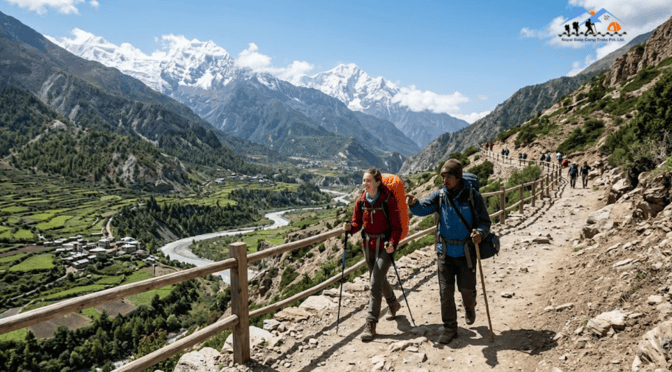
Are you planning to trek the Annapurna region in Nepal?
The Mardi Himal trek cost in 2025 is one of the most frequently asked questions by trekkers in Nepal, whether that is Nepalis or foreigners.
Whether you are a student living in Kathmandu, an expedition seeker from India or a backpacker flying in internationally to trek, understanding how much the Mardi Himal trek price will save you from surprises and help you budget.
At Nepal Base Camp Treks, we have guided and supported hundreds of trekkers on the Mardi Himal trail.
We will provide you with the clearest and honest cost breakdown of the Mardi Himal trek so you are aware of what is included, what is not included and how you can do a trek that matches your budget.
Why is Understanding the Mardi Himal Trek Cost Important?
The Mardi Himal trek is one of the cheaper and better trekking destinations in the Annapurna region.
That being said, the price points can be pretty wild depending on nationality, type of trip and length of trek.
That is why paying attention to cost is essential:
Budget trekking in Nepal: Mardi Himal is cheaper than Everest, but costs can add up if you are not careful.
Clear expectations: There are many cost factors and lots of previews of costs, such as tea-house meal prices, permits, etc, which are better to know than get surprised after.
The trip helps give a market reference: Many companies promote some great prices, but fail to consider many of the points in the pricing.
Better planning: There will be no confusion of how much money to set aside to pay for the trip, regardless of whether you are Nepali, Indian or a foreigner.
Pro Tip – Mardi Himal trek is sometimes referred to as a “hidden gem”. It is less busy and cheaper compared to the Annapurna Base Camp Trek and offers amazing views of Machhapuchhre and the Annapurna Range.
Cost Breakdown for Mardi Himal Trek
The Mardi Himal Trek cost is determined by your nationality, trek style (bargain, standard or luxury) and the duration of your adventure.
The official guided Mardi Himal Trek Package with Nepal Base Camp Treks (NBCT) is $790 for the 12-day package, which includes all accommodation, meals, guide, porter, permits and transport from Pokhara to the trailhead and, return journey back to Pokhara.
There are shorter versions of this trek for 5 or 7 days as well, which brings down the cost.
Here is a breakdown:
Mardi Himal Trek Expenses for International Trekkers
With NBCT (Nepal Base Camp Treks), the Mardi Himal trek cost for foreigners will average USD 790 for 12 12-day package.
These are some expenses that international trekkers incur:
Tourist Bus from Kathmandu to Pokhara: USD 10-25
Flight from Kathmandu to Pokhara: USD 100–120
Pokhara to Kande/Phedi jeep/bus: USD 5–30
Permit (ACAP + TIMS): USD 50 total
Teahouse accommodation: USD 5–8 per day
Food: USD 4–8 per plate
Guide: USD 25–30 per day
Porter: USD 20–25 per day
Optional extras (WiFi, hot shower, charging): USD 1 -3 per service.
Advantage of the NBCT package: You don’t worry about any of the “hidden costs” when you book through for just USD 790.
Mardi Himal Trek Cost for Nepali Trekkers
The cost of the Mardi Himal trek for Nepalese trekkers will be the cheapest, averaging NPR 15,000–20,000 [USD 115–155 ] for a 5–6 day trek.
Average spending by Nepalese trekkers
Bus fare from Pokhara (tourist bus): NPR 1,200–2,000 one way
Jeep/bus fare from Pokhara to Kande/Phedi: NPR 200–500
Teahouse accommodation charge: NPR 600–1,000 per night
Cost of each plate of Daal bhaat meals: NPR 400–600 per plate
Others (Wifi, showers, charging): NPR 100–300 per trip.
In total, the Mardi Himal trek is the cheapest and best value for Nepali adventures compared to the other trekking trails in and around the Annapurna Region of Nepal.
Mardi Himal Trek Cost for Indian Trekkers
The cost of Mardi Himal trek for Indian trekkers ranges from 18,000 to 25,000 INR (USD 220–300) for 6-7 days.
The following is a brief outline of the estimated costs of Indian trekkers:
Kathmandu to Pokhara (tour bus): INR 1,200–1,500
Flight from Kathmandu – Pokhara: INR 8,000–9,000 (will save time)
Pokhara to Kande/Phedi (jeep or bus): INR 500–1,000
Tea house/Accommodation: INR 500–700 per night
Food: INR 350–600 per plate
Guide (optional): INR1,500–2,000 per day
Porter (optional): INR1,200–1,500 per day
Pro-tip: Most Indian trekkers combine the Mardi Himal trek with a trip to Pokhara or Kathmandu.
What’s Included and What’s Excluded?
When comparing the price of the Mardi Himal trek, it’s necessary to ensure you look at more than just the cost displayed on their website.
Some businesses display a cost that seems inexpensive, but then add on hidden costs, such as meals, permits and basic accommodation.
At Nepal Base Camp Treks (NBCT), there’s nothing hidden from our clients.
So, here is exactly what is included and what’s not.
What’s Included in your Package
Licensed guide & porter: They are trained in mountain safety and have full insurance.
All meals on the trek (B, L, D): Warm dal bhat, soups, noodles, etc.
Tea-house accommodation: Our tea-house accommodations at Forest Camp, Low Camp and High Camp are cozy twin-sharing rooms.
Permit (ACAP + TIMS): We secure your permits, so you don’t waste time in Kathmandu or Pokhara.
Transport from Pokhara to the trailhead and return: Local jeep or bus.
Basic medical kit & emergency response: Your safety always comes first.
Agency support: Our Kathmandu office is available 24/7 when on trek.
Quick Tip: When booking with NBCT, your guide will also reserve the tea-house beds ahead of time, relieving you of the stress of arriving late and having no rooms available.
What’s Not Included
Travel to/from Pokhara: You can choose a bus (budget) or a flight (quick).
Accommodations in Pokhara or Kathmandu: We can suggest trusted options, if necessary.
Personal trek gear: Jackets, sleeping bags, trekking poles (available through rental in Pokhara or KTM).
Travel insurance: Necessary for foreigners, especially for high altitude evacuations.
Extra costs in tea houses: Wi-Fi, hot shower, phone charging (USD 1-3 each).
Tipping: For guides and porters (normal range is USD 5-10/day, a common norm in Nepal).
Souvenirs & snacks: Budget USD 100-150 if you want the add-ons.
Permit Cost and How to Obtain Them
There is one key component to undertake before every trekker sets foot onto the Mardi Himal trails: Mardi Himal trek permits.
You are entering the most trekked route in the Annapurna region of Nepal and permits aren’t just official papers; they represent a responsible trek.
- They protect the Annapurna Conservation Area, which requires support for wildlife, villages and the fragile trail.
- They provide a safety benefit: your information is logged in the TIMS database, allowing search and rescue to successfully locate you more quickly.
- The fees go towards trail maintenance, teahouse facilities and conservation projects.
If you utilize a local company like Nepal Base Camp Treks (NBCT), don’t even worry about these permits; it will be all done for you.
ACAP (Annapurna Conservation Area Permit)
This is basically your ‘ticket’ to enter the trekking route in the Annapurna region of Nepal, featuring Mardi Himal, Annapurna Base Camp and Ghorepani Poon Hill.
For Foreign Nationals, this permit costs around NPR 3,000 (≈ USD 25), whereas if you are a SAARC National, it will cost you NPR 1,000 (≈ USD 8)
If you are a Nepali citizen, you don’t have to pay for this permit.
Fact: Annapurna Conservation Area is Nepal’s largest protected area, covering an area of 7,629 km².
TIMS (Trekkers’ Information Management System Card)
Think of TIMS like your mountain ID.
It records your trekking itinerary, your entry points and your expected exit.
This card becomes vital in a location where the weather can change in a heartbeat.
TIMS costs NPR 2,000 (≈ USD 17) for foreign trekkers, whereas SAARC Nationals have to pay NPR 600 (≈ USD 5).
Nepali people don’t need it.
Pro Tip: Do not think of the TIMS as “just another fee.” It provides a very low-cost way to allow mountain rescues to be speedy and effective.
Where To Get Permits for the Mardi Himal Trek
When you’re ready to get the permits, you are faced with two easy options:
In Kathmandu: Nepal Tourism Board office, Pradarshani Marg.
This is ideal if you want your permits before you leave the capital. It operates on weekdays, usually 9 AM–5 PM.
In Pokhara: ACAP permit counter, Damside.
This will work well if you are traveling directly from Kathmandu to Pokhara.
You will only be asked to wait while your permits are processed, which usually takes less than 30 minutes, same day.
To summarize, the permits can be obtained in Kathmandu and Pokhara, where you will need to bring along your passport, a copy of your travel insurance (foreigners only) and 2 passport-size photos.
Or, you could skip the permits altogether and let Nepal Base Camp Treks do this as part of your booking.
Transport Costs to Reach the Start of the Mardi Himal Trek
The Mardi Himal trek does not start in Kathmandu.
First, you need to get to Pokhara, which is known as the adventure capital of Nepal, and then travel the short distance to Kande or Phedi.
The cost of transport can make up a significant part of the Mardi Himal trek cost, so let’s break it down for you.
Kathmandu to Pokhara
Pokhara is 200 km west of Kathmandu and the traveling is part of the adventure.
You have two main options:
Option 1 Tourist Bus (Budget & Scenic Option)
Cost: USD 10–25 (NPR 1,200–2,500)
Duration: 6–8 hours
This option offers comfortable seats, air conditioning, lunch stops, and scenic views of rivers and mountains along the way.
Nevertheless, the roads can be bumpy and travel time depends on traffic.
Pro Advice: If you’re an Indian traveler, the tourist bus from Kathmandu to Pokhara is the most sought-after option. It is cheap, comfortable and you get to see some of the countryside.
Option 2 Flight (Fast & Convenient)
Cost: USD 100–120 (NPR 8,000–9,000)
Duration: 25 minutes
You can save the better part of a day and have amazing views of the Annapurna range from the air.
However, this option is more expensive, and flights can be delayed due to adverse weather conditions.
Many foreigners fly into Pokhara after landing at the international airport in Kathmandu to save a day of travel.
Pokhara to Kande or Phedi (Starting Point for Trek)
If you are starting the trek to Mardi from Pokhara, you will be at an advantage, as the Mardi Himal trek cost will be lower, as you will save on transport.
Whether you journey to Kande or Phedi, you must drive to Pokhara to get to one of the official starting points for the Mardi Himal trekking route.
Local bus: NPR 200–500 (USD 2–5) — Bumpy road, but inexpensive.
Shared jeep: NPR 500–1,000 (USD 5–10) — Faster and much more comfortable than the bus.
Private jeep/taxi: NPR 2,500–3,500 (USD 20–30) — In a group or loads of bags, this is the best option.
Most packages of our guided treks already include these costs. You will be picked up in Pokhara and will be driven directly to the trailhead with no hassle.
Return Trip from Sidhing Village
When you finish in Sidhing, you will then have to drive back to Pokhara.
Jeep Ride: NPR 2,500–3,000 (USD 20–25) — Flat rate shared amongst trekkers (the whole vehicle).
NBCT package included this as well, so no panic trying to figure out how to catch a jeep itself!
Costs for Food and Accommodation while Trekking
The Mardi Himal trek is a classic teahouse trek.
At Forest Camp, a room costs around USD 5-6 and at High Camp it’s USD 6-8, since there is much less supply carried up.
Rooms are basic but clean and have wooden beds and blankets
The meals are simple local food like dal bhat, noodles and soups.
A plate of dal bhat costs USD 4-6 at lower stops and USD 7-8 higher up.
Breakfasts range from USD 3-5 and tea or coffee adds USD 1-3.
On average, trekkers spend about USD 25-30 per day for food and accommodation.
It is a special setting – dinners in a rhododendron forest, tea under the stars at High Camp or breakfast at base camp to the Mardi Himal trek with the Annapurna range glowing at sunrise.
With Nepal Base Camp Treks, this is all included in your trek, allowing trekkers to relax and enjoy walking the trail.
Cost Based on Trek Duration & Itinerary
The Mardi Himal trek cost is directly associated with how long you are on the trail.
The duration of the Mardi Himal trek is a short one compared to other treks in Nepal.
Therefore, even a few days’ difference can drastically affect your budget.
You can do the trek in 5-6 days if you wish to take the short, fast and less expensive way by moving quickly through the trails and finishing back at base camp and down to Forest Camp.
This trekking approach is going to keep the costs down (USD $350-450), but you won’t have any time to soak in nature and culture.
7 days is probably a mid-term, reasonable itinerary.
You will trek both Low Camp and High Camp, then sleep at base camp, waiting for morning sunrise views and then head home.
You can expect to pay between USD $500-700, depending on whether you do the trek in a small or large group.
The 12-day itinerary of Mardi Trek, provided by Nepal Base Camp Treks, is going to cost USD $790 per person.
This includes all transportation, permits, meals, guides and accommodation for the entire trek.
It also includes some sightseeing in Kathmandu after the trek, giving you much more than simply trekking the mountains.
If you want to customize your itinerary, just reach out and communicate with our team..
Gear, Packing & Miscellaneous Expenses
A smart trek starts with a smart pack.
Your packing list for the Mardi Himal trek should include good boots, a good jacket, light thermal layers, rain gear, gloves and sunglasses.
Additionally, you should add the following essential items — a headlamp, water bottle, sunscreen and a small travel case of medicines or first aid.
If you don’t own your trekking gear, then don’t worry, you’ll find it in Pokhara and Kathmandu.
You can find rental shops everywhere with sleeping bags, trekking poles or jackets starting from a few dollars per day.
Renting gear is an easy way to keep your Himal trek cost down, especially if you’re only trekking once.
Apart from gear, you should have a couple of miscellaneous expenses to consider – charging your phone, a hot shower, or wi-fi in tea houses, which will usually cost you USD 1–3 per service.
Gratuity is standard, around USD 5 – 10 per day in total for your guide and porter.
Most trekkers also set aside around USD 100 – 150 for snacks, souvenirs or small comforts along the way.
Is the Mardi Himal Trek Worth it?
Absolutely!
We believe the Mardi Himal Trek cost is one of the most economical treks in Nepal, which offers fantastic views of the Annapurna range and Machhapuchhre on top of that!
Mardi Himal trek difficulty is moderate, which aligns perfectly for a new trekker and Mardi Himal trek duration is short compared to the many days of trekking on a route such as Annapurna Base Camp.
Also, the ridges, wooded scenery and the sunrise views at base camp to the Mardi Himal trek are just as rewarding.
Besides food and lodging, this trek offers the experience of the Gurung villages, the peacefulness of the trails and the overall memories that you will keep long after you return from your trek.
Ways to Save Money on the Mardi Himal Trek
Trek with people – Trekking together is more fun and when you travel in groups, you can spread the cost of travel guides, jeeps and rooms.
Get a local guide – A local guide is not only going to know the best and safest routes, but they are also going to charge you less as they have lower operating expenses in your budget.
Check for seasonal trek offers – You will be surprised by how many trek deals and discounts are shared via social media during off-season months.
Pack smart and pack light – If you travel in a lightweight, minimalist way, you will not end up renting a ton of personal trekking gear in Pokhara.
Take buses over flights – There is truly something beautiful about taking the very scenic tourist bus from Kathmandu to Pokhara instead of flying.
Reduce your extras – Wifi, hot showers and charging cost you a dollar or two each time. If you use them less frequently, the savings will add up.
In conclusion
The Mardi Himal Trek price in 2025 is excellent, making this one of the most cost-effective treks in Nepal by anyones measures, whether you are a Nepali, Indian or international traveller.
You’ll experience rhododendron forests, quiet ridgelines and sunrise at base camp with a killer view of Annapurna.
The Mardi Himal trek is moderately difficult, easy to get to and relatively off the beaten path compared to the Annapurna Base Camp trek and other iconic Annapurna treks.
When you travel with Nepal Base Camp Treks, everything from permits, guide, the teahouses are included and the Mardi Himal trek cost is simple and clear.
So, if you’re sorting out your next adventure in the Himalayas, the Mardi Himal trek is beautiful, with serious views and a little cost.
Book the trek with us today for a seamless trekking experience.
Mardi Himal Trek Cost FAQs
Is the Mardi Himal trek expensive for foreigners?
No. The cost of the Mardi Himal trek for foreigners is not any more expensive than many other treks in the Annapurna. Depending on the package, considering permits, tea house stays, and meals, you can expect to pay between USD 500-800.
Can Nepali trekkers do the Mardi trek without a guide?
Yes, the cost of the Mardi Himal trek for a Nepali is the lowest. Locals can trek on their own without a guide or permit and can spend about NPR 15,000-20,000 on food, transport and stay.
How much does it cost from Pokhara to Mardi Himal Base Camp?
The Mardi Himal trek cost from Pokhara will depend on transportation and the trek duration. Shared jeeps to Kande cost around USD 5-10, while a week-long trek with food and tea houses averages around USD 250-350.