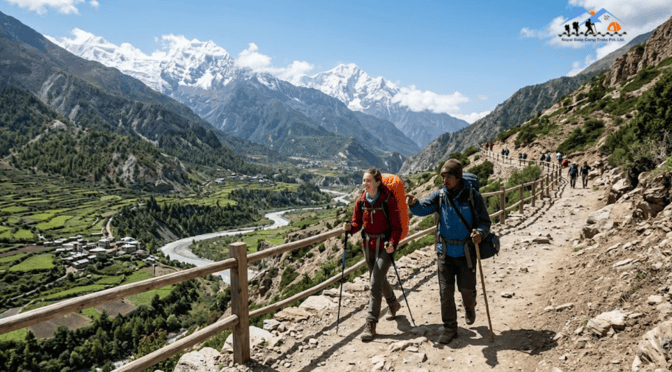
Deep within Langtang National Park, Lama Hotel Langtang remains as one of those special places where it feels like time slows down and nature talks louder than words.
Lama hotel is not a luxury lodge, but rather a humble scattering of teahouses, draped in foggy forest next to the roaring Langtang River.
For trekkers starting their journey from Syabrubesi, this hotel is their first point of real connection to the wildness of the Himalaya and the entrance to the heart of the Langtang Valley Treks.
At an approximate elevation of 2,470m above sea level, Langtang Lama Hotel offers new hikers to the Himalayas what all weary trekkers are craving — a place to relax, warmth and comfort and a warm bowl of steaming dal bhat served with a smile.
The trail to Lama takes trekkers through bamboo and rhododendron forests filled with birdsong.
You will feel as if you are walking through a postcard that is alive.
Every step here is simply a whisper for adventure.
The air is filled with the aroma of pine and earth.
The evenings glow with the warmth of the woodfire and the nights are filled with the distant hum of waterfalls flowing.
This is the point where you will get a teaser of what the Langtang trek route encompasses — wild, pure and unforgettable.
Where is Lama Hotel located in the Langtang region?
Lama Hotel Langtang Nepal is a small settlement within the Langtang National Park, which is located about 12 kilometers north of Kathmandu.
This hotel is located along the route to Langtang Valley, which takes about 6 to 7 hours of hiking from Syabrubesi, the starting point of the trek.
This village is the resting spot for trekkers doing Langtang treks and lies next to the Langtang River, surrounded by dense forests of rhododendron and bamboo.
Lama Hotel Altitude and Distance from Syabrubesi
Altitude: 2,470 m / 8,104 ft
Distance: ~11 km from Syabrubesi
Trekking duration: 6 to 7 hours
The trek itself is a beautiful contrast, beginning from low, warm riverbanks and slowly rising into cool forested woodland slopes.
You will cross suspension bridges, hear the rush of the Langtang Khola and see the sunlight shining through green forests.
Thus, it is an ideal place to acclimatize before travelling to higher altitudes along the route to the Langtang Valley Trek.
Permits and Trail Access through Langtang National Park
Before starting your trip, trekkers are required to obtain two things:
- The Langtang National Park Entry Permit, which will allow you access to the conservation area.
- TIMS Card (Trekkers’ Information Management System), used for tracking avalanche-prone group safety and records of rescues.
These can be purchased in Kathmandu (Nepal Tourism Board) or at the entrance checkpoint of the park at Syabrubesi.
The park entrance welcomes you to an existing refuge of biodiversity where you may see elusive Himalayan black bears, red panda or family troops of langurs looking for fruit and eating them in trees.
If you are trekking with Nepal Base Camp Treks, we will pre-arrange the permits for you, saving you valuable time and giving you a seamless departure.
The Trek Experience: The Path from Syabrubesi to Lama Hotel
Are you ready to adventure on one of the most picturesque trails in Nepal?
With thrill, nature and serenity, the trek from Syabrubesi reaches Lama Hotel Langtang, creating a meaningful journey.
As you move away from the small trading town of Syabrubesi, the trail quickly draws you into the wilderness — mossy forest, flowing rivers and the pulse of the Langtang Region.
This part of the Langtang Valley Trek is pure magic.
You’ll walk along the shimmering Langtang River, cross suspension bridges that sway as you walk, and walk below canopies of mossy trees!
Each step higher gets you closer to the heart of the Langtang National Park, where the crunching of your boots moves with the soft tickle of bamboo leaves.
Tip: Start early from Syabrubesi so you can reach the Lama Hotel before dark. The late afternoon light through the forest is unreal- golden light cutting through mist, turning every leaf into glass.
The Picturesque Walk through Rhododendron and Bamboo Woods
Imagine walking in a forest that is alive.
The trail steadily climbs through lovely bamboo groves and rhododendron woods, glowing red and pink in the spring.
Birds call to one another above you, monkeys leap from branch to branch in excitement and the cool mountain breeze has a faint smell of pine and wildflowers.
The trekking route hugs the Langtang River, sometimes even close enough that you can feel the icy spray on your legs.
You’ll take breaks at little tea houses serving you hot tea and simple meals of noodles or dal bhat — Nepal’s power meal for the trekker.
Each sip and noodle is that much more satisfying because you’ve worked for it!
Did You Know?
In April, the rhododendron bloom simply sets the whole Langtang Valley Trek Route ablaze (with color)! It’s one of Nepal’s most photo-worthy trails!
Spotting Wildlife and Experiencing the Charm of the Langtang Region
This section of the trail is a utopia for all nature lovers.
Keep your eyes peeled in Langtang National Park; you may find red pandas, Himalayan langurs and colorful pheasants.
At times, the forest suddenly goes quiet and a deer appears between the trees.
That’s the kind of trail it is, filled with quiet pleasure.
But the heart and soul of the Langtang Region come from its people.
Tamang villagers invite you into their tea houses with wide eyes and broad smiles, and the energizing food they offer has been providing food for trekkers for generations.
Most likely, you will finish your day sharing stories with fellow travelers around a popping stove, watching the stars peer down through the mist.
By the time you reach Lama Hotel Langtang, you will discover this is no mere trail — it is a kind of awakening.
Lama Hotel Accommodation: What You Should Anticipate
After a lengthy climb through bamboo jungles and river crossings, it feels like a reward to finally arrive at Lama Hotel.
This small settlement has only a few small tea houses that offer warm food, friendly faces and stunning views — wooden lodges that are simple but comfortable.
There are no luxuries to be found here, but there is comfort in the quiet and a sense of tranquility that urban life does not provide.
Lama Hotel Tea Houses and Facilities
Most of the tea houses in Lama Hotel Langtang are family-run lodges made from stone and wood — simple and bare but full of heart and spirit.
The rooms are small but clean and typically have twin beds and warm blankets.
Most of the bathrooms are shared, although several teahouses offer western toilets and sometimes limited hot showers for a small fee.
The power is solar-generated, so charging your phone or camera may actually cost a few rupees — but waking up without alarms to the sounds of birds and the mist of the mountains is worth it.
Travel Tip: Bring a sleeping liner, headlamp and portable charger as comfort gear for any Langtang Region trek.
Popular Food and Local Cuisine
Lama Hotel Menu is filling, homemade and sustenance fit for tired hikers.
The menu varies slightly from lodge to lodge, but you can count on always finding the mountain classic, dal bhat.
Dal bhat is a traditional Nepali dish consisting of rice, lentils, vegetables and pickle — just incredibly healthy daily sustenance.
Some more common favorites are:
- Tibetan bread drizzled with honey for breakfast
- Vegetable noodles or fried rice for lunch
- Making hot soup for cold evenings
- And that all-important local drinks – sea buckthorn juice and yak milk tea, community drinks packed with vitamins and nutrients.
Fun Fact! Sea buckthorn berries most commonly grow wild in the Langtang National Park and locals churn those berries into a sweet-tart juice as refreshing as it is healthy!
Why Lama Hotel Langtang is a standout for hospitality
Lama Hotel’s biggest gem isn’t the food or the beds — it’s the staff.
The Tamang family, who run the teahouses, treat their guests like family.
They smile after long days, they serve you extra tea without even having to ask and they remind you what hospitality is all about.
You’ll see them settled around the fire, trading stories about their existence in the Langtang Region or peddling homemade yak milk products, like butter and cheese.
Their warm hosting is as iconic as their window view.
When you come here, you’re not merely a passerby through — you’re part of a living culture that’s been hosting trekkers for centuries.
It’s since so many trekkers say, “The trek started at Syabrubesi, but the journey started at Lama Hotel Langtang”
Nearby Highlights: What Lies Beyond Lama Hotel
As you leave Lama Hotel Langtang, the Himalayas begin to unveil their secrets.
The path ahead is filled with stories of ancient monasteries, stunning viewpoints and welcoming mountain communities that embody the essence of the Langtang Region.
Here are the highlights beyond Lama Hotel every trekker should be looking forward to:
Langtang Village (3,430 m)
Following Lama Hotel, the next major stop is Langtang Village, which has risen from tragedy to triumph.
Rebuilt following the earthquake in 2015, it is now a story of resilience and strength.
Trekkers will appreciate this community in particular for its Tamang culture, colorful prayer walls and the still mighty Langtang Lirung (7,227 m) looming in the background.
You will find accommodating tea houses, fresh meals and yak milk tea, as well as the villagers, who make you feel at home with their smiles.
Tip: You do not want to miss the conversations with the villagers – their stories of survival and kindness add heart and soul to the trek.
Kyanjin Gompa (3,865 m)
A few hours past Langtang Village is Kyanjin Gompa, a sacred space and a place where trekkers often take a rest day.
This is a Buddhist monastery and the spiritual center of the Langtang Valley Treks, with glaciers and snow-rimmed mountains on all sides.
You can hear prayer chanting at dawn and the air vibrates with calm energy – one of the most peaceful places in the Himalayas.
Pro Tip: Take a walk around the village in the early morning – the first light on Langtang Lirung and Dorje Lakpa is pure magic.
Kyanjin Ri (4,773 m)
For trekkers looking for views you will remember for a lifetime, Kyanjin Ri is a must.
A half-day hike from Kyanjin Gompa, this leads to a panoramic ridge, a front-row seat for the entire Langtang Valley view.
It is an incredible spot to be at sunrise, as golden light spills over the glaciers while the prayer flags ripple in the wind.
What You Will See: Langtang Lirung, Gangchenpo, Dorje Lakpa and endless snow peaks all the way to Tibet.
Tsergo Ri (4,984 m)
If you find Kyanjin Ri beautiful, then you will find Tsergo Ri to be absolutely spectacular.
This is a full-day climb, and while challenging, the view is one of the most impressive 360° views of the Himalayas in Nepal.
At almost 5,000 meters, this viewpoint tests your endurance, and then you’ll feel rewarded with the quiet – it feels ancient.
Yak Cheese Factory (Kyanjin Gompa)
The Yak Cheese Factory is by the monastery and is one of the oldest high-altitude dairies in Nepal.
Set up decades ago with help from the Swiss, the factory produces the rich, smoky Langtang yak cheese from fresh mountain milk.
Fun Fact: People love it so much that the cheese is sold in Kathmandu!
Ideal Times to Hike to Lama Hotel Langtang
The season you choose for your Langtang Valley Trek will largely enhance your experience at Lama Hotel in Langtang, Nepal.
Each season represents a distinctly different time in the valley — from the bright colors and flowers of spring to the winter wonderland, each holds its own natural beauty for trekkers hiking in the Langtang Region.
Spring (March – May): The Season of Color and Clarity
Spring is one of the most popular trekking seasons in the Langtang Region.
The forest trail from Syabrubesi to the Lama Hotel comes alive with bamboo shoots, wild orchids and flaming red rhododendrons.
Days are warmer & clear for great photography, and oftentimes, the skies reveal Langtang Lirung and its natural beauty.
Average Temperature: 10°C to 20°C (during the day), cool at night.
Highlights: Colorful forest settings, moderate temperature, beautiful foliage.
Autumn (September – November): The Premier Season for Trekking
Autumn is the best time to visit the Lama Hotel Langtang — clear blue sky, mild day temperatures and cool mountain air that cant be beaten.
The air is cleaner and clearer after the monsoon and perfect for the high viewpoints of Kyanjin Ri and Tsergo Ri.
Average Temperature: 8°C to 18°C, chilly at night.
Highlights: Great mountain views, consistent weather and excellent trekking atmosphere.
Rainy Season (June – August): Silent Trails, Cloudy Weather
The monsoon season brings colorful foliage and movement within the Langtang Region, but rain and leeches can complicate treks.
At times slippery and very unpredictable, the trail from Syabrubesi to Lama Hotel presents some of the beautiful scenery the Langtang Region has to offer via the roaring Langtang River.
Temperature: 15° C to 25° C, with significant rain.
Highlights: Lush green, solitude, less travelers.
Winter (December – February): Still, Cold and Crystal Clear
If you enjoy quiet trails and cold mornings, then winter may astonish you.
The Valley Trek Route remains open, although often snowy, as many of the higher elevations, like Kyanjin Gompa and Tsergo Ri, have significant snow coverage.
You will enjoy beautiful mornings at the Lama Hotel, which is bone-chillingly cold, but the views are out of this world with the snow-capped peaks sparkling white in the clear blue skies.
Temperature: Day – 5° C to 10° C; Night -5° C to -10° C.
Highlights: Solitude, clear air and peaceful walking surface.
How to Reach Lama Hotel from Kathmandu
To reach Lama Hotel Langtang, Nepal, you’ll first travel from Kathmandu to Syabrubesi, the official starting point of the Langtang Valley Trek Route.
Located about 120 kilometers north of Kathmandu, Syabrubesi is a small mountain town surrounded by terraced hills and river valleys.
It is the gateway to the Langtang Region.
The highway takes the Pasang Lhamu Highway via Trishuli Bazaar and Dhunche, providing a picturesque but curved ride.
You will trek from Syabrubesi along bamboo woods and the Langtang River to Lama Hotel (2,470 m) via a 6–7 hour walk.
Kathmandu to Syabrubesi by Bus or Jeep
You can drive to Syabrubesi using a public bus, shared jeep or private jeep, depending on your budget and suitability.
Public buses leave every day from Machhapokhari (Balaju) for NPR 1,000–1,500 and take 7–8 hours.
They are slower but cheap and a great experience to have local travel in Kathmandu.
Split jeeps are faster and more comfortable, taking 5–6 hours for NPR 2,000–2,500 per head.
For a smoother ride, jeeps (NPR 15,000–18,000 per vehicle) are convenient and flexible — a blessing during the monsoon when roads are rough.
Pro Tip: If you’re trekking with Nepal Base Camp Treks, your jeep transfers, bus tickets and Langtang National Park permits are already booked, so you can focus on the excitement that lies ahead.
Key Tips Before You Reach Lama Hotel
Tip 1: Acclimatize Correctly: Lama Hotel Langtang sits at 2,470 meters. So, you should walk slowly, drink lots of water often and rest if needed before going higher.
Tip 2: Pack Lightly, Pack Wisely: Take layers, rain clothes, trekking poles, and a sleeping liner for warmth in mountain tea houses. A good Langtang trek packing list helps make your trek comfortable and smoother.
Tip 3: Take Cash: Tea houses on the trekking route do not take cards, nor will you find ATMs. Taking Nepali rupee cash will come in handy.
Tip 4: Get Permits Early: Arrange your Langtang National Park Entry Permit and TIMS Card in Kathmandu or at Syabrubesi. Without these, you won’t be allowed entry at checkpoints
Tip 5: Get Travel Insurance: Make sure you buy good insurance that covers high-altitude trekking and helicopter evacuation for peace of mind.
Tip 6: Eat Smart: Enjoy hot meals like dal bhat and drink sea buckthorn juice for natural energy on the trail. This food will supply you with energy for the adventure ahead.
Tip 7: Trek with Experts: You can select the best trekking agencies in Kathmandu, like Nepal Base Camp Treks handles transport, permits and safety, so you’re free to just enjoy the trip.
Why You Should Visit Lama Hotel Langtang
Lama Hotel Langtang Nepal is more than a place on the Langtang Valley Trek Route; it’s an experience.
It’s where the forest comes alive, where the Langtang River warbles by your side, and every breath is flavored with mountain air.
It’s that rare place where simplicity is luxury — a warm tea house, a dal bhat and the sound of rain on wood roofs.
For trekkers, Lama Hotel is the perfect combination, peaceful but never uneventful and isolated yet welcoming.
It has all that the Langtang Region has to give: raw nature, warm locals and eternal peace.
Whether overnighting here or gazing out over the riverside, this is where your relationship with the Himalayas truly begins.
You enjoy a smoother trekking journey with Nepal Base Cam Treks, who have helped more than hundreds of trekkers reach the Lama Hotel and complete the Langtang trek.
Book your Langtang trek today and discover the secret why the Hotel Lama is more than a stop.