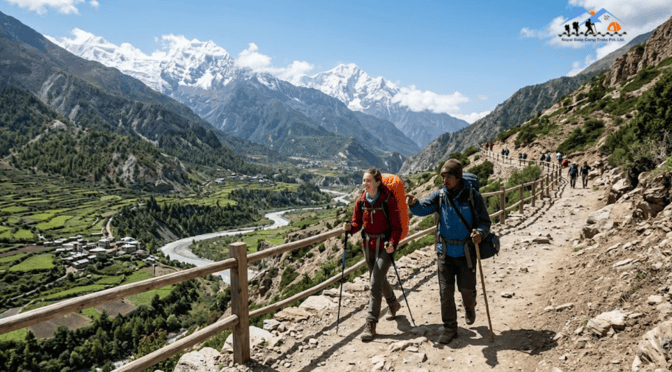
Kyanjin Ri Trek is one of the most beautiful short treks in Nepal.
It takes you above the quiet Langtang Valley, where snow peaks seem close enough to touch.
The trek culminates at Kyanjin Ri (4,773 meters), a viewpoint where you will see panoramic views of mountain ranges and Langtang glaciers, with prayer flags flapping in the breeze.
You don’t require a harness or climbing gear, just great vibes and curiosity.
It’s a trek for all who want a bona fide Himalayan experience without the long days and crowded trails.
From the forest just beyond Syabrubesi to the stone houses at Kyanjin Gompa, it feels like there is a story to every step.
It is calm, spiritual and lively.
At Nepal Base Camp Trek, we have helped hundreds of trekkers here every year with local guides.
We take care of everything, including tea houses and permits, so all you have to do is walk, breathe and take it all in.
So, let’s understand more about the Langtang Kyanjin Ri trek, where adventure feels like a lovely balance of nature, culture and pure mountain happiness.
Overview of the Kyanjin Ri Trek

At a Glance
Location: Langtang Valley, in Langtang National Park (north of Kathmandu, Nepal)
Duration: 6–8 days round trip
Highest Point: Kyanjin Ri (4,773 m)
Starting Point: Syabrubesi (1,550 m)
The hike to Kyanjin Ri is a brief but arduous journey through Langtang Valley, a place where the stillness of the mountains speaks more effectively than words.
From Syabrubesi, the hike winds through forests, suspension bridges, and small Tamang villages before it widens into the wide, glacier-broached valley of Kyanjin Gompa.
From here, a half-day hike leads to Kyanjin Ri (4,773 m) — a natural balcony overlooking Langtang Lirung, Yala Peak, and the shimmering Langtang Glacier.
It’s one of the few treks in Nepal that gives such dramatic views in less than a week.
You don’t come here for crowds or comfort.
You visit for the tranquility and for the occasional Himalayan moments of standing above the clouds, surrounded by prayer flags and feeling at peace.
Why Kyanjin Ri Should Be on Your List in Langtang?
Kyanjin Ri is the best-kept secret of the Langtang area, which is accessible yet rugged enough to feel unspoiled.
The view is breathtaking, yet what remains is the feeling of having been there: wind in your ears, flags flapping and sunlight spilling over the valley.
It’s a place that changes with every step.
As you climb, you stroll past grazing yaks, ice-fed streams and rocks covered with Buddhist mantras.
When you do reach the top, the world unfolds.
The vistas on Kyanjin Ri go on and on, from Langtang Lirung in front of you to Tserko Ri and Yala Peak on the horizon.
If you love peace, open skies and natural beauty that doesn’t overextend itself in a bid to impress, this is your haven.
Trek Duration and Level of Difficulty
The Kyanjin Ri trek is short, moderate and surprisingly generous for such a great reward.
It usually takes 6 to 8 days round-trip from Kathmandu, with daily walking of 5–7 hours.
The climb is gradual, not sudden.
The most challenging section is the final climb from Kyanjin Gompa to the top, which is around 3 hours — steep, but every single step is worth it.
No ropes, no technical gear, just fresh legs, deep breaths and a heart ready for the mountains.
You need to be careful of the Langtang region weather, which affects your trek experience.
Since the Langtang Kyanjin Ri trek route leads to the same destination as other Langtang trails, there are warm teahouses and welcoming locals along the way.
The experience is well-balanced with adventurous turns yet never overwhelming.
How to reach Kyanjin Ri from Kathmandu?
The adventure to Kyanjin Ri begins in Kathmandu, where travelers head north to the tranquil hamlet of Syabrubesi, which serves as the trailhead for the Langtang Valley trek.
It is a fun 7-hour adventure including beautiful hills, terraced farms, and the roaring Trishuli River, making for a perfect warm-up to the trek ahead.
By the time you reach Syabrubesi (1,550 m), you will already have sensed the rhythm of the mountain life.
From Syabrubesi, the Langtang trek route takes you into Langtang National Park, one of Nepal’s most picturesque and biodiverse regions.
From Syabrubesi to Kyanjin Gompa
The trail follows the Langtang Khola River and traverses suspension bridges and rhododendron forests.
After just a few hours, you arrive at Lama Hotel, which is a forest stop with no more than a few lodges, surrounded by pine trees with the sweet sound of flowing water.
Upon departing Lama Hotel, the scenery opens up into Langtang Village.
The valley floor is littered with colorful prayer flags and herds of yak.
Shortly after this, you reach Kyanjin Gompa (3,870 m), a stunning mountain village with Langtang Lirung and Yala Peak framing either side.
Mostly, this is a place where trekkers stop to rest, visit the yak cheese factory or even for day hikes around the area, before embarking on the Kyanjin Ri trek, the crown itself of the Langtang trek.
Transportation Options and Trailheads
Traveling from Kathmandu to Syabrubesi is easy and you can choose from multiple transportation methods.
Local Bus: The least expensive option of all. The public bus leaves early morning from Machhapokhari Bus Park and it takes around 8-9 hours to reach Syabrubesi.
Shared Jeep: This option is quicker and more comfortable, great for small groups. The ride will get you to your destination in 6 to 7 hours.
Private Jeep: This option is ideal if you like everything to be flexible. You could stop for pictures, tea or lunch in small roadside villages.
Most trekkers going to the Kyanjin Ri trek or one of the Langtang treks will book through a local operator such as Nepal Base Camp Trek, who together arrange your permits, guides and transportation all at once.
Planning will save you time and you’ll be able to leave with your permits for Langtang National Park and your TIMS card already sorted before you start.
Kyanjin Ri Trek Route and Major Destinations

The Kyanjin Ri trek is a short, straightforward trek that passes through the most scenic parts of the Valley trek.
It is short, easy to follow and you will see a change in scenery every day.
You begin in Syabrubesi and slowly ascend toward higher villages such as Lama Hotel, Langtang Village and Kyanjin Gompa, before the culminating approach to the summit of Kyanjin Ri.
Each destination is unique.
You begin in the forests and rivers, then move onto pastures and mountains covered with snow.
You will pass through local Tamang villages, drink warm tea in small teahouses and observe life move quietly in the Himalayas.
Lama Hotel: The Forest Stop
The first main stop is Lama Hotel, which is situated within Langtang National Park.
The trek follows the Langtang Khola River, along the edges of the forest, through pine trees and rhododendron.
It is quiet, green and cool, with a few easy walking paths, some small wooden bridges and simple lodges.
Lama Hotel is at about 2,470 meters and is built into the trees and greenery.
Most trekkers stop here for the night to enjoy the rest before the trail gets steeper.
Most of the local village teahouses will serve home-cooked Nepali meals and offer a comfortable bed to sleep.
Kyanjin Gompa: The Heart of the Valley
As you ascend higher past Langtang Village, the trees will retreat and the valley becomes wider.
Soon enough, you will arrive at Kyanjin Gompa (3,870 m), a quiet mountain village at the base of snow peaks.
This is one of the more serene destinations along the trek and it happens to be an important cultural stop as well.
At Kyanjin Gompa, in addition to the view of the high peaks, you can visit the Buddhist monastery, watch the locals make cheese at the yak cheese factory and simply walk around the stone-built village.
Many trekkers will spend an extra day in this area relaxing and doing short day hikes, which include just simple trails to ridges and glaciers.
On clear evenings, the setting sun will turn the sky golden as Langtang Lirung and Yala Peak glow in sunlight.
Summit of Kyanjin Ri: The Last Climb
The last climb starts at Kyanjin Gompa and takes around 3 hours to reach the final Kyanjin Ri altitude of 4,773 meters.
The Kyanjin Ri trek is constantly uphill and it offers one of the best views that exist in Nepal.
As you look around, you will see Langtang Lirung, Tserko Ri, Yala Peak, and the glimmering Lirung Glacier all in one panoramic view.
No feeling will compare to the experience of being at the top of Kyanji Ri.
You can see your entire view of the Langtang Valley below, the glaciers are still sliding through the mountains and clouds are moving across the land slowly in the distance.
It is the pinnacle experience of the Langtang trek route, and one moment of every trekker’s journey.
Views and Sights from Kyanjin Ri
The views from Kyanjin Ri are what make this the jewel of the Langtang treks.
As you climb the Kyanjin Ri height, the entire Himalayan range opens up to you – peaks and glaciers with deep valleys stretching endlessly toward Tibet.
This is a view that makes climbing more than worthwhile.
You’ll be above the clouds, with Langtang Lirung and Yala Peak glowing in sunlight, along with Tserko Ri.
Down below is the Lirung Glacier winding its silver trail through the valleys like a frozen riverbed.
Each view is different magically with its own quiet, open and peaceful balance.
Panoramic Views of the Langtang Valley
From atop Kyanjin Ri, you see the entire Langtang Valley opening below you like a green and white carpet.
This beautiful contrast between the icy, steep Lirung Glacier and the warm village rooftops of Kyanji Gompa is one of Nepal’s most beautiful alpine scenes.
The massive Langtang Lirung dominates the skyline while Tserko Ri is stationed proudly on the other side.
The clouds shift and transform the valley every few moments.
If you’re a photographer or someone who enjoys hanging out quietly in nature, this view is one you will take home with you and cherish.
Sunrise and Sunset at Kyanjin Ri
For most trekkers, witnessing the sunrise at Kyanjin Ri is the best part of the whole trek through the Langtang Valley.
At the first glimmer of light, the peak of Langtang Lirung changes from grey to pink, while Yala Peak glows golden and the prayer flags flap delicately in the cold air.
In the evening, the sun sinks behind the mountains, filling the sky with orange and purple hues.
It’s the ideal time to sit and reflect on your experience.
If you leave Kyanjin Gompa early, you’ll make it to the top right at sunrise — the memory alone is worth it for every step.
Fun Fact: The best light for photos occurs anytime between 6:00 AM to 7:00 AM. Bring a thermos with tea, as it makes the short wait at the top so much more pleasant!
Trekking Tips for Kyanjin Ri

The Kyanjin Ri trek is brief, but it gains a significant amount of altitude; that’s why a little preparation can go a long way.
Here are 5 tips to make your Langtang Valley trek safe, comfortable and memorable.
Tip 1: Acclimatize at Kyanjin Gompa
Take a day (or two) at Kyanjin Gompa before you go for the summit.
Do some short day hikes to the Lirung Glacier or other ridges in the vicinity to acclimatize to the Kyanjin Ri altitude and reduce your chances of experiencing altitude sickness.
Tip 2: Walk Slow and Steady
The trail is steep and the air is getting thinner.
Maintain a relaxed pace and take short breaks along the Langtang trek route – that is the best way to enjoy the views and maintain your energy.
Tip 3: Choose the right season
Spring (March-May) and autumn (September-November) provide the best weather in Langtang National Park.
These seasons offer the best trail conditions and breathtaking scenery of mountains and valleys.
Tip 4: Eat well and hydrate
Drink plenty of water, avoid alcohol and eat the local food, like dal bhat, for energy.
Keep a lookout for rare Himalayan wildlife.
You can read more about them in our blog on Langtang National Park animals.
Tip 5: Be Smart and Light About Your Packing
In the Langtang region, the weather can change in an instant, so plan to layer.
Bring your gloves, warmer jacket, small med kit and sturdy shoes to walk in.
See the Langtang trek packing list guide for more ideas about things to pack.
Nearby Peaks and Side Hikes
Once your Kyanjin Ri trek is done, you can begin to explore nearby viewpoints, which will add even more excitement for you in the Langtang Valley.
Tserko Ri – Beautiful Vista
Tserko Ri (4,984 m), located on the eastern side of Kyanjin Gompa, is one of the best side hikes in the Langtang region.
The round-trip trail takes about 5–6 hours, offering stunning views of the Langtang Lirung, Langshisa Ri and the upper Langtang Valley.
This is a good hike with no one around; a great acclimatization hike or just for fun following your Kyanjin Ri summit.
Yala Peak – For the Brave
If you are a brave trekker and are after a little higher challenge without having to climb, Yala Peak (5,520 m) is a good option.
You will need one day from the base, which is close to Kyanjin Gompa, to get to the top with incredible panoramic views reaching into Tibet.
A lot of trekkers will find a way to combine Yala Peak with the trek to the Langtang Valley for the complete Himalayan experience.
Check Out Hidden Trails Around Langtang Valley
In addition to the main summits, the smaller ridges and short walks take you to yak pastures, rivers and glacier overlook points.
Your local guide with Nepal Base Camp Trek can talk with you about the trekking routes that you and your fitness level ultimately feel are the best fit, given your time.
Frequently Asked Questions
What is the length of the Kyanjin Ri trek?
The Kyanjin Ri trek usually takes about 5 to 7 days to trek from Kathmandu and includes travel to Langtang and acclimatization days.
Most trekkers will stay one extra night in Kyanjin Gompa before taking the time to summit Kyanjin Ri to get a better experience.
Do I need a guide for the Kyanjin Ri trek?
Langtang trek can be done independently with no guide, as it is marked well and you can always find a teahouse.
However, if you choose to trek with Nepal Base Camp Trek, you will be able to have better interaction with the culture, safety and support from an expert in that area.
What permits do I need to trek to Kyanjin Ri?
You will need a Langtang National Park Entry Permit and a TIMS card (Trekkers’ Information Management System) to trek.
These permits can be easily organized for you through a trekking agency or you can get them in Kathmandu before departing on your trek.
How challenging is the climb to Kyanjin Ri summit?
The climb from Kyanjin Gompa to Kyanjin Ri takes about 3 hours, with an uphill moderately steep slope.
The climb is not technical, however, because of the altitude (4,773 m), trekkers must take it slow and take breaks.