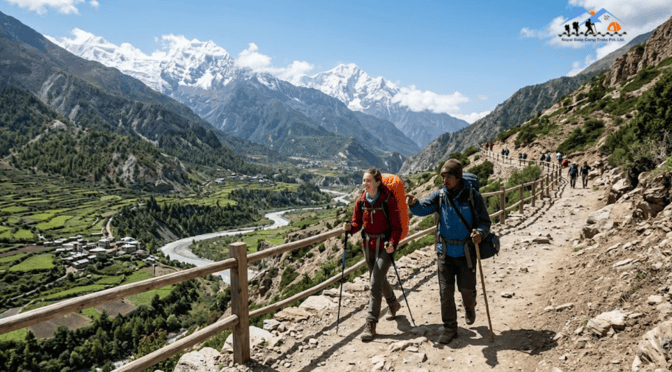
When you step into Langtang National Park, you step into one of the Himalaya’s richest wildlife zones.
Just a day’s journey from Kathmandu, you will find all the rare Langtang National Park animals, including red pandas, Himalayan black bears, snow leopards, musk deer and more than 250 colourful bird species.
This remote and rugged region of Nepal rises from river valleys to icy peaks, traversing a range of ecosystems at varying altitudes.
Subtropical forests are followed by oak and rhododendron forests, alpine meadows and blue sheep and Himalayan tahr.
For these reasons, Langtang National Park is biodiversity-rich, with rich flora and fauna.
If you trek the classic route to Langtang valley, you might see some langurs swinging through trees, hear the sharp call of a monal or, if you are lucky, you may spot a red panda slipping through the bamboo at dusk.
At Nepal Base Camp Treks, we love to help travellers enjoy wildlife in Langtang National Park safely.
With our eco-friendly trips, we support the conservation of the plants, animals and mountain culture that make Langtang a biodiversity hotspot.
Check our full Langtang Valley trek package to learn more.
An Overview of Langtang National Park

Langtang National Park is the first national park in Nepal to originate in the Himalayas and is one of the most diverse.
Spanning a staggering 1,710 square kilometers, the park enters the Himalayas from river valleys at 1,000 m and rises above 7,000 m at its peaks.
This amazing elevation creates all sorts of habitats that support Langtang National Park animals.
Langtang Trek at a Glance
Total Distance: Approx. 65 km return.
Typical trek duration: 6 -8 days (about 5-7 hours walking each day).
Highest point: Kyanjin Gompa, 3,870 m (and optional one-day hikes up to 4,500 m).
This guide provides a snapshot of the walk while emphasizing the park’s abundant flora and fauna in Langtang National Park.
Location and Ecosystem diversity
The park is 130 km north of Kathmandu against the border of Tibet.
Trekking begins in Syabrubesi with the checking of permits.
The track then climbs through subtropical forests, rhododendron slopes and open alpine meadows.
Each ecosystem has its own fauna and bird species so you can quickly see why Langtang is a Himalayan biodiversity hotspot!
How to Reach Langtang National Park and Get Your Permits
If you want to reach Langtang National Park from Kathmandu, then you have
From KTM, you will travel to Syabrubesi, which takes 6-7 hours by scenic jeep or bus drive from Kathmandu.
Whatever you do, before you get started, be sure to read our guide to the Langtang trek permit.
This guide outlines the costs, checkpoints and current park regulations, everything you need for a smooth start.
At Nepal Base Camp Treks, we take care of permits, transport and trustworthy guides.
Read more about our green trekking options on the Nepal Base Camp Treks homepage.
Iconic Species of Langtang National Park

Langtang is one of the best destinations in Nepal to view the Langtang National Park animals in their natural habitat.
Forty species of mammal live in its forests and alpine slopes, offering wildlife enthusiasts a chance to see rare Himalayan species every time they hike the park.
The Rare Red Panda
The red panda is the park’s key species and primary species that is beginning to gain awareness among hikers.
A red panda occupies a bamboo habitat at elevations between 2,000 and 2,800 m.
They are nocturnal and tend to be the most active in low light at dusk and dawn.
You should trek quietly and socially distance yourself to “view”, not “disturb” the red panda’s behaviors & conservation.
By moving slowly enough to catch a glimpse of a red flash in the green bamboo.
Himalayan Black Bears and Their Habitat
Himalayan black bears go through oak and rhododendron forests and feed usually at night.
It’s a good idea to plan all your hikes in daylight hours and check on the Langtang Valley trek difficulty if you plan to do your trekking after dark.
Avoiding carrying any loose food limits attracting bears, which enhances the safety of the powerful animal and its visitors as well as protects the unique biodiversity of the park.
Snow Leopards, Musk Deer, and Other Unique Species
High above 3,500 m, snow leopards, blue sheep, Himalayan tahr, goral and elusive musk deer can all be found.
These Langtang National Park animals can be seen on rocky slopes and high meadows.
Each species serves a key function in balancing the fragile high-mountain ecosystem, demonstrating just how unique the wildlife in Langtang National Park truly is.
Birdlife in Langtang National Park

Langtang National Park is a wonderland for bird watchers.
There are 250+ recorded bird species in the area, including:
- Himalayan monal – Nepal’s national bird
- Satyr tragopan and blood pheasant
- Himalayan griffon, bearded vulture and golden eagle
- Ibisbill, rosefinch, warblers and many common forest song birds
This rich species list demonstrates the park’s amazing biodiversity and well-balanced ecosystem.
The lower valley and bamboo forests are alive with thrushes and minivets.
The mid-altitude rhododendron slopes are alive with the colors of monals and tragopans.
Higher up, griffons and bearded vultures exploit the thermals, while ibisbills patrol glacial-fed rivers.
Birds are integral to the flora and fauna of Langtang National Park and play an important role in seed dispersal and promoting healthy habitats.
They are most active at dawn and dusk, when light is easiest and it is often quiet enough to be still and observe them.
Quiet sections of the trek through Langtang Valley provide the opportunity to see many bird species and to develop a real sense of environmental awareness.
Fauna and Flora Beyond the Animals

For different Langtang National Park animals, their natural habitat are in different vegetation zones of the Park
Subtropical forests (1,000–2,000 m): sal, pine, alder, bamboo
Temperate forests (2,000–3,500 m): oak, maple, and dazzling rhododendron
Alpine meadows (3,500–4,500 m): juniper, dwarf rhododendron, tough grasses
High Himalayan zone (above 4,500 m): lichens and tiny flowers of the glacier
Each of these green layers is the starting point of all fauna and flora in Langtang National Park – and the diversity in the area it generates.
What trekkers should know?
Each of these zones supplies both food and shelter for the variety of wildlife in Langtang National Park – from insects and birds to blue sheep and Himalayan tahr.
Rare Himalayan herbs, such as jatamansi, also grow here as part of the continued conservation of Himalayan plants.
Healthy plants also protect us.
Roots bind soil, prevent landslides and keep our mountain springs flowing.
To support this sensitive ecosystem, please stay on the marked trails, carry all of your waste with you, and never pick flowers or herbs.
By observing the changes in the forest at different altitudes and at different times of year, trekkers will begin to see how plants keep animals and the landscape alive.
These living landscapes are the essence of Langtang’s natural beauty.
Wildlife Conservation Programs and Challenges in Langtang National Park
While it’s fun to enjoy watching the wildlife found in Langtang National Park in Nepal, protecting those creatures is also important.
The Langtang National Park is home to a variety of animals, including endangered species such as the red panda, Himalayan black bear, and snow leopard, among others.
To help safeguard these protected Langtang National Park animals, an effort serves to connect science, local engagement and policy.
Key conservation efforts:
Species protection: Anti-poaching patrols, camera traps and wildlife counts are regularly conducted to monitor the presence of rare animals and help protect them.
Park regulations: The national park involves strict regulations before entering: camping is restricted to locations, waste must be carried out and permits are required to decrease pressure on forests and rivers.
Cooperative community: Local villages are involved in collecting seeds and planting trees; maintaining trails and augmenting the trekkers’ experiences by teaching them nature’s value and earning money to benefit nature.
Remaining challenges:
Climate change: Climate change dislocates snowlines and upsets feeding places and breeding cycles
Human activity: In particular, increased trekking and grazing animals have the potential to stress sensitive alpine meadows, unless managed effectively.
Natural disasters: Earthquakes and landslides can affect forest and water usage at times.
For trekkers in Nepal, you can help ensure your experience is sustainable by practicing sustainable trekking: walking on tracks, carrying out all waste and being respectful of quiet wildlife zones.
Every step you take toward thinking about the environmental experience you enjoy supports the surface of the park’s living ecosystem in fostering its rich biodiversity for all generations.
Wildlife Photography and Trekking Experience
To capture the images of the Langtang National Park animals in their home is a dream for photographers and trekkers alike.
Every corner of the trail can yield surprising wildlife moments in Langtang National Park – a red panda munching on bamboo, a Himalayan monal flashing its rainbow feathers or even blue sheep scaling rocky slopes.
Being able to photograph these moments takes patience and respect for natural animal behavior.
Best times of year to photograph
Spring (March–May): rhododendrons blossom and many animals feed in open meadows.
Autumn (September–November): with clear skies and long light for sharp mountain and wildlife shots.
These are also the seasons when the Langtang National Park animals are most active.
When you walk the Langtang Valley trek, go early in the morning or late in the afternoon to find the best light and the most wildlife.
Even a simple camera can generate memorable images as long as you are quiet and steady.
Tips for Ethical Wildlife Photography Ethics
- Keep a safe distance and do not chase animals.
- Use natural light rather than flash to avoid stressing animals.
- Carry out your waste back to camp, and stay on marked paths for the sake of conservation.
These small acts ultimately help protect the fragile ecosystem and continue the park’s rich biodiversity.
Whether you are a professional photographer or casual trekker, Langtang rewards patience and care with beautiful and rare images of the Himalaya that can tell powerful stories about how conservation matters.
Safety Protocols When Traveling to Langtang
The natural wonders that Langtang has to offer are breathtaking.
However, all trekkers should practice a few simple measures to ensure that their travels are safe for themselves and the Langtang National Park animals.
How to Handle an Encounter with Large Mammals
- Remain calm and retreat. If you encounter a Himalayan black bear or blue sheep, remain calm, talk softly and retreat slowly.
- Avoid sudden movements and don’t feed wildlife. The chance of a wild animal becoming startled from sudden movements could trigger that animal’s instinct to charge or follow prey.
- Travel during daylight hours. By starting out early each day and walking at a steady pace, the chances of coming across seasonal campers at night are diminished.
Park rules and permit requirements
- Permits: All visitors must have a valid Langtang trekking permit and a TIMS card. Each visitor should keep a valid permit and a TIMS card at each checkpoint.
- Stay on the established trails. Staying on established trails helps to protect many sensitive plants and animals and, in the event of an emergency, will allow for easier rescue.
- Abide by all park rules and regulations. Many of the rules and regulations from parks are intended to help regulate campfires, solid waste disposal, animal excrement disposal, and group size, which ultimately protect wildlife and the surrounding communities.
By following these simple guidelines, trekkers can enjoy awe-inspiring peaks, rare animals and the tranquil flora and fauna of Langtang National Park while ensuring long-term conservation.
Frequently Asked Questions – Langtang National Park Wildlife
What animals can be found in Langtang National Park?
From all the Langtang National Park animals, there are more than 40 mammal species. Animals seen in Langtang National Park include: red pandas, Himalayan black bears, snow leopards, blue sheep, Himalayan tahr, goral, musk deer, and langur monkeys.
Can I see red pandas on the Langtang Valley trek?
Yes. Red pandas inhabit cool bamboo forests between elevations of 2,000 meters to 2,800 meters. Early morning or evenings are vital times to attempt to see these creatures while quietly trekking.
What kind of biodiversity is in Langtang National Park?
The park’s boundaries include subtropical forests, rhododendron slopes, alpine meadows, and all elevations in between form a complete ecosystem with over 250 bird species and rare plants.
Are there bears in Langtang National Park?
Yes, and bears in Langtang National Park include Himalayan black bears, which inhabit oak and rhododendron forests. When trekking, travelers should carefully follow all posted safety guidelines and be vigilant.
Do you need permits to travel and explore wildlife areas in Langtang National Park?
Yes. You will need a Langtang National Park entry ticket and a TIMS card. All park regulations help to fund conservation and limit use by travelers, while protecting the park’s plants and animals.
Conclusion – Why Wildlife in Langtang Makes the Trek Unforgettable
A trek in Langtang is more than just hiking in the mountains – it’s an encounter with wild nature.
From red pandas in bamboo forests, Himalayan black bears in rhododendron forests, to snow leopards on windy rocky slopes, the Langtang National Park animals create moments you will remember for life.
With every twist and turn of the trail, new sights and sounds abound to make one wonder why the wildlife in Langtang National Park is so special.
The range and variety of forests, meadows and glaciers in the park are a diverse but interconnected ecosystem where plants and wildlife are interdependent.
A harmonious ecosystem counts on healthy interactions in the antagonistic processes around us.
This remarkable biodiversity is not only alluring; it is a requisite for the source of clean water, fresh air and a local attribute to positive community health.
As trekkers follow responsible outdoor ethics – remaining on marked trails, carrying out all waste, and quietly observing wildlife – we help good conservation keep a healthy balance.
Regardless of your motives to travel here for nature photography, simple adventure or quiet contemplation in the greater ranges, Langtang offers some of the most unique combinations of absurd levels of beauty and discovery.
When you are ready to explore, contact Nepal Base Camp Treks to experience these landscapes sustainably and take back memories of a truly wild Nepal.