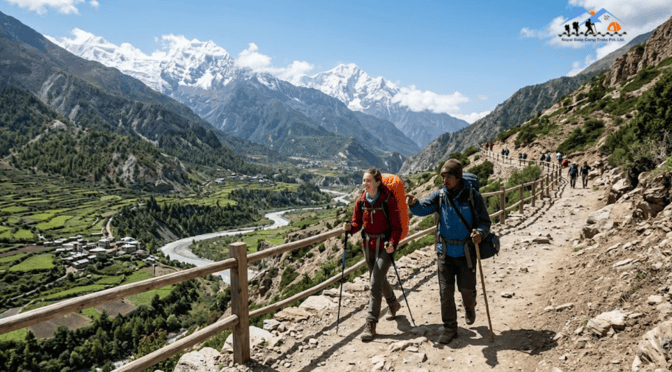
When looking for a great Himalayan trek that offers solitude, stunning mountain views and fewer crowds, you’re thinking about doing Langtang Trek.
Excellent decision.
It is one of the most beautiful and beginner-friendly treks in Nepal, offering breathtaking mountain views, traditional villages and Tamang culture.
But before you pack your bag and book your trip, there is one thing you need to take care of first:
Your Langtang Valley trek permits.
Yes, you’ll need two permits for Langtang trek to legally and safely enter the protected area.
In this simple, no-stress guide, we’ll go over:
✅ The Langtang trek permits you’ll need
✅ How much they cost (2025 updates!)
✅ Where to get them, step-by-step
✅ The current rules and regulations about trekking
✅ What to bring, what not to bring and professional advice from the trail
At Nepal Base Camp Treks, we’ve helped thousands of trekkers navigate the permitting process.
Whether it’s your first trip or fifth, this guide will help you obtain permits easily.
Are you ready? Let’s get started!
Do You Need a Permit for Langtang Valley Trek?
Yes, absolutely.
If you are trekking in the Langtang region, you need permits, period.
These are not bits of paper; they are your entry ticket into the beautiful Langtang National Park and allow you to walk the trails without any problem.
These are required if you are trekking in a group, with your friends or if you are a solo trekker (but there are new rules for this, which we’ll discuss).
- Langtang National Park Entry Permit
- TIMS Card (Trekkers’ Information Management System)
Without these permits, there will be no getting past a checkpoint, eg, Dhunche or Syabrubesi.
People have been turned around and fined before.
Quick Tip: The Nepalese government has officially announced that, as of February 15, 2025, onward, you must employ a licensed guide when trekking in Langtang. So, you can no longer be a solo trekker in Langtang.
So yes, you need a permit for Langtang trek and you are also required to have a Langtang Valley trek guide.
What Permits are Required for Langtang Valley Trek?
Now, let’s understand what Langtang Valley trek permits you need.
All foreign trekkers are required to carry two permits in the Langtang region, which are:
Langtang National Park Entry Permit
The Langtang National Park entry permit is your official entry into the Park – one of Nepal’s oldest and most scenic protected areas.
The park consists of dense forest, wildlife of Nepal (including the red panda!) and traditional villages, all of which combine to create the awesome trek you will undertake.
Children under the age of 10 do not require an entry permit.
Whether you are on a simple hike or trekking the whole route of Langtang Trek, you will need this document at all checkpoints.
TIMS Card (Trekkers’ Information Management System)
TIMS card is a permit you’ll need for every trek in Nepal.
It is used to register your trek and track you for your safety while trekking in the high altitude of langtang trek.
It monitors trekkers’ movements and is crucial in emergencies such as earthquakes or landslides.
There are two types of TIMS card, one for group and another for solo.
But, as per the new law of Nepal, every international trekker will need to trek with a licensed guide in Langtang region.
The individual TIMS Card still technically exists, but you can not use it for the Langtang trek.
How Much do Langtang Trek Permit Cost?
From the overall cost of Langtang Trek, only a fraction will go towards the permit cost.
Here’s what you can expect to pay for each required permit for the Langtang Valley Trek in 2025.
We’ll keep it straightforward and clear.
Langtang National Park Entry Permit Cost
The fee for the Langtang National Park Entry Permit is NPR 3,390 ($25) with 13% VAT (tax) for foreign trekkers.
SAARC citizens are only required to pay NPR 1,695 ($12) for the Langtang National Park Entry Permit (includes VAT as well).
Note that children under 10 years of age enter for free.
This is mostly valid for the full trek duration, unless you enter and exit the park.
You will be asked to show it at checkpoints, such as Dhunche and Syabrubesi, so you shouldn’t lose it.
TIMS Card Cost (Trekkers’ Information Management System)
The TIMS card is about safety.
Neal used to have two kinds of TIMS: one for solo treks and one for group treks.
As of February 2025, solo trekking in Langtang is banned.
So, every trekker will need a Group TIMS, available through a licensed guide or trekking agency.
The Cost of TIMS is $10 for foreign trekkers.
If you booked through a trekking agency, such as Nepal Base Camp Treks, we take care of this for you and you don’t need to worry.
Where and How to Get Langtang Trek Permits?
Now, you know which Langtang Valley trek permits to get and how much it will cost.
But now you’re probably thinking:
“Where do I get the permits for Langtang Valley Trek?”
Let me make this real simple for you.
Option 1: Get Your Permits in Kathmandu
The easiest and most common option is to get both permits before you trek in Kathmandu.
You can visit the Nepal Tourism Board (NTB) office, located at Bhrikutimandap.
The office operates on weekdays and it is quick if you plan ahead.
You can get both the Langtang National Park permit and the TIMS card on the same day (they should sell/issue them together).
Many trekkers stop at these entry points a day or two before they travel to the Langtang trail.
Option 2: Get Your Permits at the Entry Point
Don’t worry if you forgot to get them at the NTB office in the city.
You can also obtain your permits at the entry points, such as Dhunche or Syabrubesi, which is the gateway to your Langtang Valley trek route.
The officers at the entry points check your paperwork and on the spot issue your permits.
Tip If you book your trek with a trekking company like Nepal Base Camp Treks, then we handle all of this for you.
Documents & Requirements to get your Permits
Before collecting your Langtang trek permits, ensure that you have all your required documents in a neat little bundle.
It’s a fairly simple process, but you want to make sure you are organized and prepared.
Whether you get your Langtang Valley trek permits at the Nepal Tourism Board in Kathmandu or at the entry points of Syabrubesi or Dhunche, the documents you need will always be the same.
Here’s what you need:
- Your original passport (a copy won’t be accepted)
- Two passport-sized photos (for the TIMS card)
- The basic details of your trekking route itinerary
- Enough Nepali rupees/cash to pay for the permits (as they often don’t accept cards)
From this information, the officials will fill out some paperwork and then ask you to sign.
What If You Forget Something?
If you forget your photographs, no big deal.
There is usually an inexpensive photo booth right near the permit counters in Kathmandu.
If you forgot your passport, however, that is a bigger problem.
As it is required for issuing official permits, you would have to go back.
Also, don’t try to use someone else’s permit or to photocopy it; permits are personalized and tied to your passport number.
You will be checked at several checkpoints along the Langtang Valley Trek route by officers checking your permits.
How long are the Langtang trek permits valid for?
Okay, you have your Langtang Valley trek permits.
But how long do they last? Are there any exceptions to the rule?
Let’s keep it simple.
Permit Validity: How Long Is It Valid For?
Once you purchase the permit for Langtang Treks, they are valid for the whole time you are on the trail, as long as you don’t exit and re-enter the park.
So if you are trekking for 7 days, 10 days, etc, all in one go, you are fine.
However, if you exit the park and want to return another day, you will need to purchase another permit.
Do Children Require Permits as Well?
If you have a child, here’s the best news:
Children under age 10 don’t require a Langtang National Park permit or TIMS card.
However, they do have to be registered and you will need to show their passport at the permit counter.
Is it Possible to Get a Refund?
The short answer – unfortunately not!
Once your Langtang Valley trek permits have been issued in your name and passport, the fee is non-refundable, even if you decide to change your plans or do not trek.
So, make sure you are totally set on your travel dates before you get your permits.
Or let a team like Nepal Base Camp Treks take the stress out of your plans.
Look After Your Permits
Don’t crumple, lose or laminate.
The officials will stamp your permits at various checkpoints along the route, so keep your permits easily located within your jacket or daypack.
Penalties of Trekking without a Permit
Thinking about skipping the permitting process?
Don’t do it. Seriously.
Trekking in the Langtang without a permit is not only illegal, it can lead to many obstacles on your quest.
What Happens If You Don’t Have A Permit?
There are multiple checkpoints along the route of the Langtang Valley Trek, especially at Syabrubesi, Dhunche and later in the trail.
Park Rangers and/or the police check every trekker’s documents.
Here is what could happen if you don’t have a permit:
- You will be fined on the spot, in many cases double or more than the previous fees.
- You could be forced to turn around before you even start your trek.
- Without a permit, they could confiscate your passport for some time or delay your travels.
None of that will be fun when you want to be enjoying the mountains.
What If There Is An Emergency?
Permits serve an important function for safety.
If there is an emergency, be it an earthquake, landslide or altitude sickness, rescue teams always rely on your TIMS card and registration data.
No permit means no tracking system, leading to delay in help.
Langtang Permit Rules & Regulations You Must Know
Before heading out on your adventure, it is important to know the main regulations in the Langtang area.
These permit regulations are for your safety and to help protect the national park.
Rule 1: You Need a Permit – No Exceptions
Anyone trekking in the Langtang area will need a Langtang National Park permit as well as a TIMS card.
If you don’t have Langtang Valley trek permits, you will likely be stopped at checkpoints such as Syabrubesi or Dhunche and can expect to either be fined or sent back.
Rule 2: Be Honest on Your Application
When writing your full trekking route on your permit application, you should be fully transparent.
This is particularly important if you will head for any side trails to places such as Ganja La Pass or Gosainkunda.
This helps ensure that the information is correct in the system and is also useful in the case of an emergency.
Rule 3: Be Aware of Local Safety Regulations
Langtang is a high-altitude region that is susceptible to earthquakes and landslides.
Always remain on the marked path, listen to the advice from your guide and don’t try to take shortcuts by cutting corners.
Rule 4: Be Respectful of the Environment
Please do not litter, disturb wildlife or take plants as this is a protected area.
Please be respectful of local customs when passing through villages or religious sites and places that have prayer flags.
Do You Need a Guide for Langtang Trek?
If you have been asking yourself, “Can I do Langtang trek without a guide?” then the answer is quite simply, no more.
As of February 2025, the government requires foreign trekkers in the Langtang Valley Trek to hire a licensed guide.
This regulation was implemented to underscore trekking safety as well as the frequency of accidents among lone trekkers, lost or missing and injured.
So, while you may have undertaken other solitary hikes or own a GPS, you will require a guide for Langtang.
But not just any guide, but one who is licensed and registered by the Nepalese government.
More Tips for a Stress-Free Permit Process
Here are some additional tips to make your permit process stress-free and hassle-free:
Tip 1: Try to get your permits a day before departing Kathmandu, especially during the peak seasons.
Tip 2: Employ a registered agency of Trekking Agencies’ Association of Nepal (TAAN), such as Nepal Base Camp Treks.
We will take care of all of the paperwork, arrangements and attention of your guides.
Tip 3: Carry enough local cash, especially Nepali rupees, so that you can pay for permits when you are collecting them from an entry point.
Tip 4: Make sure you have run through your papers: passport, photos and itinerary the night before you leave.
Tip 5: And finally, don’t hesitate to ask questions! Understanding what you’re getting yourself into while trekking makes you feel more secure and confident!
Conclusion
It is mandatory and easy to get the right permits for Langtang Trek.
With Nepal Base Camp Treks, we will ensure that you have all the paperwork, permits and your guide sorted before you even step a foot on the trek.
Our aim is to allow you to enjoy your trek without having to deal with the headaches of paperwork and delays.
You want memories, stories and views; not headaches, paperwork and delays.
We will do all the backend work and help you get all your permits in a legal way.
The only thing you should do is book your trek.
The mountains are waiting.
Recommended Read : Packing list for Langtang Valley Trek
FAQs About Langtang Valley Trek Permits
Can I buy the Langtang permit online?
Not yet. You will need to collect the Langtang Valley trek permits from the Nepal Tourism Board, Kathmandu or the entry point like Syabrubesi.
Is TIMS card required in 2025?
Yes. Any foreign trekkers require a group TIMS card that can be obtained through a licensed guide or agency.
Individual TIMS cards are not acceptable for Langtang anymore.
What if I forget my passport?
Unfortunately, you won’t obtain a permit without your original passport.
You’ll want to take this with you when you sign up for it, along with passport photos and fees to pay.
Do children trek for free?
Yes! All children under 10 do not need to pay the Langtang National Park permit or the TIMS card, but still need to be registered.
What if I lose my permit on the trail?
You have to inform your guide as soon as you notice or the nearest checkpoint.
A lost permit will result in fines or will exclude you from further entry.