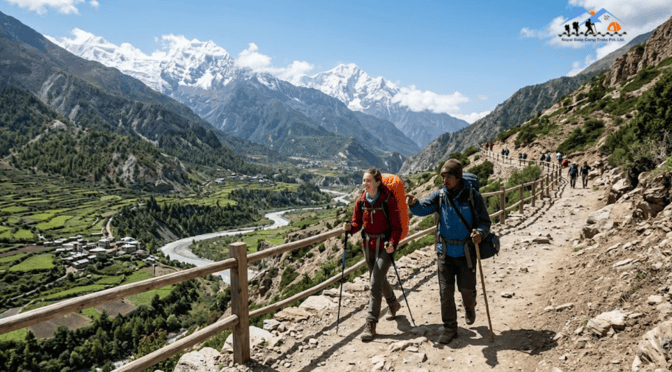
Think of this.
You’re sitting in a peaceful Himalayan valley, encircled by white peaks and soft pine forests.
You take a deep breath, and it feels different.
Not painful. Just… thinner. Lighter. As if your lungs have to reach a little deeper to find what they’re used to.
That’s the Langtang trek altitude affecting your body.
The Langtang Trek gives you a gentle climb from 1,503 meters (4,931 ft) at Syabrubesi to 4,773 meters (15,659 ft) at Kyanjin Ri, the highest point of the trek, showcasing stunning views of mountains, glaciers and flowing rivers.
That’s more than three vertical kilometers of elevation gain in just 7-8 days.
Here’s a brief altitude profile of the Langtang treks:
| Location | Altitude (in meters) | What’s there? |
| Syabrubesi | 1,550 m | Trek start |
| Langtang Village | 3,430 m | Cultural Tamang villages |
| Kyanjin Goma | 3,870 m | Monsatery and Yak cheese factory |
| Kyanjin RI | 4,773 m | Stunning scenery from a lower viewpoint |
| Tserko Ri (Optional | 4,984 m | The highest viewpoint and breathtaking panoramic views |
Why Altitude Matters on This Trek

As you go up, the oxygen gets lower, so your body has to work harder to breathe, walk and even sleep.
That is why learning the altitude of Langtang is absolutely important to a safe and enjoyable trek.
From our experienced guides at Nepal Base Camp Treks:
“We always tell first-time trekkers: The mountains won’t run away. Take your time. It’s not how fast you get to the top. It’s how you let your body acclimatize each step of the way.”
At Nepal Base Camp Treks, we’ve guided over 1,000 trekkers on the Langtang trek safely and the majority were first-timers.
Our team includes certified local guides trained in high-altitude rescue and AMS response.
They live here, hike here and know every bend of this trekking trail.
You’re in good hands.
Pro Tip: At 3,870 m in Kyanjin Gompa, oxygen levels are just about 64% of what they are at sea level!
Langtang Trek Starting Point – Syabrubesi Altitude
Welcome to Syabrubesi, a peaceful Tamang village perched in the hills at 1,550 meters (5,085 ft).
This is where your Langtang journey starts, both physically and psychologically.
What is Syabrubesi Like?
- At the edge of the Langtang National Park, it is the official start point for most Langtang valley treks.
- It’s approximately a 7–8 hour scenic drive (122 km) from Kathmandu, passing through rice terraces, deep valleys and towering Himalayan ridges.
- It’s a popular choice for the first-night rest and refueling before starting the trek.
Langtang Trek Altitude Profile Day by Day
Have you ever found yourself wondering, “How much do I have to climb each day?”
This section is your visual cheat sheet!
Whether you’re preparing gear, pacing your breath or just psyching yourself up, a clear-to-understand altitude profile makes all the difference.
Day-wise Langtang trek Altitude | Elevation Gains Table
| Day | Route | Distance in km | Altitude in meters | Duration |
| 1 | Drive Kathmandu → Syabrubesi | 122 km (road) | 1,550 m / 5,085 ft | 7–8 hrs drive |
| 2 | Trek Syabrubesi → Lama Hotel | 11 km | 2,380 m / 7,808 ft | 5–6 hrs |
| 3 | Lama Hotel → Langtang Village | 14 km | 3,430 m / 11,253 ft | 6–7 hrs |
| 4 | Langtang Village → Kyanjin Gompa | 6 km | 3,870 m / 12,697 ft | 3–4 hrs |
| 5 | Acclimatization Day (Hike to Kyanjin Ri / Tserko Ri) | 6–10 km (optional) | Up to 4,984 m / 16,352 ft | 3–6 hrs |
| 6 | Kyanjin Gompa → Lama Hotel | 18 km | 2,380 m / 7,808 ft | 6–7 hrs |
| 7 | Lama Hotel → Syabrubesi | 11 km | 11 km 1,550 m / 5,085 ft | 5–6 hrs |
| 8 | Drive Syabrubesi → Kathmandu | 122 km (by road) | 1,300 m / 4,265 ft | 7–9 hrs drive |
Be it Langtang Valley Trail or Langtang Tamang Heritage Trail, both pass through the same route.
Did You Know? On the downward journey from Kyanjin Gompa to Syabrubesi, your body replenishes faster as oxygen levels rise step by step!
Highest Altitude on the Trek – Kyanjin Ri
After days of slow and steady climbing Langtang trek altitude, you’ll arrive at Kyanjin Gompa — a quiet mountain village surrounded by glaciers, prayer flags and snow-capped giants.
But if you’re craving just one more epic view (and you’re feeling strong), there’s a final challenge: Kyanjin Ri.
At 4,773 meters (15,655 ft), Kyanjin Ri is the highest viewpoint on the standard Langtang Valley Trek.
Hiking there is not mandatory, but it sure will be an unforgettable experience.
What the Climb Feels Like?
The ascent starts early in the morning, usually before daylight.
As you head there, your breath will be shallower, your steps will be slower and your legs will feel heavier.
Almost none of you will be talking on the way.
The whole crew will be focused, taking one step and one breath.
And then suddenly, the ridgeline opens and boom!
You will be rewarded with stunning panoramic views of beauty, which include
- Views of Langtang Lirung (7,234 m) dominate like an ice fortress
- Tserko Ri glimpsed above the valley
- Sheets of glacier glinting below
- Total silence, with only the breeze and your own awe
Pro Tip: Wake up early. Take gloves, take a buff, take your best camera – you won’t ever want to forget what the world looks like from up there.
Understanding AMS – Altitude Sickness In the Langtang Trek
While climbing the Langtang trek altitude, you may be doing everything right — trekking slowly, drinking water and admiring the mountains.
Suddenly, your head feels heavy. You don’t feel as hungry. You feel weird.
That’s your body holding up a small red flag called Acute Mountain Sickness AMS.
It might surprise even the healthiest of trekkers, especially if climbing over 2,500 meters and the Langtang Valley Trek goes far above that.
So What Exactly Is AMS?
AMS happens when your body is not able to handle the reduced oxygen levels in the air at altitudes of over 2,500 m, a height you’ll have reached by Day 2 of the Langtang trek.
Think of it as your body complaining: “Hey! You’re going up too fast for me to keep up!”
Symptoms of Altitude Sickness You Shouldn’t Ignore
- Headache (pounding, particularly at night)
- Nausea or loss of appetite
- Dizziness
- Weakness or fatigue
- Insomnia
- Shortness of breath even while resting
These can strike as early as Langtang Village (3,430 m) or Kyanjin Gompa (3,870 m), so staying alert is your best form of defense.
The Serious Stuff: HAPE and HACE
Untreated, mild AMS progresses to more serious conditions:
HAPE (High-Altitude Pulmonary Edema): Fluid in the lungs. Causes gurgling breathing, extreme fatigue and blue lips/nails.
HACE (High-Altitude Cerebral Edema): Brain swelling. Causes confusion, hallucination and loss of coordination.
Both are deadly without instant descent and medical care, but both are also fantastically unlikely when hiking intelligently.
How to Prevent AMS on Langtang Trek

The Langtang trek altitude climbs from grassy river valleys to white ridges in only a matter of days.
That is why it is necessary to stay one step ahead of AMS (Altitude Sickness) before it catches you on the Langtang trek.
So here are tips to avoid it, get stronger each day and get the most out of the trek:
AMS Prevention Strategies Most Trekkers Miss
- Stay Hydrated (More than you are probably thinking)
You need to drink more water at high altitude because we lose fluid faster through breath and sweat, even if we are not sweating.
Drinking 3 – 4 liters a day will ensure you have enough oxygen flowing and will help reduce the chance of getting altitude headaches.
Avoid alcohol and caffeine because they will dehydrate you.
- Take Your Time and Use Trekking Poles
While in Langtang, the trail climbs quite quickly, particularly between Lama Hotel and Langtang Village.
Walking slowly is not weakness; it is a technique.
Trekking poles are great because they can help distribute the effort, keep a rhythm and lessen the impact on your knees or lungs, particularly on long uphills.
- Eat Light and Warm
You will lose a lot of energy while hiking, which leads to your body struggling to digest food at altitude.
Eat and stick to light and warm food, such as garlic soup, dal bhat or thukpa.
You shouldn’t skip meals even if you are not hungry.
- Pack Wisely for Altitudes
Carrying good gear can make or break your trek.
Follow a correct Langtang trek packing list to bring layered clothing and essential trekking gear, all of which will help keep you warm, safe and without AMS while trekking at high elevations.
- Eat local garlic soup
Garlic, besides being a typical staple of local Nepali food, is a natural vasodilator, so it can help in blood circulation when at higher Langtang trek altitudes.
Garlic soup (along with dal bhat) is available in most tea houses or guest houses and it helps reduce headaches and dizziness.
- Drink ginger or Tibetan butter tea
Warm drinks, like ginger tea, are helpful for digestion as well as keeping your body warm while maintaining hydration.
Tibetan butter tea is also a solid source of calories and salts to help keep your energy up, just don’t go overboard with sugary drinks or caffeine.
- Do Deep Breathing or Yoga before bed
Slower, controlled breathing before sleep will increase oxygen uptake and potentially reduce the feeling of restlessness during the night.
NBCT provides a Langtang Valley trek guide who often teaches trekkers basic mountain breathing exercises during relaxing dinners in the evenings.
- Sleep with a warm head and feet
Cold feet and a little head can lead to sleeping problems due to insufficient blood circulation at higher altitudes of the Langtang trek.
Wearing a wool cap and dry socks at night (even inside a sleeping bag) may reduce your discomfort and help reduce physical stress.
- Bring Chlorophyll Drops or Iron Supplements
Some hikers will take liquid chlorophyll (a plant-based supplement) to increase oxygen-carrying efficiency.
If you tend to run low on iron, you can have a supplement before your trek (with your doctor’s guidance) to improve oxygen capacity.
- Do Not Overexert Yourself in the First 3 Days
Do not push yourself to hike fast or overschedule the first few days with side trips.
The first 72 hours above 2,500 m are critical.
Always remember to take it slow (even if you feel great).
Acclimatization Tips for Langtang Valley
Acclimatization is your body saying, “I got this.”
However, it is not instant.
In the Langtang Valley, it is best to go up slowly and gain altitude gradually.
The biggest jumps in Langtang trek altitude are going from Lama Hotel to Langtang Village and then again to Kyanjin Gompa, so take your time.
This is why our NBCT Langtang trek itinerary includes a full rest day at Kyanjin Gompa.
This has nothing to do with taking a day off and everything to do with allowing your body to catch up with the drop in oxygen at altitude.
If you are feeling well at Kyanjin, do a short acclimatization hike up to a local ridge and then sleep lower.
This “climb high, sleep low” method is an effective way for your body to acclimatize without added stress.
“Our clients are always thanking us for that rest day,” says guide Suraj Lama. “It makes the summit hikes feel doable and fun, not horrible.”
Fitness Level and Pre-Trek Training
The Langtang trek’s difficulty is not due to trails with technical sections; it really comes down to your capacity for endurance at a high altitude.
You don’t have to be an athlete, but you need to be physically fit for climbing the altitude of Langtang trek.
We recommend setting your baseline fitness level for the trek at least 3–4 weeks ahead of time by walking 5–10 km every day, undertaking stair climbs or gentle uphill walks with a backpack.
This builds up strength for your legs and lets your lungs adjust to sustained efforts.
You can also do supplementary activities, such as squats and planks, that help you perform very well on the trek.
If this will be your first experience trekking, don’t worry – Langtang is suitable for beginners, provided it is approached smartly.
Most first-time trekkers do very well if they take their time, eat well and listen to their guide.
Emergency Evacuation and Rescue Options
While rare, if you develop severe AMS (such as HAPE or HACE), treatment requires immediate descent, which sometimes means a helicopter evacuation.
That’s why travel insurance (covering emergencies or helicopter rescue) is non-negotiable for climbing the Langtang trek altitude or any high-altitude treks.
NBCT guides are trained to recognize emergencies and can coordinate rapid rescue if required.
We also take daily pulse oximeter readings to monitor your oxygen levels and adjust your application pace as needed.
There is limited connection in remote areas like Langtang, but our team ensures you are never out of contact, via mobile signal or satellite call networks.
Pro Tip: Make sure you have your insurance policy number and emergency contact details in your daypack and do not rely only on your phone.
When is the Best Time for Langtang Trek Altitude?
The best times to trek Langtang are during Spring (March–May) and Autumn (September–November).
These seasons offer clear mountain vistas, blooming rhododendrons or golden forests and the most stable weather during Langtang Trek.
Stable weather means fewer delays, safer trails and better acclimatization.
Unpredictable rain or snow in winter and monsoon can lead to quicker elevation gains, increasing your altitude sickness risk.
Spring vs Autumn – Which is Better for AMS Risk?
Here’s the thing: both seasons are wonderful, but they provide different experiences and challenges.
Spring brings warm weather and colorful rhododendron forests, but the heat can trick you into drinking less water, which increases your risk of altitude sickness.
Autumn brings cooler, crisp air – ideal for slow trekking and more comfortable sleep, which helps your body acclimatize to altitude changes.
On the positive side, it’s when the Langtang National Park animals like red pandas, Himalayan tahr and langurs are more active
Pro Tip: Autumn has slightly less AMS risk as the weather is cooler and drier, making sleeping and oxygen inhalation easier. But both seasons are okay for beginners if you pace well and prepare well.
Should You Hire a Guide or Go Solo?
Thinking of doing the Langtang trek without a guide?
It may sound adventurous, but there are some things to think about.
As of April 2023, it is now a requirement in Nepal to have a licensed trekker guide if you want to trek in national parks or restricted areas (such as Langtang).
This was a new law to protect trekkers, help support local businesses and maintain trekking routes of Langtang and safety in remote travel.
Okay, there are probably guest houses every few days, but you will face changes in altitude, weather and long stretches without a signal.
Having a local guide will assist you with route navigation, altitude sickness assessment and learn more about the local cultures & locations you would never have been able to learn about without them.
Our advice: If this is your first trek, simply do it with a guide and porter. It is safer, wiser and now also a legal requirement.
Conclusion – Is the Langtang Trek Altitude Suitable for Beginners?
Yes, the Langtang trek altitude is suitable for beginners as long as you plan smartly and take your time.
The trek starts at a reasonably comfortable altitude in Syabrubesi and will take you through higher terrain, allowing enough time to adjust and acclimatise your body to your increasing altitude.
You can complete a trek like this if you plan every detail comprehensively, move steadily and mitigate the risks associated with AMS.
The Langtang Valley is beautiful, has fantastic trails, warm tea houses and allows you to connect with local culture without the build-up, like the Everest base camp trek.
So what’s our conclusion?
If you are new to trekking in the Himalayas, the Langtang trek has enough adventure, without being strenuous.
It is the perfect first-time experience of high-altitude trekking.
Book your Langtang treks with Nepal Base Camp Treks and we will make sure every step of your trek is one to remember and enjoy.