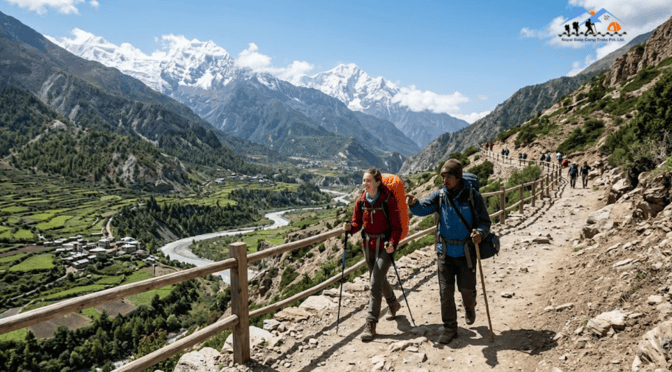
If you are on a trek in Langtang Valley, one question always comes up:
Should you hike Kyanjin Ri or Tsergo Ri?
Both peaks are exhilarating viewpoints, both start from the same village and both offer a non-technical summit experience that ranks among the best in Nepal, but they are not equal treks.
At Nepal Base Camp Treks, we have led trekkers into (and out of) both peaks for more than 2 decades and we have seen every type of trekker thrive (and suffer) on these adventures.
So instead of a simple pros-and-cons-based list, we will help you make the best determination, based on your fitness, trekking experience, altitude tolerance and self-exploration of what mountain moment you are really hoping for.
Whether you want a quick summit of 4,700+ meters at sunrise or a nearly 5,000+ meters Himalayan altitude push, this guide will help you choose right.
Quick Response – Simplest Way of Choosing Between Two Peaks

Here’s the simplest way to choose between Kyanjin Ri or Tsergo Ri in just 15 seconds:
If you want a shorter trek with moderate difficulty as well as a half-day hike with big views and lower risk, then choose Kyanjin Ri (4,773 m).
If you’re looking for an all-day high-altitude challenge with a 360° panorama of the Himalayas, then go for Tsergo Ri (5,033 m).
What’s amazing is that both peaks can be reached from the same Langtang Valley trek route.
Kyanjin Ri is suitable for novice trekkers or those seeking their first acclimatization hike, as well as for those interested in a sunrise trek.
While Tsergo Ri is for the seasoned and fit trekkers looking for that “I climbed above 5,000 m” moment.
If you are still not sure, read on! The whole details kind of matter.
Why These Two Peaks Matter on the Langtang Valley Trek
The Langtang Valley trek is one of the few trekking routes in Nepal that allows trekkers to get to two noteworthy Himalayan viewpoints without mountaineering gear.
Both Kyanjin Ri and Tserko Ri are located inside Langtang National Park and both start at the same point: Kyanjin Village (3,870).
So, this might make your choice much more challenging:
But Chill Out!
It will not require you to change your Langtang trek itinerary, just the change of your destination on one day of your trek.
One of these peaks presents a moderate but completely rewarding Himalayan summit experience to take home with you.
The other will provide a full expedition-style, high-altitude climb above 5,000 m in the air.
And if you plan your acclimatization well, you could hike both peaks in a row.
That is a true joy trekking in Langtang!
Side-By-Side Comparison of Kyanjin Ri vs Tsergo Ri
| Feature | Kyanjin Ri | Tsergo Ri |
| Altitude | 4,773 m | 5,033 m |
| Duration | 3-4 hours | 7-10 hours |
| Style of Trail | Steep but accessible and easy to follow | Rocky, long and exposed, with some snow in winter |
| Altitude Gain | Around 900 m | Approximately 1,200 – 1,300 m |
| Difficulty | Moderate | Challenging |
| Type of View | Close-up glacier view & sunrise behind Langtang Lirung | 360 degree view of the Himalayas, including portages to Tibet, Shishapangma (8,027 m) |
| Risk Level | Low to medium | High! (Any time reaching the 5,000 m zone increases AMS risk) |
| Crowds | More trekkers | Fewer trekkers, more wilderness feel |
| Rate of Success | Very high | Only if acclimatized and paced properly |
Kyanjin Ri – A 4,773 m Viewpoint Accessible for Almost Every Trekker

If you are choosing between a hike to Kyanjin Ri or Tsergo Ri, the first thing you need to understand is that Kyanjin Ri is the most accessible of the two peaks.
It’s the peak where we’ve witnessed nearly every type of trekker succeed, from first-time hikers to families to 55-year-old travelers.
The trail begins just behind Kyanjin Village (3,870 m) and then begins an upward path to 4,773 m.
It is a steep hike in places, but you don’t require any technical skills, so the Kyanjin Ri trek is an adventure most trekkers complete in about 3-4 hours total.
We, at Nepal Base Camp Treks, utilize Kyanjin Ri as the “acclimatization summit” for the Valley Trek.
It gives your body a controlled taste of a high, thinner altitude, before undertaking anything that may be more difficult.
This hike immediately rewards you with glacier views, a sunrise over Langtang Lirung and a viewpoint that feels so much higher.
What Does The Hike Feel Like
The hike starts off mellow, then becomes a zig-zagging ridge trail above you with prayer flags blowing.
The village keeps shrinking down the hill behind you, with the glacier growing larger in front of you and the snow peaks beginning to frame the setting sky like a theatre stage.
This is why trekkers will often call Kyanjin Ri a “short hike with a big payoff.”
The view from the peak shows you:
- Langtang Lirung (7,227 m), right in front of you
- Yala Peak and Langtang Glacier below
- Ganja La Pass, high to the south
- The full panoramic view of the valley behind you
It’s a peak that feels Himalayan, but will not leave you with the same kind of bodily punishment as a 5000 m ascent usually does.
Who is Kyanjin Ri best for
- First-time Himalayan trekkers.
- Anyone who wants a summery moment without extreme risk
- Trekkers who need one acclimatization day before heading to Tsergo Ri
- Photographers & Sunrise lovers
If you have one day for a viewpoint and want something guaranteed to feel worthwhile, this hike is what we suggest.
Tsergo Ri – The 5,033 m Summit for Hikers

Tsergo Ri is not your average day hike.
It is a serious day of walking at a high altitude.
You will be walking close to a full summit day of high altitude in 7-10 hours return, with long rocky stretches and a steep final ascent.
The views are very rewarding, you will witness a 360° view of Langtang Lirung, Dorje Lakpa, the high glacial basins and even Shishapangma (8,027 m) across the border in Tibet.
We treat Tsergo Ri like a serious altitude day. It is not a casual sightseeing day walk.
It requires you to plan for an early start, set a steady pace throughout the hike and closely monitor your body’s reaction to the thin air altitude.
Full reference must be given to high altitude; it is definitely manageable with acclimatization.
Reasons Trekkers Enjoy It
There is a physical change relatively near the final ridge to Tsergo Ri when the whole valley spreads out below you and your effort feels negligible in comparison to the vastness of the mountains.
When you are standing at 5,000 and looking out at glaciers with wind blowing around you, this is when the Tsergo Ri trek shifts from being just a hike to a memory you will likely forget in your lifetime.
The view from the top is not merely expansive – it is border-to-border:
- 360° Himalayan views
- Shishapangma (8,027 m) in Tibet
- The Dorje Lakpa and Ganja La ranges
- Langtang Glacier far below, like shattered ice
Who should go to Tsergo Ri?
- Trekkers who have already acclimatized (ideally after Kyanjin Ri)
- Anyone who not only wants a view, but is also looking for a physical challenge
- Fit hikers, endurance trekkers, and travelers used to altitude
- People who want to have a full Himalayan summit day
If you determine Kyanjin Ri or Tsergo Ri based on bragging rights, altitude or effort-to-reward ratio, the Tsergo trek is the winner.
Is it Possible to Hike Both Peaks?
Yes, but not the same day (unless you request a custom schedule)
In our normal Valley trekking plan, we don’t put Kyanjin Ri and Tsergo Ri together to allow for a proper pace, rest and acclimatization rate, as both peaks deserve to be appreciated at their own pace.
However, since we stay two nights in Kyanjin Gompa, you have options to choose from.
- Hike Kyanjin Ri as a shorter, warm-up peak
- Attempt Tsergo Ri the following day
- Or you can request a custom schedule to attempt both during your two-night stay
We work out the final plan after you arrive in Kyanjin Gompa based on your:
- Body’s reaction to altitude
- Physical fitness and energy levels
- Weather window
- How many days do you plan to be in the region?
You do not have to make this decision before we start trekking.
You can make your decision when your body tells you it’s ready and we will arrange the hike from there.
Altitude & Acclimatization
This is the one aspect of comparing Kyanjin Ri or Tsergo Ri that most people often overlook and explains why some trekkers will not summit peaks that they might otherwise enjoy.
Although the two peaks start from the exact same village, the altitude gain related to the Langtang trek is vastly different:
| Start Point | Kyanjin Ri | Tsergo Ri |
| Kyanjin Village (3,870 m) | + 900 meters gain | + 1,200-1,300 meters gain |
| Summit Altitude | 4,773 m | 5,033 m |
| Time Required | 3–4 hrs | 7–10 hrs |
| Risk of AMS | Low–moderate | High if rushed |
Most of the issues we see related to altitude start with trekkers who make a poor decision of attempting Tsergo Ri too early, before the body has adapted to the sleeping elevation of 3,800 meters.
That is the reason we use this guiding rule:
- Never try Tsergo Ri the first morning you arrive in Kyangjin Village.
- Climb Kyanjin Ri first so that you can test altitude more safely.
- Also, hydrate and pace properly above 4,500 m – not rushing, or carrying an ego.
When trekkers do the above properly, they can summit both peaks without undue concern.
When they do not do this, even strong athletes struggle.
Best Time to Hike Kyanjin Ri or Tsergo Ri
Your chance of success on Kyanjin Ri or Tsergo Ri while trekking in Langtang Valley doesn’t depend on the trail being open year-round or the type of trek; it’s all about visibility, snow conditions or wind currents.
| Seasons | Good for | Warning |
| Spring (March–May) | Clear skies + wildflowers and stable temperature | Chance of clouds developing after 2 pm |
| Autumn (September–November) | Best visibility and perfect summit windows | Peak season crowds |
| Winter (December–February) | Silent trails, crisp air, snow-capped views and a serene environment | It can be very cold above 4,500 meters |
| Momosoon (June–August) | Would not recommend | Slippery trails, leechy, close to zero mountain views |
We don’t guide Tsergo Ri during heavy monsoon unless there is little choice, as it becomes equal to the climb, with impressive views reducing the risk.
Overall, the best time to hike Kyanjin Ri or Tsergo Ri is during mid-April to early May and late October to mid-November.
These weeks generally offer the best chances of blue sky summit photos.
Packing & Gear – What You Truly Need for These Summits
Packing for the Langtang Valley trek involves packing only the necessary items and ensuring they are packed at the proper weight.
Because you are trekking in altitudes over 3,000-5,000 meters, the weather can shift from sunny to a snowstorm in 20 minutes; therefore, layering properly is everything.
So what do we recommend each trekker wear on the trek:
- Thermal base layer + warm mid layer + windproof outer shell
- Trekking pants + insulated layer for summit morning
- Hat/neck buff/gloves (wind chill at altitudes 5000m)
- 1.5-2.5 L water + electrolytes
- Sunglasses (the UV is high at altitude)
- Trekking poles (definitely useful when descending Tsergo Ri)
- Snacks: nuts, chocolate, ORS and dried fruit
- Headlamp if you start before sunrise
For a more detailed list, you can read about all that in our Langtang Valley Trek packing list.
Beyond the Summit – Nearby Attractions
The adventure does not stop after you have decided to hike to Kyanjin Ri or Tsergo Ri.
Langtang Valley is one of the most rewarding trekking regions in Nepal because it offers a combination of mountain scenery, cultural exposure, wildlife and spiritual trek, all in one trail, which is not experienced on the more popular trails of Everest or Annapurna.
While in Kyanjin Village, you can take short side trips and cultural experiences, which not many trekkers experience:
Langtang Glacier & Icefall Walk
A short half-day hike from the village towards the lower glacier and the base of Langtang Lirung.
There are no climbing efforts, just raw glacier scenery and silence, which is intended for acclimatizing or resting days.
Kyanjin Yak Cheese Factory
One of the oldest high altitude cheese factories in Nepal. You can tour the facility and meet the local cheese people and you will get to eat the fresh yak cheese right from the counter.
Kyanjin Gompa – Buddhist Heritage Site
The spiritual hub of the valley
With prayer wheels, stone mani walls, and amazing panoramic ridgeline views, it is one of the most tranquil locations to relax before or after your summit day.
Gosainkund Lake
If you have spare days, you can continue the trek toward the sacred lake of Gosainkund, an important site for pilgrimage, surrounded by stunning, ice-covered peaks.
This side trip adds a spiritual element to your trek, especially for folks interested in Buddhist & Hindu mythology.
Wildlife Spotting in Langtang National Park
In this area, you can expect to see:
- Red panda
- Himalayan tahr
- Musk deer
- Snow partridge & lammergeier vultures
Wildlife is usually seen around Ghora Tabela and the forested areas below 3,200 meters.
Kyanjin Ri or Tsergo Ri – Which is It? (Expert Guide Advice)
Having guided thousands of trekkers, we can say confidently:
Choosing Kyanjin Ri or Tsergo Ri is not about “better” or “more beautiful” destinations — it’s about choosing the viewpoint that fits your altitude response, fitness level and ease of trekking.
So, choose Kyanjin Ri if:
- You want a beginner-friendly trek in Langtang.
- You want a day hike from Kyanjin Gompa that is just 3-4 hours.
- You’re trekking with family, mixed age groups, or it’s their first time trekking.\
- You want a safe acclimatization peak before attempting a higher altitude.
- You want a nice sunrise summit without rushing in the dark.
- You want big glacier views without going over 4800m.
Choose Tsergo Ri if:
- You want an advanced trek in Langtang that crosses 5000m.
- You’re comfortable trekking 7-10 hours in a single day.
- You want a higher viewpoint ranking, which gives a 360° panorama.
- You’ve already acclimatized and you’re confident with the risks of altitude sickness.
- You want to stand at a viewpoint where you can see all the way into Tibet.
- You want the challenge and feeling of achievement of a 5,000 m summit day.
FAQ
Which mountain is harder, Kyanjin Ri or Tsergo Ri?
Tsergo Ri is harder because it is a higher elevation (5,033 m) and a longer journey than Kyanjin Ri (4,773 m), taking 7-10 hours.
Most people will try Kyanjin Ri first to see how they deal with the altitude.
When is the best time to attempt Kyanjin Ri or Tsergo Ri?
Spring (March-May) or autumn (September-November) gives you the trail with clearer skies, stable weather and the best chance of summiting.
It is also possible in winter, but the viewpoints will be colder and windier.
Can beginners do Kyanjin Ri?
Yes, Kyanjin Ri is very suitable for beginners and is the best choice for a first viewpoint at a high altitude.
As long as a beginner is cognizant of pacing themselves, they will arrive with relative peace of mind.
Is Tsergo Ri suitable for beginners?
Only if a beginner is fit, acclimatized and comfortable hiking for 8-10 hours at high altitude.
Most beginners will try Kyanjin Ri first before considering Tsergo Ri.
Final Thoughts – Things Most Trekkers Remember
Some trekkers remember the summit.
While some remember the silence of the valley, the monastery bells or the first view of Langtang Lirung.
But almost everyone remembers standing on top of Kyanjin Ri or Tsergo Ri, struggling to breathe in the thin air while feeling small and fortunate.
For us at Nepal Base Camp Trek, those peaks are not just a viewpoint.
They are high altitude classrooms in which you learn how your body reacts, how you change because of the mountains and how simple life becomes at 4,000 m and above.
Are you ready for a trek in Langtang your way?
Whether you choose to hike Kyanjin Ri or Tsergo Ri, we will build a trek plan for the Langtang Valley that suits your pace, fitness, adventure and levels.
Our local licensed guides will handle everything from permits to safety and acclimatization planning, logistics and real-time altitude recommendations so you can just walk, breathe and enjoy your mountains.
Just let us know your dates, your group size and what you want to achieve so that we can customize the trek and get you safely to the peak.
Shoot us a quick message and we can help you decide on the best options for you!