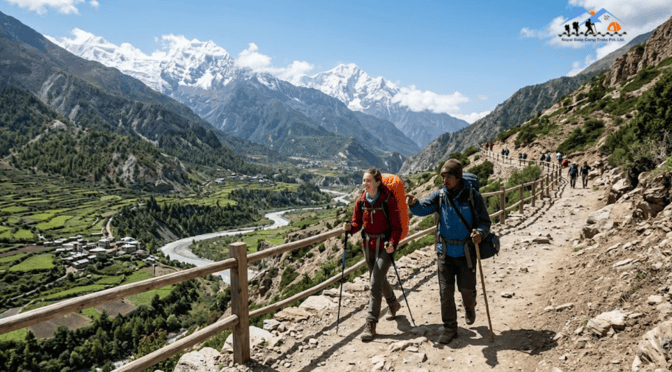
If you dreamed of standing in front of a real Himalayan glacier and not having to be crushed by crowds, helicopters or having to pay the $2000 price tag for that Everest experience, in that case, the Langtang Glacier trek is the trek that will provide you with that experience.
It’s accessible from Kathmandu, it’s culturally rich, full of snow-capped peaks and still one of the most underrated trekking options in Nepal.
Our local guiding company has led trekkers along this route for over 20 years, and there is always a moment along the trek when everyone stops walking, not because they are tired, but because the allure of the glacier in Langtang presents itself, as if a river of ice carved into the mountains.
No photo, no drone shot, no travel blog will compare to this moment of silence and goosebumps.
This is why we refer to it as the “hidden gem” of Nepal.
Not because it’s small, but because most trekkers have no idea how good it really is.
This guide, designed by Nepal Base Camp Treks, aims to provide trekkers with a deeper understanding of trekking in the Langtang Glacier area.
Quick Trek in a Nutshell
Length: 8-10 Days
Two Highest Points: Kyanjin Ri (4,773 m) & Tsergo Ri (5,033 m)
Accommodation: Tea houses run by Tamang families
Best Season: Spring + Autumn (Winter challenges you, but the trek is possible with some planning)
Starting point: Kathmandu → Syabrubesi (only road access, no flight)
Permits: Langtang National Park Entry + TIMS
Difficulty Level: Moderate. Beginners can complete it with a decent level of fitness.
Key Highlights: Glacier views, monasteries, local culture and relatively safe elevation profile.
Common Add-ons: Gosainkunda Lake, Tsergo Trek, Yala Peak summit attempt.
Why the Langtang Glacier Trek is Worth Your Time

Three categories of travelers love this trek.
- Trekkers who want a genuine Nepal adventure, but don’t like the crowds of Everest Base Camp.
- Travelers who want glacier views, mountain peaks and culture in one trek.
- Travelers who desire a fulfilling trek that begins by road, with no risk or expensive mountain flights.
This trek features snowcapped peaks, Buddhist monasteries, traditional Tamang villages, pastureland where yaks graze and a real Himalayan glacier, all in 8 to 10 days.
You will have the experience of walking, eating, sleeping and living in Langtang National Park, a national park that protects red pandas, Himalayan monals and over 250 species of birds!
Guide’s insight: The Langtang Valley has been rebuilt since the 2015 earthquake. While trekking here, you are not only hiking, but you are also providing some support to local families that have rebuilt their tea houses and livelihoods from scratch.
Where is the Langtang Glacier located?
Langtang Glacier is located at the end of Langtang Valley, in Langtang National Park, about 60 kilometers north of Kathmandu.
This is the same area covered in the ever-famous Langtang Valley Trek.
The Langtang Glacier Trek is more extensive, offering you the opportunity to see glaciers that few besides you and a handful of travelers experience.
Your adventure begins in Kathmandu, where you drive about 6-7 hours through winding mountain roads to Syabrubesi, the entrance to Langtang.
The long drive, which offers views of rivers, rice terraces and glimpses of faraway snowy peaks, is an integral part of the experience.
Then, from Syabrubesi, you head up to Langtang by walking gradually through forest and villages and following the Langtang River upstream.
You will quickly notice that the air becomes cooler and the terrain slowly changes from cool subtropical forests to alpine valleys capped by snowy ridges.
The Route Overview – Reaching the Glacier
While on the Langtang Glacier trek, the journey follows a natural rhythm, revealing new altitude and a new sense of awe each day.
Here’s how you can reach the Langtang Glacier:
Day 1: Drive from Kathmandu to Syabrubesi
You will take a shared jeep ride or a local bus (depending on your budget) and embark on a 6-7 hour journey along the winding mountain roads, marking the beginning of your Nepal adventure.
Day 2 Trek from Syabrubesi to Lama Hotel
The official trekking day starts, as you will hike alongside the Langtang River as ass through green oak and rhododendron forests while keeping your eyes out for red pandas or langur monkeys.
Day 3: Lama Hotel to Langtang Village
Walking deep into the village, you will witness the trees thinning and spectacular mountains like Langtang Lirung, where you will appreciate the scale of the Himalayas.q
Day 4: Langtang Village to Kyanjin Gompa
This day is one of the best for scenery.
After passing through Mundu, a rebuilt Tamang village after the 2015 earthquake, you will arrive in Kyanjin Village, surrounded by peaks and glaciers.
Pro Tip: You’ll probably want at least one extra night to acclimatize and experience the nearby hikes, such as the Kyanjin Ri Trek or Tsergo Trek. Both hikes have incredible views of the glacial valleys and great opportunities for sunrise photography.
Day 5: Kyanjin Gompa to Langtang Glacier Viewpoint
Today is your day of adventure.
You will walk alongside your guide toward the glacier base, safely but excitingly hugging the moraine ridge.
From this location, the Langtang Glacier itself offers an incredible view, with ice walls and edges of peaks mirroring the sunlight.
Day 6-8: Descend Back to Syabrubesi and Drive to Kathmandu
After a nice couple of days resting at Kyanjin Gompa and taking in the gorgeous views, it will be time to retrace your steps downhill with stops for tea, rest and of course, yak cheese!
This is the heart of the Langtang Valley, surrounded by Buddhist chortens that line the trail and the winds of the mountains, humming through the prayer flags.
Every turn of this trek is special because it is about the journey and not just reaching the glacier.
Did You Know? The Langtang Valley Trek Route is often called the “Gateway to Tibet” because the trails through the valley were ancient trade routes, part of a trade passage, connecting Nepal to the high plateaus of Tibet.
Trek Highlights
Every trek in Nepal has its unique beauty, but only a few can deliver everything that the Langtang Glacier Trek can deliver: glaciers, monasteries, mountain peaks and that natural wildness that brings you to a place that feels untouched.
As local guides from Nepal Base Camp Trek, we have watched trekkers arrive here, thinking they would have a short walk and leave, calling the trek “the best kept secret of the Himalayas.”
Here is what makes this trail a magical experience:
Raw Glacier Beauty and Ice Formations
The Langtang glacier is the highlight of the trek, a living glacier; it is a massive river of ice that flows down from Langtang Lirung (7,227 m).
This is one of the easiest glaciers to reach in Nepal, but feels feels just as wild as the glaciers you would see deep into the Himalayas.
Standing just below the moraine ridge, you can hear the glacier crack, shift and sigh, which lends itself to knowing the mountains are alive.
The trail around Kyanjin Village allows you to see the glacier in all its glory, changing colors throughout the day, glowing silver in the morning and adopting golden tones by evening.
Along the way, there are smaller glaciers and icefalls in proximity to Yala Peak and the ridge of Tsergo Ri. These provide for constant photography opportunities.
Cultural Touch
A trek in Langtang isn’t just about mountains; it’s a cultural journey.
You’ll trek through Tamang villages where prayer wheels will spin in the air next to yak pens, smelling incense and butter tea.
In Langtang Village and Kyanjin Gompa, you’ll have a view of restored ancient monasteries (after the 2015 earthquake), which symbolize a resilient culture!
You’ll see prayer flags decorating the horizon and locals will greet you as they share their stories.
At Nepal Base Camp Trek, we promote sustainable trekking practices, which means staying in local tea houses and supporting the Tamang families who are keeping this valley forward, while minimizing negative environmental impacts.
Scenic Viewpoints and Nearby Peaks
The Langtang area boasts some of the highest viewpoints accessible on any major trek in Nepal, all of which are attainable from Kyanjin.
Kyanjin Ri Trek (4,773 meters)
Located a short but steep climb behind Kyanjin Village.
From the summit, you will have views of the whole Langtang range and the glacier below.
This hike is a popular acclimatization option on the Langtang Glacier Trek package.
Tsergo Ri Trek (5,033 meters)
A full day of climbing and is one of the highest photography spots in the area.
This trek is much more demanding than Kyanjin Ri, but offers wonderful 360° views of Langtang Lirung, Yala Peak, Dorje Lakpa and the Tibetan plateau.
It’s a good introduction to mountaineering basics and high altitude endurance for those interested in mountaineering.
Langtang Lirung Base Viewpoint (Optional)
For experienced trekkers or those looking to extend the trail, there is a side trail that is accessible beyond Kyanjin, heading toward the base of Langtang Lirung.
This is a truly unique Nepal experience showcasing raw mountain solitude.
What to Know Before Heading off on the Trek

Before you put on your boots, it is important to know that the Langtang Glacier Trek is actually quite demanding.
It can demand a lot from you physically, mentally and logistically
Difficulty Level and Preparation
The Langtang Glacier trek is moderate in difficulty and does not require prior mountaineering skills, but you must be in good shape and able to walk for 5–7 hours a day.
The path will mostly be easy to see and safe to walk, with slopes gradually ascending through forest, valley and alpine landscapes.
For a beginner, the most challenging aspect will be the final push to Kyanjin Ri or Tsergo Ri; the altitude and the cold wind will test your mental toughness and stamina.
Guide’s Tip: You will not need ropes or ice axes; however, basic mountaineering skills, such as adjusting your pace slowly, wearing effective layers and being aware of altitude, will surely make your life easier.
Preparing for Your Trek:
- A month before your trek, incorporate cardio exercises such as jogging, stair climbing or hiking, at least 1-2 times a week.
- Practice walking on uphill hikes with a small backpack.
- Break in your boots, as blistering on Day 2 is not fun.
- Pack snacks to keep your energy levels throughout the morning despite the cold.
Pro Tip: If you can hike 6–7 hours comfortably in your home country, you will have no problem with the Langtang Glacier Trek.
Best Time to Trek and Seasonal Challenges
You can complete the Langtang Glacier Trek any time of the year, but the best times for clear skies and beautifully glowing glacier views are in Spring (March – May) and Fall (October – November).
In the Spring, the Langtang Valley comes alive with many colors and the weather is perfect for photography and adventure in Nepal.
In the Fall, you enjoy crisp air, stable trails, and illuminating mountain light, making it excellent for the Tsergo Trek or Kyanjin Trek.
If you prefer quiet trails, winter (December – February offers frozen waterfalls and snow-covered ridges; however, trekkers should be prepared for all the challenges of winter trekking, freezing temperatures at night and icy trails.
June – September is the monsoon season: green, lush, peaceful, but cloudy with wet and slippery trails.
Permits and Requirements for Entering the Park
Before entering Langtang National Park, you’ll need to obtain two official permits to trek along the Langtang Glacier Trek route.
These are the Langtang National Park Entry Permit and the TIMS Card (Trekkers’ Information Management System).
Both of these permits are required for all travelers to the Langtang Valley Trek area.
The Langtang National Park Entry Permit costs about NPR 3,000 (USD 25–30) and can be purchased at the Nepal Tourism Board office in Kathmandu or at the Dhunche checkpoint.
This permit contributes to the development of the national park’s facilities, wildlife management and protection of the park’s natural beauty.
You can read more about the Langtang National Park Entry Permit information in our updated Langtang Trek Permit page.
The TIMS Card costs approximately NPR 2,000 (USD 17), and this card provides proof that the trek has been officially logged for your protection in case of a health emergency (which is unlikely to occur) while on the Langtang Glacier Trek route.
Do not lose sight of either permit, as there are checkpoints at both Dhunche and Syabrubesi and near Kyanjin Gompa.
Together, your Langtang National Park Entry Permit and TIMS Card ensure that trekking in and around Langtang National Park is responsible, while also protecting the magnificence of its landscapes.
Tips for Acclimatization and Altitude Sickness
If you want to enjoy the Langtang Glacier Trek safely, then it’s crucial to acclimatize properly and prevent altitude sickness.
Here are five important tips to utilize while on the trail:
- Ascend slowly – After reaching 3,000 meters, you should gradually increase the altitude. Take an extra night in Kyanjin Gompa to rest, explore and acclimatize before you head toward the glacier or attempt the Kyanjin Ri Trek or Tsergo Ri Trek.
- Maintain Hydration – Ensure to drink at least three liters of water every day. Use water purification tablets or filters whenever you drink to avoid stomach issues that lead to dehydration.
- Avoid Alcohol and Smoking – Both will slow down the absorption of oxygen and increase your altitude sickness risks. Stick to warm tea or soup instead.
- Walk slowly and often rest. – Maintain a steady pace, take deep breaths and always follow the rule: climb high, sleep low
- Recognize Symptoms Early. – Symptoms to look for include headache, dizziness, and nausea. If any persist, descend and seek assistance.
Accommodation, Food and Water: What to Expect on the Langtang Glacier Trek
Expect one of the most authentic accommodation experiences in Nepal on the Langtang Glacier Trek, which features a series of family-run tea houses along the Langtang Trek route.
Villages, such as Lama Hotel and Kyanjin Gompa, etc., welcome trekkers with warm beds, home-cooked meals and stories shared around firelight.
Rooms are simple yet cozy with windows that show mountain views but framed by prayer flags; the views are much better than the cozy inside.
Meals are hearty and comforting, so you can expect dal bhat, noodles, soups, yak cheese produced locally in Kyanjin Village and more.
If you’re looking for a true Nepal adventure, try the traditional yak butter tea, purchased along with freshly steamed momos from the kitchen.
Guide’s Tip: Bring reusable utensils and avoid plastic bottles to support sustainable trekking in Langtang National Park.
Water is available at every stop, but needs to be purified. Bring a water purification bottle or water purification tablets to keep drinking water safe to drink through the trail.
Staying hydrated helps prevent altitude sickness and maintains your energy levels high for the long ascent up toward Langtang Glacier.
Packing and Gear Advice
Smart packing will undoubtedly make the Langtang Glacier Trek more comfortable and safer.
Because this trekking route traverses from warm forest zones to cold glacier viewpoints, layering your clothing is critical.
You should travel with lightweight and moisture-wicking clothing for the lower Langtang Valley, then thermal, down, and wind-resistant outer layers as you trek upward through Kyanjin Gompa and to the glacier.
You need a sturdy trekking boot with ankle support; make sure to break your new boots in before departing from Kathmandu!
Be sure to also bring trekking poles for the uneven terrain of the Langtang Glacier Trek, particularly if you venture into the winter, which can include snow or ice near the moraine ridge.
Guide’s Tip: Make sure to have gloves, sunglasses, and sunblock. The glacier in the Langtang can reflect many times more sunlight, even on cloudy days.
Your trekking essentials should also include a headlamp, a refillable water bottle with a purified water attachment, a small first aid kit and a travel charger.
If you plan to make summit attempts on the highest viewpoints, pack extra layers and energy bars.
Health, Safety & Emergency Information
The Langtang Glacier Trek is often considered safe for beginners and novice trekkers; however, proper planning and awareness become even more crucial once in the air.
The trek passes through a series of small villages in the Langtang Valley, so I would question how much medical assistance you would receive outside of Kyanjin Gompa.
Trekkers should carry, at least, a basic first-aid kit that includes items such as bandages, pain medication and anything for altitude or stomach issues.
Your local guide and porter’s role is to take care of emergencies and they can always help to locate the nearest rescue points.
Guide’s Tip: Always keep emergency contact and insurance details at arm’s reach.
Helicopter extraction from Kyanjin or Syabrubesi is available, but be prepared, you need travel insurance that states that you are covered for trekking at altitude.
At times in winter, challenges can cause the trails to be slippery or blocked by snow, so it’s essential to check the weather daily and allow your guide to lead.
Remember to drink plenty of fluids, rest when needed and take any symptoms of altitude sickness seriously.
With mindful trekking, the Langtang Glacier Trek is a safe and unforgettable adventure in Nepal that rewards you with both beauty and caution.
FAQ
How hard is the Langtang Glacier Trek?
The Langtang Glacier Trek is considered a moderate trek.
Most hikers with average fitness will be able to complete the trek successfully, even if they have hiked before.
It is well-marked, and the altitude increases gradually, making it easier than trekking the Everest or Annapurna Regions.
When is the best time for the trek to happen?
The Langtang Glacier Trek can ideally be undertaken during the Spring (March to May) and Autumn (October to November).
During these times, visitors will likely see clear skies, warm days and be treated to the best glacier views throughout the Langtang Valley.
Do I need a guide or a porter?
It is possible to trek on your own, but using a licensed guide will help ensure your safety and provide a better experience, allowing you to navigate more effectively and learn a little bit about the local culture.
Hiring a local porter to carry heavy items will also help support the local economy and, of course, will only make your adventure in Nepal easier.
Can I stay in tea houses along the way?
Yes! The Langtang Glacier Trek route features numerous comfortable tea houses with warm beds, hot meals and simple local hospitality.
Most outlets serve traditional Nepali food, delicious soups, and yak cheese from Kyanjin Village.
Will I experience altitude sickness?
If you start to feel mild symptoms, it will likely be above 3,000 meters.
However, if you drink plenty of fluids and take your time acclimatizing, you will be fine.
Spending an extra night in Kyanjin Gompa and setting your daily trekking agenda by the “climb high, sleep low” will keep you safe and healthy throughout the Trek.
Conclusion — The Langtang Glacier Awaits
The Langtang Glacier Trek isn’t simply a journey into the Himalayas. The journey truly is an exploration of Nepal’s soul.
Every step draws you deeper into the heart of Langtang Valley, where mountain winds whistle through prayer flags and glistening glaciers sparkle in the morning sun.
It isn’t about conquering peaks; it is about connecting — to nature, to local culture, and to yourself.
Whether you are sitting on Kyanjin Ri as you watch the sun rise over the Langtang glacier or sipping butter tea beside a warm fire in the mountaineering lodge, you will feel what every trekker who has ever been here has felt
It will be a calm, insightful sense of beauty.
The landscapes are pure, people are resilient, and the experience connects you to the earth and a sense of dignity.
So when you are ready for your next Nepal adventure, let the Langtang Glacier be your adventure, a remote secret that still beats to the pulse of the mountains.