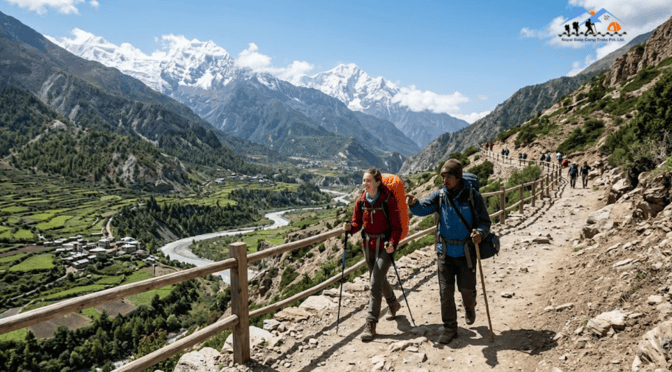
If you are wondering how high the Poon Hill trek actually goes, the fact you need to know is that the highest point of the Poonhill trek altitude is 3,210 m (10,531 ft) at the famous sunrise viewpoint.
However, even with that single measure, there is more to the story of this short trek in Nepal.
It’s important to know the entire altitude profile, from its start on the river at Nayapul, to the ridge-top village of Ghorepani and to the hike days later up to Poon Hill.
This guide breaks it all down for you in terms of altitude, based on Nepal Base Camp Treks two decades of on-the-ground experience.
And you’ll see that the Ghorepani Poon Hill trek provides sweeping views of the high Himalayas of both the Annapurna and the Dhaulagiri mountain ranges, without the extreme and high risks that you will encounter on higher altitude trekking expeditions, like the Annapurna Base Camp trek or the Annapurna Circuit trek.
Short answer:
Elevation: 3,210 m / 10,531 ft (Poon Hill Viewpoint)
Highest nighttime stop: ~2,860 m / 9,383 ft (Ghorepani)
Typical daily climb: 400–700 m
Altitude sickness potential: Low, with sound itineraries
For trekkers who want limited altitude trekking but want to experience Himalayan sunrises and rhododendron forests with a moderate climb, the Poonhill trek offers an enjoyable adventure.
The Importance of Knowledge of Altitude
As you climb, even on a moderate trek in Nepal like this one, the air pressure drops.
This means that each time you take a breath, you get less oxygen in your blood.
Understanding how altitude increases from day to day will help you stay physically fit, avoid unnecessary fatigue and enjoy those sunrise views over the Annapurna massif when the time comes.
Nepal Base Camp Treks, a highly regarded local company, builds natural acclimatization into every itinerary.
From organizing Poonhill trek permits to adjusting the pace of the climb, our team ensures you are steadily and safely organized for altitude gain.
Thinking ahead?
The detail-rich Ghorepani Poon Hill trek package provides a well-planned itinerary, including guides, meals, and all necessary official permits.
Ghorepani Poon Hill Trek Overview
The Ghorepani Poon Hill trek is among the best short treks in Nepal.
The trek starts at Nayapul, not far from Pokhara and meanders through the Annapurna region.
The trail ascends gently through stone-paved villages, terraced farmland and vibrant rhododendron forests full of birds.
You steadily gain altitude along the classic Poonhill trek route until you reach the iconic Poonhill trek elevation of 3,210 m / 10,531 ft.
You’ll spend nights lower down, with the highest night at Ghorepani (2,860 m / 9,383 ft).
This keeps the risk of altitude sickness low while allowing for some magnificent views of the Himalayas.
Cultural elements enhance your overall trek experience.
You will encounter local Gurung and Magar families, eat filling dal bhat and sleep in delightful tea houses, which impart their own sense of hospitality.
This trek is flexible.
While you can retain the experience as a four-to-six-day trek, you can pair it with a longer trek like the Annapurna Base Camp trek.
Learn more about the cost of poonhill trek here.
What is the altitude of Poon Hill?
The Poonhill trek altitude reaches an impressive 3,210 m (10,531 ft) at the renowned sunrise viewpoint in the Annapurna range of the Himalaya in Nepal.
This moderate height provides sweeping views of the Annapurna and Dhaulagiri range without putting trekkers at high risk of complications of sleeping at extremely high altitude.
Below we provide a detailed guide for starting and ending altitude of Poonhill trek, as well as elevations you will sleep at and walk through, on the Ghorepani Poon Hill trek.
Starting and Ending Altitudes of the Trek
| Key Stop | Approx. Altitude (m/ft) | Notes |
| Nayapul (starting point) | 1,070 m / 3,510 ft | Reached by road from Pokhara |
| Tikhedhunga | 1,540 m / 5,050 ft | Gentle warm-up walk along rivers and terraces |
| Ulleri | 2,050 m / 6,725 ft | Famous for long rock staircases |
| Ghorepani | 2,860 m / 9,383 ft | Highest overnight stop |
| Poon Hill Viewpoint | 3,210 m / 10,531 ft | Early-morning hike for sunrise viewpoint |
| Tadapani (descent) | 2,630 m / 8,628 ft | Typical next stop of the loop back |
Daily Changes in Poonhill Trek Altitude
Day 1 – Nayapul to Tikhedhunga/Ulleri
The starting altitude is 1,070 m and the walk takes you to about 1,540 m – 2,050 m. Note that it’s a gradual warm-up through terraced fields on the first day.
Day 2 – Ulleri to Ghorepani
A total increase of approximately. 800m to reach the final elevation of 2,860 m. The trail traverses waterfalls and rhododendron forest.
Day 3 – Ghorepani to Poon Hill and down to Tadapani
Early morning trek and views at Poon Hill 3,210 m around sunrise, then down to the 2,630 m for overnight. You will be at the highest altitude for only a short period of time.
Day 4-5 – Further Descent
The trek travels back through Ghandruk and to the finish within Pokhara, roughly 800-1,000 m.
This clear altitude profile illustrates that the trek takes roughly 50 km over 4-6 days, without any steep increases in altitude.
The gradual ascent and lower sleeping altitudes are two key reasons most trekkers reach the altitude of Poonhill trek safely and happily.
Should You Be Worried About Altitude Sickness On The Poon Hill Trek?
Most trekkers complete the Ghorepani Poon Hill trek without any serious altitude sickness issues.
The maximum altitude on the Poonhill trek – 3210 m / 10531 ft – is safely below the danger zone for serious altitude sickness.
You also sleep significantly lower, at around 2860 m / 9383 ft in Ghorepani.
This natural descent on the morning of your trek substantially mitigates risk.
Nonetheless, basic awareness helps every trekker stay as healthy and comfortable as possible.
What Symptoms to Look Out For
Even on a short trek, it’s possible to experience mild Acute Mountain Sickness (AMS).
Common symptoms to look out for include:
- A persistent headache
- Nausea or not wanting to eat
- Dizziness or light-headedness
- Unusual fatigue
If any of your symptoms worsen after resting, it’s best to descend and let your guide know.
Tips For Avoiding Altitude Sickness
- Climb slowly – You are following the standard 4 – 6 day itinerary; don’t rush the altitude of Poonhill trek.
- Drink a lot – Aim for 3 – 4 liters of water per day, and avoid excess alcohol and caffeine.
- Take breaks to rest – Usually, take regular breaks when on a steep step to maintain normal breathing.
- Eat and sleep well – Eating normal meals and getting a good night’s sleep assists the body in acclimating.
- Use a licensed guide – A guide is now required in Nepal and is great for spotting early signs of AMS.
Pro Tip: If you haven’t already, check out our comprehensive Poon Hill trek difficulty guide so you can nail down your fitness level for the trek.
Height Comparison: Poon Hill Trek vs Other Famous Treks
By understanding how the Poonhill trek altitude compares with other similar routes in the Himalaya, you can lessen the selection process.
The highest point on the Poon Hill trek is 3,210 m / 10,531 ft.
This is modest compared to the higher elevations in Nepal, but that does not diminish the experience of visiting the incredible views of the Himalaya, specifically the Annapurna and Dhaulagiri mountain ranges.
| Itinerary | Highest Point (approx.) | Typical Duration | Condition |
| Poon Hill trek | 3,210 m / 10,531 ft | 4-6 days | Great first shorter trek without altitude risk |
| Mardi Himal trek | 4,500 m / 14,764 ft | 6-8 days | Steeper climbs and thinner air |
| Annapurna Base Camp trek | 4,130 m / 13,550 ft | 7-12 days | Higher foot elevation and colder nights than poon hill |
| Everest Base Camp trek | 5,364 m / 17,598 ft | 12-14 days | An iconic trek that requires careful altitude planning before departure |
How Acclimatization Works on the Poonhill Trek
Although the Poonhill trek altitude climbs to 3,210 meters, the trail is intended for natural acclimatization.
The gradual ascent from Nayapul through Tikhedhunga, Ulleri, and Ghorepani allows the body to adjust incrementally, which makes these treks in Nepal safe for the vast majority of hikers.
Do you have to build in acclimatization days for your Poon Hill Trek?
In general, acclimatization days are unnecessary for the Poonhill trek.
Here’s why:
- Moderate altitude – You sleep at Ghorepani (2,860 m) and you only spend a short time at the summit before returning down
- Gradual gain – Daily ascent of 400-700 m allows your body to adjust.
- Lower descent each night – After a pre-sunrise trek to poon hill, you descend lower in Poonhill trek altitude each night.
This natural rhythm is sufficient for anyone who is reasonably physically fit.
But, if you want, you can add acclimation days so that you can enjoy the villages and surrounding views to the fullest.
Quick Tips for Easy Acclimatization
- Hydrate and eat balanced meals.
- Trek at a comfortable pace; do not race your way uphill.
- Avoid alcohol and excessive caffeine.
Pro Tip: Booking with us means you will have guides who monitor everyone’s well-being and manage the plans if the altitude or weather becomes an issue.
The Right Season to Trek Poon Hill for Optimum Altitude Adjustment
If you are equipped with the right gear, you will be able to enjoy the Poonhill trek at altitude safely and comfortably.
When you trek in the right season, your body will acclimatize in time and you will get good quality of the poonhill weather, trail conditions and visuals.
Spring (March–May) – With clear skies, blooming rhododendrons, and mild temperatures, Spring is the most colorful time of year to trek—ideal sustained elevation gains along with the views of a sunrise at Annapurna and Dhaulagiri.
Fall (September–November) – Dry, stable weather and clear mountain views, an excellent choice for photographers and trekkers alike, especially for first-time trekkers.
Winter (December–February) – Quiet local trails and possible snow at Ghorepani or Poon Hill. Much colder mornings require packing extra warm layers.
Monsoon (June–August) – Intense periods of rain with slippery trails, more like a cloud walk, for the experienced trekker who is looking for wet-weather experiences.
By matching your trek with the appropriate season, you can minimize the chance of being delayed by weather, stay physically fit and enjoy every moment of the Poon Hill trek!
Recommended Packing for the Higher Poonhill trek altitude
Quality gear can keep you warm, dry, and safe as you hike to the Poonhill trek altitude of 3,210 m / 10,531 ft.
Even for a short trek in Nepal, mornings before sunrise can be cold and damp.
Appropriate Clothing
- Warm jacket or fleece for Ghorepani and the pre-dawn hike to Poon Hill.
- Waterproof shell and rain gear in case of sudden showers or during the monsoon season.
- Layered shirts and trekking pants to easily accommodate any temperature changes.
- Hat, gloves and neck gaiter in preparation for cold mornings.
Gear and Personal Items
- Good quality trekking boots to keep your footing on the rocks.
- Trekking poles to lessen the impact to your knees while navigating stone steps.
- Basic first-aid kit and personal meds.
- Water treatment pills or a filter.
- Headlamp for the early climb to Poon Hill.
Pro Tip: Our extensive packing list for the Poonhill trek covers absolutely every item from sleeping bags to extra power banks.
Packing wisely is key for comfort and safety all the way up to the elevation of the Poonhill trek, regardless of the season, high season or the colder months.
Safety Tips & What to Expect at High Altitude
The Poonhill trek altitude at 3,210 m / 10,531 ft is well within a safe range, but it certainly doesn’t hurt to have smart preparation so that your trek goes more successfully.
Here’s how to stay safe and confident during the Ghorepani Poon Hill trek inside the Annapurna Conservation Area.
Stay Safe on the Trail
Try to walk at a comfortable speed.
We advise you to slow down, especially on the Ulleri stone steps.
Use trekking poles for steep sections to take strain off your knees when climbing and descending.
Hydrate and Eat!
Drink lots of water, so mild altitude sickness doesn’t affect you.
Keep meals healthy and balanced.
Dal bhat is a staple in the mountains and will sustain you with loads of energy.
Plan for all Weather!
Prepare for cool mornings and a potential for a sudden, short shower.
Dress in layers so you can adjust to changing temperatures.
Respect the Mountains
Listen to your guide and stay on clearly marked trails to respect the sensitive environment,
Remember to “take only photos” and “leave only footprints” to allow others to enjoy the views of Annapurna and the Annapurna and Dhaulagiri mountain landscapes.
FAQ
Is the Poon Hill trek a good fit for beginners?
Yes. The Ghorepani Poon Hill trek is one of the safest short treks in Nepal, with a maximum altitude of 3,210 m (10,531 ft) and overnight stops much lower than that.
Most people would just need to have average fitness levels and maintain a normal walking pace.
Will I need to acclimatize for Poon Hill?
You do not need extra acclimatization days.
The trail ascends gradually and you always sleep lower than the summit, so the body acclimatizes itself naturally with the Poonhill trek altitude.
How high is Ghorepani?
The main overnight village on the trek, Ghorepani is located about 2,860 m (9,383 ft).
Trekkers usually spend the night in Ghorepani on the night before going up to Poon Hill at sunrise.
What is the total elevation gain?
From Nayapul at 1,070 m (3,510 ft) you gain approximately 2,140 m (almost 7,000 ft) over the span of several days and around 50 km distance.
Can you get an altitude sickness itinerary for a 2–4 day trek?
It is rare to get altitude sickness, but it is possible. You may develop mild symptoms like a headache or light nausea if you ascend too fast.
However, if you progress at a relaxed pace, drink enough water and heed the advice of your guide, your risk is very low.
Concluding Remarks
The 3,210 m Poonhill trek altitude is high enough for impressive views of the Himalayas, but low enough that it should remain comfortable for most trekkers.
Because you spend a night sleeping at Ghorepani, your body has a chance to acclimatize and the possibility of altitude sickness is very low.
A consistent 4-6 day ascent allows for safety and great fun.
If you are ready for this beautiful yet tame trek in Nepal, there is no better time than now to plan.Book your Poon Hill trek with us so that you don’t have to worry about permits, guide and logistics.
All you do is just enjoy the stunning views of sunrise over the Annapurna and Dhaulagiri ranges.