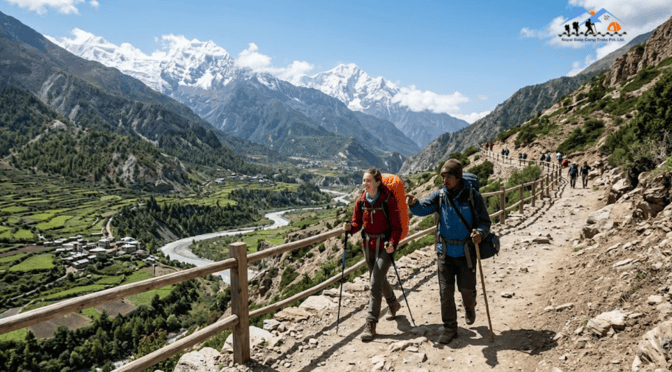
The Tsum Valley Manaslu Circuit Trek is not just a simple extension to the Manaslu Circuit Trek.
It’s a richer journey into a remote Himalayan land.
Located north of Gorkha and near Tibet, the Tsum Valley was closed off to the outside world until 2008, so the scenery and traditions remain strikingly intact..
Going with Nepal Base Camp Treks (NBCT) on the Manaslu Tsum Valley trek lets you see all the benefits of the traditional route and even more.
- Hidden Valley Nepal experience – Walk through a true off-the-beaten-path region of deep valleys and high cliffs, glacier-fed rivers and centuries-old village life.
- Living cultural heritage – Visit Mu Gompa and Rachen Monastery, spin prayer wheels along mani walls and hear stories of Tsum as a sacred Beyul where nature and spirit merge.
- Himalayan wildlife and landscapes – See blue sheep, Himalayan monal or even snow leopard. The seasonal rhododendron blooms and crystalline skies will provide world-class photography opportunities.
- A natural ability to acclimatize – The additional days in the valley provide more time for your body to acclimate naturally before you traverse the 5,106 m Larkya La Pass, which reduces common trekking ailments.
- Simply tranquil villages – Experience a true teahouse hospitality in the villages on the Manaslu trek, such as Chumling, Chhokangparo and Nile, where the influence of Tibetan culture is seen throughout their everyday actions.
Tsum Valley Location: Geography & Trekking Trails

Tsum Valley is located in the north of Gorkha District, Nepal.
The Valley is located between Ganesh Himal and Sringi Himal and is relatively close to the Tibetan border.
It was one of the hidden valleys, which was only recently opened to travelers in 2008.
On the Tsum Valley Manaslu circuit trek, you diverge from the main trail at Lokpa, which is the entrance into a tranquil river valley, a world of stone houses, green terraces and Buddhist monasteries.
Best Ways to Reach Lokpa
Your journey begins with a picturesque drive from Kathmandu to Machhakhola or Soti Khola.
They are the more common starting point on the Manaslu trek route and you will get your first glimpse of rural or undeveloped Nepal.
After driving, you hike along the river Budi Gandaki through forests and across long suspension bridges before reaching Lokpa, the entry point to Tsum Valley.
A private jeep will save time on the journey and a public bus will keep the cost of the Manaslu trek down.
Combining Tsum Valley with The Manaslu Circuit
Traveling from Lokpa, the Tsum Valley Manaslu Circuit trek heads north.
The track will climb through traditional villages, such as Chumling, Chhokangparo and Nile, which ends at Mu Gompa, a monastery located high above the valley.
After exploring Tsum Valley, hikers return to the main trail and proceed to other destinations in the Himalaya.
Altitude Change and Acclimatization Considerations
Tsum Valley starts at about 1,900 m and then goes above 3,700 m.
This steady, gradual ascent provides natural altitude acclimatization, allowing your body to acclimatize before you start reaching higher passes.
This gradual ascent also helps minimize common trekking problems like headaches and being tired.
Did you know?
Tsum Valley is still relatively quiet and less busy compared to other trekking areas, making it a perfect trek for first-timers who want a true feel of being in the Himalaya without the busyness of busy trails.
And with Nepal Base Camp Treks organizing of permits, transport and safety, this trip to Tsum Valley is streamlined, safe and you will see new views and places each day.
Cultural Highlights of the Tsum Valley

From our perspective, the Tsum Valley Manaslu Circuit Trek is equally about the culture and spectacular mountain views.
This hidden valley was closed to visitors until 2008, so the customs and traditions are remarkably preserved and remain untouched.
Walking here feels like entering a mountain world where the daily pace of Buddhist rituals and village life follows the rhythms of centuries past.
Highlight 1: Ancient Monasteries and Buddhist Traditions
Way above the valley, the Mu Gompa greets with the sounds of morning chants and rows of flaming butter lamps.
Rachen Monastery is in easier to access location that showcases colorful murals and peaceful courtyards.
At every turn, you will see Mani walls, spinning prayer wheels and white chortens, which resonate deeply in cultural authenticity, transforming into a more spiritual experience.
Highlight 2: Remote Villages and Daily Life
The villages, Chumling, Chhokangparo and Nile, exemplify the fabric of authentic Himalayan life.
People continue to grow barley and keep a collection of yak herds, as children play under strings of prayer flags.
When reaching small family-owned lodges, you experience the true teahouse of Manaslu.
Here, families serve dal bhat with hospitality and share stories or recount experiences previously gathered from friends and trek partners.
Trekking through these sleepy villages provides a culture of everyday mountain life on Manaslu.
Highlight 3 Tsum Valley Legends, Folklore and Beyul heritage
Tsum is recognized as a Beyul, a sacred, hidden valley blessed by Guru Rinpoche.
Elders from this region share folklore that includes saints meditating in hidden caves and mountains that are strongly protected by deities.
Hearing these stories under the stars adds a magic horse that no photo can accurately depict.
Highlight 4 Cultural Protocol and Responsible Engagement
Respect for tradition gives this culture sustenance.
Always walk clockwise around mani walls and stupas, dress modestly in temples and ask to take a picture.
When choosing responsible travel with a local trekking agency like Nepal Base Camp Treks, you will be supporting local families and fragile monasteries, which helps to continue these customs for the next generation.
Engaging directly with monasteries, legends and timeless villages makes the Manaslu Tsum Valley trek an enriching cultural trek along with breathtaking mountain views.
Natural Wonders of the Tsum Valley

The Tsum Valley Manaslu Circuit Trek is a fantasy for nature enthusiasts.
It is one of Nepal’s most serene and undisturbed Himalayan valleys, adorned with green forests, snowy summits, waterfalls and tranquil pathways.
Being here feels as if you have stepped into an invisible world, with one breathtaking experience after the next.
Scenic Landscapes of Tsum Valley and Himalayan Views
Tsum Valley opens up like a massive painting, which includes cliffs, terraced farmland and bright sky mountains.
The peaks of Ganesh Himal and Himalchuli rise high, feeling nearly accessible.
In spring, pink rhododendrons decorate the hills, while autumn clears the skies and showcases the peaks’ white glimmer.
Villages like Chhokangparo and the Nile are spectacularly positioned for great photo possibilities in the morning and evening, far away from the crowds of the Manaslu trekking route.
Did you know?
Locals refer to this valley as “the garden of the mountains” because everything about this stunning place exudes perfect harmony – glaciers, rivers and forests!
Wildlife in the Tsum Valley
Tsum Valley is rich in the rare wildlife of the Himalayas.
You might see blue sheep grazing on the slopes of rocky outcrops or the colourful Himalayan monal displaying.
You may even find snow leopard tracks, if you are lucky, in the nearer trails, above.
The valley’s pristine ecosystem is also conducive to quiet nature observation.
If we respect and care for the wildlife and mammals by travelling responsibly, we will ensure this fragile ecosystem remains intact for generations.
Again, Tsum Valley, with its waterfalls, glaciers and pristine nature, adds an extra level of purity and magic to the Tsum Valley Manaslu Circuit trek that contains one of Nepal’s most rewarding off-the-beaten-path adventures.
Pro Tip:
Get up early in Chumling or Chhokangparo – sunrise provides the best light and highest bird activity.
Teahouse and Trekking experiences in Tsum Valley
The Tsum Valley Manaslu Circuit Trek is special for its wonderful landscapes and culture.
Additionally, the teahouse experience at Manaslu also makes the trek worth it.
Staying in family-run lodges keeps the trekker close to the warmth and simplicity of living in the Himalaya.
Every night ends with a warm cup of tea, a hearty meal and a sense of community.
What to Expect in Tsum Valley’s Teahouses
Teahouses in Tsum Valley are simpler than in busier areas but far more personal.
Most teahouses are operated by families, with wooden walls fitted with warm blankets and a shared dining area amongst trekkers enjoying dal bhat and chatting about the day’s events.
Typically, the meals include local ingredients featuring fresh vegetables, yak butter and homemade bread.
Electricity is provided via solar panels with no Wi-Fi service, which helps keep the evenings calm and social.
If you are travelers searching for village authenticity amongst the Manaslu trek experiences, the teahouses generally provide that genuine connection and quiet comfort.
Comparing Teahouses of Manaslu Circuit vs Tsum Valley
Teahouses on the main Manaslu circuit trek, especially in larger villages such as Namrung or Samagaon, are slightly more developed.
In Tsum Valley, they are basic but more authentic. In these villages, you will be treated like family — you may be offered butter tea or invited to attend evening prayers.
Although the rooms are basic, the experience is great because of the warmth of the people.
Safety, Trekking Challenges and Ethical Trekking in Tsum Valley

We at Nepal Base Camp Treks believe the Tsum Valley Manaslu Circuit Trek should be exciting but safe.
The remoteness of the valley brings peace, but demands that trekkers be well prepared.
Knowing terrain, elevation and travel conditions makes the experience smooth and pleasant.
Post-Earthquake Trail Reconstruction and Safety Measures
After the 2015 earthquake, local villagers worked hard to rebuild trails, bridges and teahouses.
Now, the post-earthquake Manaslu trek is fully open and the trails are safe with proper maintenance.
Our guides examine every part before each season and follow strict rules of safety – including checking for weather conditions, altitude tests and emergency communication backup.
Trekking Difficulties in a Far-Remote Himalayan Valley
Though the scenery is breathtaking, the Tsum Valley Manaslu Circuit trek is still a demanding endeavor.
Paths can be steep and rocky and the altitude gradually rises from 1,900 m to over 3,700 m.
Treking in spring or autumn keeps conditions equal, but monsoon rains and winter snow can make paths slippery.
Good acclimatization to altitude, layers of clothing and pacing are key to managing these trekking difficulties.
Supporting Local Communities Through Responsible Travel
Tsum Valley relies on sustainable tourism that is respectful to its culture and environment.
Making responsible travel choices, such as reducing waste, staying in local teahouses and employing local guides, which helps benefit families directly.
Each trek with NBCT will contribute to supporting local schools, monastery upkeep and community projects, making your experience richer.
Pro Tip:
Bring a refillable water bottle and eschew single-use plastics. It is your responsibility to safeguard the natural beauties in the area.
With good leadership, guidance and respect, trekking in the Tsum Valley is not only a safe experience but a collaborative effort to protect one of Nepal’s last remaining unspoiled Himalayan regions.
Cost and Logistics of Adding Tsum Valley to Your Trek
For those who wish to add the remote Tsum Valley to their Manaslu circuit trek, information on costs and logistics can make a world of difference.
The off-the-beaten-path trek provides trekkers with rich cultural heritage, peaceful villages along the Manaslu trek and breathtaking scenery, but it has to be well-planned for.
Knowing what to expect allows you to travel smart and focus on the experience, not the logistics.
Permits and Rules for the Tsum Valley Extension
The Tsum Valley trek passes through a restricted area near the border with Tibet and therefore requires special permits.
Trekkers will require a Manaslu Restricted Area Permit (RAP), a Tsum Valley Permit and the Annapurna Conservation Area Permit (ACAP).
These permits are checked along the trekking route, enabling safety and proper travel documentation.
To sustain the region, single treks are not allowed and all visitors should be accompanied by a licensed guide.
This policy encourages responsible tourism and ensures that visitors follow local nature and customs.
Did you know?
A share of every permit fee is directly donated towards rebuilding trails, schools and monasteries that were destroyed along the Manaslu trek after earthquake reconstruction efforts.
Budgeting for Extra Days on the Circuit
Adding Tsum Valley tacks on five to seven days to the journey, depending on your itinerary and side treks.
While this translates to more money spent on food and accommodations, it also means a more in-depth Himalayan cultural and landscape experience.
A total Manaslu Tsum Valley trekking package can cost anywhere from USD 1,400 to 1,800, including guides, porters, transport and permits.
The Tsum Valley part can add another USD 250–400, depending on the group size and your comfort level.
Food is simple but healthy-dal bhat, soups and tea-and teahouse life, manaslu style in Tsum Valley, is cozy and warm.
Lodges are mostly family-owned, solar-powered and use local ingredients.
Why the Extra Cost Is Worth It
The Tsum Valley extension adds more than distance – it adds perspective.
You’ll enjoy better altitude acclimatization, visit families who live in the shadow of Ganesh Himal and walk on trails that are full of Himalayan wildlife and spiritual significance.
For photographers, each turn offers natural photo ops – from yak caravans to golden sunrise peaks.
This side trip is well-designed, turning a regular Tsum Valley Manaslu circuit trek into a story of nature, resilience and connection – an unforgettable mix of adventure and authenticity.
FAQs – Tsum Valley Extension of the Manaslu Trek
How many days does the Tsum Valley add to the Manaslu circuit?
The Tsum Valley trek usually adds 5–7 extra days to the Manaslu Circuit trek, depending on the time spent visiting monasteries and villages on the Manaslu trek, like Chumling and Nile.
What permits are required for Tsum Valley?
Trekkers need a Manaslu Restricted Area Permit (RAP), a Tsum Valley Permit and the Annapurna Conservation Area Permit (ACAP). These are checked along the trek route for safety and record purposes.
Are teahouses available in Tsum Valley?
Yes, simple family-run teahouses are available in all big villages. The teahouse experience here is local and homely, with dal bhat, tea and hospitality.
Is the trek safe after the earthquake?
Yes. Post-earthquake recovery of the Manaslu trek is complete and trails are safe with rebuilt bridges, lodges and improved safety standards.
How high is the Tsum Valley and is it good for acclimatization?
The valley rises from about 1,900 m to 3,700 m, providing excellent altitude acclimatization before crossing the Larkya La pass.
Why take the Tsum Valley extension?
It’s peaceful, traditional and culturally rich.
Trekkers enjoy serene trails, Himalayan wildlife and spectacular photo opportunities free from the crowds – making the Tsum Valley Manaslu Circuit trek a lifetime Himalayan experience.
Final Thoughts
Adding the Tsum Valley to your Manaslu circuit trek is not just an extra trail, it’s an awakening.
This serene valley is everything unique about Nepal trekking: pure landscapes, warm-hearted individuals and time-stood cultural heritage.
You walk through stone villages on the Manaslu trek, drink tea with smiling villagers and hear ancient chanting carried from mountain monasteries.
The experience is still straightforward but profound.
Days pass at a leisurely pace, allowing for natural altitude acclimatization as your mind adjusts to mountain life.
You see prayer flags flapping in the wind, spot rare Himalayan wildlife and unwind in a peaceful teahouse nights under starry skies.
Every step is intimate – slow, quiet and deeply rewarding.
As opposed to busy trekking routes, Tsum Valley is off-the-beaten-path, where traditions naturally exist and guests have space to breathe.
For those as keen on stories as they are on peaks, this is where adventure and significance meet.
Finally, the Tsum Valley Manaslu Circuit trek is not just a trek – it’s a reminder of how small we are compared to the Himalaya and how beautiful it is to walk humbly through its midst.