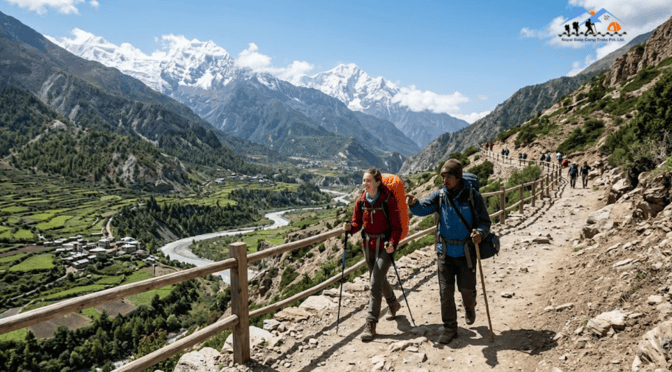
When choosing between the Annapurna Base Camp trek and the Annapurna Circuit trek, most trekkers ask one big question: Which one delivers more scenery per day?
Both routes sit within the spectacular Annapurna Conservation Area and showcase Himalayan giants like Annapurna I and Machapuchare. Yet their scenic density, the concentration of dramatic landscapes within a given trekking day, differs significantly.
Let’s break it down so you can choose the trek that aligns with your expectations, timeframe, and appetite for variety.
What Is Scenic Density?
Scenic density refers to how frequently the landscape changes and how often you encounter jaw-dropping views in a short span of days.
Do you prefer constant mountain drama every single day? Or do you love gradual ecological transitions across vast terrain?
That’s exactly where the Annapurna Base Camp and Circuit trek part ways.
Scenic Density on the Annapurna Base Camp Trek
The Annapurna Base Camp is compact and immersive. Within 7–11 days, you transition from subtropical forests to a high-altitude amphitheatre of snow peaks.
Why It Feels Visually Intense
- Rapid elevation gain means faster landscape shifts
- Continuous close-up mountain views
- Natural hot springs and cascading waterfalls
- The dramatic bowl of Annapurna Base Camp (4,130m)
Standing at base camp, you’re surrounded 360° by Himalayan walls, Annapurna I, Annapurna South, Machapuchare and Hiunchuli towering above.
Because the route is shorter, the Annapurna Base Camp trek package delivers concentrated scenery without long transitional walking days. Nearly every day offers a strong visual payoff.
Scenic Density Rating: Very High
Best For: Trekkers wanting maximum mountain immersion in a limited time.
Scenic Density on the Annapurna Circuit Trek
The Circuit trek spans 14–20 days and circles the entire Annapurna massif. It’s a journey of diversity rather than intensity.
Why It’s Visually Diverse
- Subtropical valleys shifting to an alpine desert
- Cultural shifts between Gurung, Thakali and Tibetan-influenced villages
- Crossing the legendary Thorong La Pass (5,416m)
- Kali Gandaki Gorge, one of the world’s deepest
Instead of a constant mountain enclosure, you experience vast Himalayan geography unfolding gradually.
An Annapurna Circuit trek tour provides expansive landscapes, river valleys, monasteries, and desert-like terrain reminiscent of Tibet near Manang and Muktinath.
The trade-off? Some days focus more on distance than dramatic scenery.
Scenic Density Rating: Moderate to High (but stretched over more days)
Best For: Trekkers who love ecological variety and cultural depth.
Direct Comparison: Scenic Density Snapshot
| Factor | Annapurna Base Camp | Annapurna Circuit |
| Duration | Shorter | Longer |
| Mountain Proximity | Very Close | Varies |
| Landscape Variety | Moderate | Very High |
| Cultural Exposure | Moderate | Extensive |
| Visual Intensity Per Day | Higher | Spread Out |
If you want cinematic mountain immersion fast, the Base Camp wins.
If you want a grand Himalayan narrative with geographical diversity, the Circuit trek excels.
Which Trek Feels More “Epic”?
It depends on your definition of epic.
- The Annapurna Base Camp trek feels like walking straight into a Himalayan amphitheatre.
- The Annapurna Circuit trek feels like traversing an entire Himalayan world.
Both are iconic. The real question is: Do you prefer intensity or scale?
Summing It Up
If scenic intensity per kilometre matters most, the Annapurna Base Camp trek delivers unmatched mountain immersion. Meanwhile, panoramic diversity and Himalayan scale inspire you; go for the Annapurna Circuit trek that offers a journey of transformation.
Whichever path you choose, the Annapurna region never disappoints.
With experienced local guides and personalised itineraries, Nepal Base Camp Treks Pvt Ltd delivers safe, well-paced Himalayan adventures across the Annapurna region. Ensure authentic cultural experiences, seamless logistics, and unforgettable mountain journeys tailored to every trekker’s goals.
FAQs
1. Which trek has higher scenic density?
The Annapurna Base Camp offers more concentrated mountain scenery per day. The Circuit trek spans dramatic landscapes across a longer timeframe.
2. Is the Annapurna Circuit trek harder?
Yes, the Annapurna Circuit trek includes Thorong La Pass at 5,416m, making altitude management more critical than on the Annapurna Base Camp trek.
3. Which trek is better for beginners?
The Annapurna Base Camp trek is generally more beginner-friendly due to shorter duration and slightly lower maximum altitude.
4. How long does each trek take?
The Base Camp trek typically takes 7–11 days. Meanwhile, the Circuit trek tour usually requires 14–20 days, depending on pace.
5. Which trek offers better cultural experiences?
The Annapurna Circuit trek passes through more diverse ethnic villages, offering deeper cultural immersion than the Annapurna Base Camp trek.
6. Is an Annapurna Base Camp trek package suitable for short holidays?
Yes, an Annapurna Base Camp trek package is ideal for travellers with limited time seeking a high mountain impact.
7. Does the Annapurna Circuit trek tour include desert landscapes?
Yes, the Annapurna Circuit trek tour transitions into arid, Tibetan-style terrain near Manang and Muktinath.
8. Which trek has better sunrise views?
Both are spectacular, but the sunrise at base camp during the Annapurna Base Camp feels more enclosed and dramatic.
9. Can both treks be done year-round?
Spring and autumn are best for both the Annapurna Base Camp and the Circuit trek due to clear mountain visibility.
10. Which trek gives better value overall?
Value depends on preference. The Annapurna Base Camp trek offers condensed scenic payoff, while the Circuit trek provides broader geographical diversity.