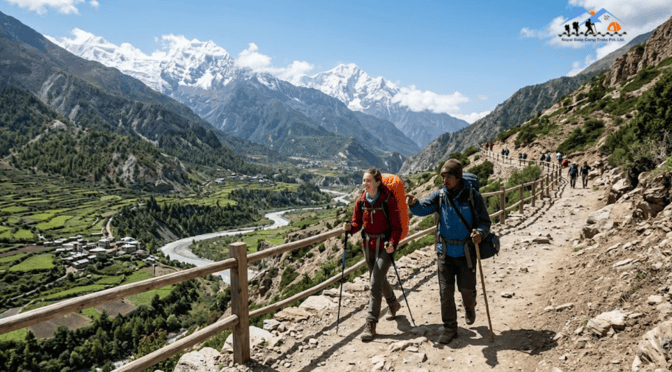
The Annapurna Base Camp trek is one of Nepal’s most celebrated Himalayan journeys. Walking into the Annapurna Sanctuary beneath the towering presence of Annapurna I (8,091m) is unforgettable. Yet during peak seasons, sections of the trail can feel busier than many trekkers expect.
If your goal is solitude, deeper cultural immersion, and uninterrupted mountain views, strategic planning makes all the difference. Here’s how to approach the Base Camp trek hassle-free by choosing smarter entry and exit points.
Why the Trail Gets Busy
The classic approach begins from Nayapul, passing through Ghandruk, Chhomrong, Deurali and Machhapuchhre Base Camp before reaching Annapurna Base Camp. This direct route is scenic and efficient, which is exactly why it attracts the highest footfall.
Spring (March–May) and autumn (September–November) offer stable weather and clear skies, leading most fixed-itinerary groups to follow the same schedule and overnight stops. Standardised routing in many Annapurna Base Camp trek package itineraries further concentrates traffic along identical paths.
The result? Congestion at staircases, crowded teahouses, and limited flexibility in peak hours.
Smarter Entry Points
1. Jhinu Danda Start
Beginning from Jhinu Danda instead of Nayapul helps bypass early trail bottlenecks. It also reduces repetitive walking sections and spreads trekking flow more evenly.
2. Dhampus–Pothana Approach
Entering via Dhampus and Pothana provides expansive views of the Annapurna range before merging with the main corridor later. This variation allows gradual acclimatisation and avoids initial crowd clusters.
3. Landruk Alternative
Choosing Landruk instead of the more heavily visited Ghandruk offers a quieter village atmosphere while still connecting efficiently to Chhomrong.
When designing an Annapurna Base Camp trek package, incorporating these entry variations significantly improves the overall experience without altering the core destination.
Strategic Exit Routes
Most trekkers descend the same way they ascend. Opting for alternative exits can dramatically reduce congestion.
1. Exit via Siwai
Descending to Siwai instead of retracing steps to Nayapul shortens the final leg and avoids heavy downhill traffic on steep stone staircases.
2. Mardi Himal Link Extension
Linking part of the Mardi Himal ridge trail before descending provides a scenic alternative and reduces repetitive walking. This option distributes trekking flow across less crowded paths.
3. Helicopter Return Option
For time-sensitive itineraries, a helicopter exit from base camp eliminates descent congestion while offering panoramic aerial views of the Annapurna Sanctuary.
These alternatives can be integrated thoughtfully into a customised Annapurna Base Camp trek package without compromising safety.
Timing: The Overlooked Advantage
Even during peak seasons, small timing decisions make a major difference:
- Start walking before 7 am
- Reach major checkpoints before group arrivals
- Schedule lunch before peak dining hours
- Trek in late February or early December for shoulder-season calm
Staggering daily movement helps avoid the busiest windows on the Annapurna Base Camp trek.
Accommodation Strategy
Teahouses closest to major junctions fill first. Choosing lodges slightly beyond common stopping points reduces noise and service delays.
Instead of staying exactly at popular hubs like Deurali, consider locations 30–45 minutes further along the trail. Many Annapurna Base Camp itineraries can adjust overnight stops to reflect this strategy.
Smaller Groups, Flexible Pacing
Large organised groups often move at fixed speeds and occupy multiple teahouses at once. Travelling independently or in smaller groups allows:
- Flexible rest breaks
- Adjusted departure times
- Quicker lodge check-ins
- Greater interaction with local communities
This flexibility enhances the overall Annapurna Base Camp experience.
Choosing the Right Season
While spring and autumn are peak periods, winter trekking (December–February) offers exceptional clarity and significantly fewer trekkers. Snow conditions must be assessed, but many sections remain accessible.
Monsoon (June–August) sees reduced numbers as well, though leeches and rainfall should be considered. Evaluating these seasonal trade-offs helps in selecting the most suitable Annapurna Base Camp.
Wrapping It Up
Avoiding congestion on the Annapurna Base Camp is entirely possible with strategic planning. By choosing alternative entry points, smarter exit routes, flexible timing, and a well-structured package, trekkers can experience the Annapurna Base Camp trek with greater serenity, efficiency, and a deeper connection to the Himalayan landscape.
Nepal Base Camp Treks Pvt. Ltd. delivers expertly planned Himalayan adventures with experienced local guides, flexible itineraries, and safety-focused logistics. Their thoughtfully structured Annapurna Base Camp package ensures efficient routing, smooth operations, and a seamless trekking experience from start to finish.
FAQs
1. What is the busiest section of the Annapurna Base Camp trek?
The stretch between Chhomrong and Deurali typically sees the highest traffic. Many Annapurna Base Camp itineraries follow identical overnight stops here.
2. Can alternative entry points reduce congestion?
Yes. Starting from Jhinu, Dhampus, or Landruk spreads trail usage and improves pacing within the Annapurna Base Camp.
3. Is Siwai a better exit than Nayapul?
Siwai shortens the descent and avoids busy staircases. It’s often incorporated into flexible Annapurna Base Camp trek package plans.
4. Does the Mardi Himal link add difficulty?
It adds moderate elevation but offers quieter trails. When integrated into an Annapurna Base Camp, pacing adjustments ensure safety.
5. Are shoulder seasons less crowded?
Yes. Late February and early December provide calmer trails while maintaining reasonable weather for the Annapurna Base Camp trek.
6. Do early morning starts really help?
Absolutely. Leaving before 7 am reduces overlap with large groups on the Base Camp trek.
7. Are teahouses overcrowded in peak season?
Popular stops can fill quickly. Adjusted Annapurna Base Camp itineraries often shift overnight stays slightly beyond major hubs.
8. Is winter trekking feasible?
Winter offers fewer trekkers and clear skies, though cold temperatures require proper preparation for the Annapurna Base Camp.
9. Does avoiding crowds increase trek duration?
Not necessarily. Smart routing within an Annapurna Base Camp package can maintain duration while reducing congestion.
10. Is crowd avoidance possible during peak months?
Complete avoidance is unlikely, but strategic entry, exit and timing decisions significantly improve the Annapurna Base Camp experience.