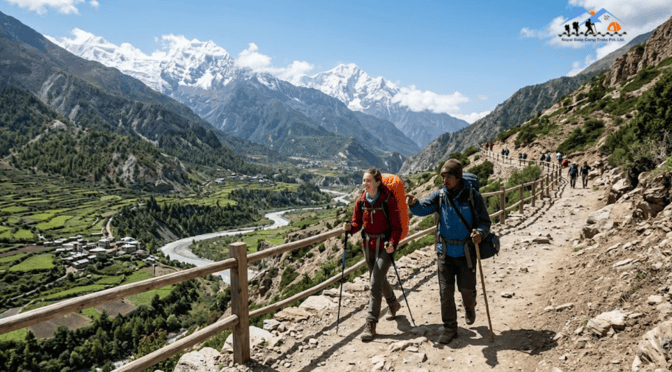
If you’re choosing between Tilicho Lake and the Everest Three Passes, the real question isn’t just which is harder, it’s which delivers the best high-altitude experience with purpose, scenery and sustainability. Both offer the perfect balance of challenge, beauty and smart acclimatisation.
Whether you’re considering the Annapurna Tilicho Lake Trek as a standalone journey or as part of the wider Annapurna Circuit, this route provides high Himalayan intensity without the excessive physical strain and logistical uncertainty of Everest’s triple-pass circuit.
Let’s break it down properly.
1. Altitude: High, But Smarter
Tilicho Lake sits at 4,919 metres, one of the highest alpine lakes in the world. The Annapurna Tilicho Lake Trek takes you high enough to experience a genuine altitude challenge while allowing gradual acclimatisation through Manang.
By contrast, Everest Three Passes repeatedly pushes trekkers above 5,300–5,500 metres. While impressive, the sustained extreme altitude significantly increases fatigue and altitude-related risks.
2. Terrain: Challenging Without Being Reckless
The trail to Tilicho Lake includes:
- Rocky alpine paths
- Steep ascents
- Landslide-prone sections near Tilicho Base Camp
- Remote mountain terrain
It is demanding but non-technical. No glacier crossings. No ice axes required. No crampons in standard seasons.
Everest Three Passes involves glacier travel (notably Cho La), snowbound passes and higher exposure to extreme weather.
3. Duration: Efficient Yet Rewarding
The Annapurna Tilicho Lake Trek typically runs 12–16 days. This makes it ideal for trekkers wanting a serious Himalayan expedition within a manageable timeframe.
Everest Three Passes generally requires 18–21 days. Longer duration means:
- Greater fatigue accumulation
- Higher cost
- Increased weather exposure
4. Landscape Diversity
One of the greatest strengths of Annapurna Tilicho Lake is the landscape contrast. In just a few days, you can experience:
- Lush lower valleys
- Tibetan-influenced villages in Manang
- High-altitude desert terrain
- A surreal turquoise glacial lake surrounded by towering peaks
On the other hand, the Everest region offers dramatic glacier scenery.
5. Logistics & Reliability
Tilicho Lake begins with a scenic overland journey from Pokhara. Flexible road access allows alternative exit points if required.
Everest Three Passes depends on Lukla flights, often delayed by weather, especially in peak trekking seasons.
6. The Experience Factor
The Annapurna Tilicho Lake Trek feels raw, expansive and immersive. It’s less crowded than the Everest routes, particularly outside the peak Annapurna Circuit sections.
Standing at Tilicho Lake at sunrise with Annapurna and Nilgiri ranges reflecting on still turquoise waters delivers an emotional high that rivals any Himalayan viewpoint.
Everest Three Passes feels more expedition-like. Tilicho feels more transformative.
Summing It Up
In the end, while Everest Three Passes tests extreme endurance, Annapurna Tilicho Lake delivers a smarter, more balanced Himalayan challenge. With dramatic landscapes, high-altitude adventure and manageable risk, the Tilicho Lake Trek offers serious accomplishment without excessive exposure, making it the more rewarding choice for well-prepared trekkers.
Plan your Himalayan journey with Nepal Base Camp Treks Pvt Ltd, specialists in expertly guided, safety-focused adventures across Nepal’s most iconic trails. With experienced local guides, personalised itineraries and seamless logistics, we ensure your trek journey is professionally managed, immersive and truly unforgettable from start to finish.
FAQs
1. Is Annapurna Tilicho Lake harder than Everest Three Passes?
Everest Three Passes is technically harder due to repeated 5,500m crossings. However, Annapurna Tilicho Lake provides a serious yet more balanced high-altitude challenge.
2. How difficult is the Annapurna Tilicho Lake Trek?
The Annapurna Tilicho Lake Trek is challenging, involving long trekking days and high-altitude exposure, but it does not require technical climbing skills.
3. What makes Annapurna Tilicho Lake special?
Annapurna Tilicho Lake combines dramatic alpine desert landscapes with one of the world’s highest glacial lakes, offering unmatched scenic diversity.
4. Is Annapurna Tilicho Lake safer than Everest Three Passes?
In general, Annapurna Tilicho Lake involves a lower maximum altitude and no glacier crossings, reducing overall risk compared to the Everest Three Passes.
5. How long is the Annapurna Tilicho Lake Trek?
The Annapurna Tilicho Lake Trek typically takes 12–16 days, depending on acclimatisation and itinerary structure.
6. Do I need prior experience for Annapurna Tilicho Lake?
Previous trekking experience is recommended. Annapurna Tilicho Lake involves demanding terrain and high elevation conditions.
7. What is the highest point of Annapurna Tilicho Lake?
Tilicho Lake stands at 4,919 metres and is the trek’s highest elevation point.
8. Which trek offers better scenery?
Annapurna Tilicho Lake offers greater landscape diversity, while Everest Three Passes delivers dramatic high-glacier environments.
9. Is Annapurna Tilicho Lake crowded?
Compared to the Everest routes, the Annapurna Tilicho Lake generally feels less crowded, especially outside the peak Annapurna Circuit sections.
10. Who should choose the Annapurna Tilicho Lake Trek?
Trekkers wanting a demanding yet well-balanced Himalayan adventure with stunning scenery and manageable risk should choose the Annapurna Tilicho Lake Trek.