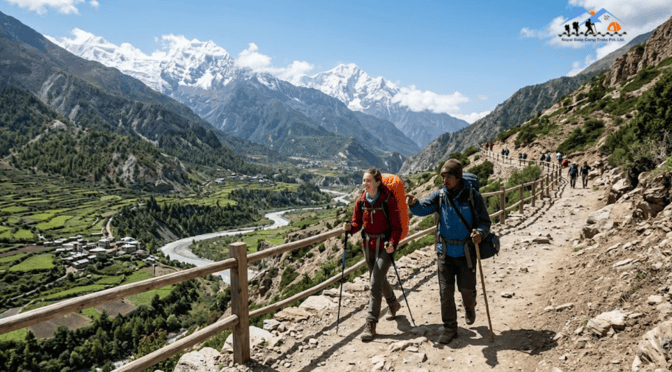
The Himalayas reward preparation. One of the most important steps before any high-altitude adventure is building the physical endurance needed to walk long distances while gaining elevation. The Annapurna Circuit Trek is famous for its diverse terrain, lush forests, alpine landscapes, and high mountain passes. So trekkers must train their bodies to handle varied conditions.
Physical preparation is not about becoming an elite athlete. It is about building stamina, strengthening key muscle groups, and adapting your body to sustained activity over several days. With the right approach, even first-time trekkers can feel confident and ready.
1. Build Cardiovascular Endurance
Trekking in the Himalayas involves walking for 5–7 hours daily, often at increasing altitude. Strong cardiovascular fitness helps your body use oxygen efficiently.
Start with endurance-focused activities such as:
- Brisk walking or hiking
- Stair climbing
- Cycling
- Swimming
- Light jogging
Aim for 30–60 minutes of cardio, 4–5 days per week. Gradually increase the intensity and duration for the successful Annapurna Circuit Trek tour. Hill training or stair climbing is especially effective because it mimics uphill trekking conditions.
2. Strengthen Your Legs and Core
Your legs will do most of the work on the trail, while your core stabilises your body when carrying a backpack or walking on uneven paths.
Important exercises include:
- Squats and lunges
- Step-ups
- Wall sits
- Planks
- Glute bridges
Perform 2–3 strength sessions per week. Focus on controlled movement and proper technique rather than heavy weights. Strong legs and a stable core help reduce fatigue and prevent injuries during the long days at the Annapurna Circuit Trek.
3. Train With a Backpack
During the Annapurna Circuit Trek tour, you’ll carry essential items such as water, clothing layers, and snacks. Training with a backpack prepares your body for this extra weight.
Start with a 5–6 kg pack and gradually increase it to 8–10 kg. Walk on uneven terrain, local hills, or long staircases. This training improves balance, posture, and shoulder endurance.
4. Practice Long Walks
Weekend hikes are one of the best ways to simulate trekking conditions. Try to include:
- Long walks lasting 3–5 hours
- Mixed terrain, such as trails, hills, or gravel paths
- Gradual elevation gain, if possible
This practice helps your body adapt to sustained activity and teaches you how to manage pace and energy levels throughout the day.
5. Improve Flexibility and Mobility
Flexibility often gets overlooked, but it plays a major role in preventing muscle stiffness and injuries.
Incorporate:
- Stretching routines after workouts
- Yoga or mobility exercises
- Hip and hamstring stretches
Better mobility allows smoother movement across rocky or uneven trails, which are common in mountain environments.
6. Focus on Recovery and Consistency
Training consistency matters more than extreme workouts. The goal is to gradually build endurance without overtraining.
Key recovery habits include:
- Getting 7–8 hours of sleep
- Staying hydrated
- Eating balanced meals with protein and complex carbohydrates
- Taking rest days when needed
Listening to your body helps maintain steady progress and keeps you injury-free before your trek.
7. Prepare for Altitude Conditions
Altitude is one of the biggest challenges in the Annapurna Circuit Trek. While you cannot fully simulate high altitude at home, strong fitness helps your body cope better with lower oxygen levels.
Slow, steady pacing and good breathing habits during training will help your body adapt to extended physical effort in thin air.
Summing It Up
Preparing physically for the Annapurna Circuit Trek is a gradual process that combines endurance training, strength development, and consistent outdoor practice. By focusing on cardio fitness, leg strength, mobility, and long-distance walking, trekkers can build the resilience needed for a rewarding mountain journey.
With proper preparation, the experience becomes far more enjoyable, allowing you to focus on the breathtaking landscapes and cultural encounters that make Himalayan trekking unforgettable.
With experienced local guides and carefully crafted itineraries, Nepal Base Camp Treks Pvt. Ltd. ensures every journey through the Himalayas is safe, authentic, and memorable. We emphasise personalised service, cultural insight, and responsible trekking experiences.
FAQs
1. How fit do I need to be for the Annapurna Circuit Trek?
The Annapurna Circuit Trek requires moderate to good fitness because trekkers walk several hours daily across varying terrain and altitude. Regular cardio training and strength exercises can prepare most healthy individuals for the challenge.
2. How long should I train before starting the Annapurna Circuit Trek tour?
Ideally, you should train for 8–12 weeks before an Annapurna Circuit Trek tour. This allows enough time to build endurance, strengthen muscles, and gradually increase hiking distance.
3. Is altitude training necessary for the Annapurna Circuit Trek?
Altitude simulation is helpful but not essential for the Circuit Trek. Building strong cardiovascular fitness and maintaining a slow, steady trekking pace are more important for managing altitude.
4. What kind of cardio workouts help before the Annapurna Circuit Trek tour?
Activities such as hiking, stair climbing, jogging, and cycling prepare the body well. These exercises strengthen the heart and lungs for long days of walking.
5. How much weight should my training backpack have?
When preparing for the trek, start with about 5 kg in your backpack and gradually increase the weight. This helps your shoulders and back adjust to trekking conditions.
6. Do I need leg strength for the Annapurna Circuit Trek tour?
Yes, leg strength is vital for the trek because trekkers encounter long ascents and descents. Exercises like lunges, squats, and step-ups help build endurance in the legs.
7. Can beginners complete the Annapurna Circuit Trek?
Most beginners complete the Annapurna Circuit Trek with proper training and preparation. Consistent walking, strength training, and gradual conditioning make the trek achievable.
8. How often should I hike before the Annapurna Circuit Trek tour?
Before an Annapurna Circuit Trek tour, try to hike or walk long distances once or twice each week. This helps your body adapt to sustained activity similar to trekking days.
9. Does flexibility matter for the Annapurna Circuit Trek?
Flexibility supports smoother movement during the trekking journey. Stretching or yoga helps reduce muscle stiffness and lowers the risk of injury on uneven trails.
10. What is the most important fitness factor for an Annapurna Circuit Trek tour?
Endurance is the most important factor for the trek. The ability to walk comfortably for several hours each day ensures you can enjoy the trek without excessive fatigue.