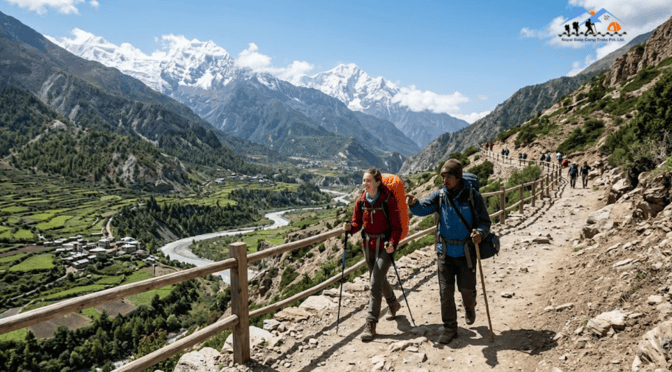
Have you ever wondered what it feels like to hike from river valleys all the way upward to a Himalayan mountain pass, where air density is low, prayer flags flutter and snowy peaks surround you?
That’s exactly what the Trek to Manaslu Circuit is about.
This is not just a hike; this is a steady climb through altitude, from the Budhi Gandaki River (930m) near Machha Khola to the snow-capped Larkya La Pass (5,160m).
That makes the Manaslu trek altitude very important to understand, as it plays a significant role in your trekking experience.
You will be trekking through lush forests, deep gorges, remote Tamang villages and icy mountain passes.
If you haven’t been to Manaslu before and you’re worried about altitude, don’t be.
It is a walkable and life-changing trekking adventure if you go at your own pace, prepare well and acclimatize correctly.
Fun fact: The Manaslu region is home to Mount Manaslu, which is the 8th highest peak in the world at 8,163m, but you can feel like you’re on top of the world without having to climb that high.
This guide, prepared by Nepal Base Camp Treks, will help you understand and manage the Manaslu trek altitude, how to stay safe from altitude sickness and how to pack and prepare for the Manaslu trek, whether you’re an experienced trekker or someone new to trekking.
What is the Altitude Profile of the Manaslu Trek?
So you are interested in finding out that wonderful feeling of altitude on the Manaslu trek?
You are not alone.
We have assisted trekkers as they have enjoyed and walked through the Manaslu trek altitude, from green valleys to Larkya La Pass, every step of the way.
Starting Altitude at Machha Khola (930 m)
Your trek starts after a drive from Kathmandu to Machha Khola filled with plenty of holiday scenery.
You start at 930 meters in Machha Khola, which is cozy and cool, as you don’t need your oxygen tanks yet!
Have a cup of tea along the Budhi Gandaki River, get your legs stretched out and take your time before you head up into the Himalayas.
Mid-Altitude Stops: Jagat, Deng, Namrung, Samagaun (1,340m–3,530m)
The middle section of this Manaslu trek route is where altitudes start increasing steadily.
Each village you pass is colder and higher than the previous one.
Jagat (1,340m): Formal checkpoint for the Manaslu Circuit trek Permit.
Here, you start to notice Tibetan architecture, including mani walls and stupas, begin to manifest as well.
Deng (1,860m): A Tiny village that introduces you to Buddhist culture and the multi-hued prayer flags dancing in the wind.
Namrung (2,900m): At this altitude, you will notice the difference in the air.
After you’ve crossed some mani walls, tea houses and an alpine forest, you’ll be back in civilization.
Samagaun (3,530m): It is one of the most scenic villages on Manaslu trek.
This is also where trekkers typically spend a rest day.
You’ll be able to get a bird’s eye view of Manaslu Base Camp, Ganesh Himal and maybe even some Himlung Himalayan peaks.
Fun Fact: Samagaun lies right below the eighth-highest mountain in the world and is a good place for a day hike to help your body acclimatize.
Manaslu Circuit Trek Highest Altitude: Larkya La Pass
We reach the highest point of the Manaslu Circuit Trek, Larkya La Pass.
Larkya La is an extremely high-altitude pass that will challenge your physical endurance and your mind.
You will set out very early, usually before dawn, usually on snow underfoot, with breathtaking views of Cheo Himal, Himlung Himal and Annapurna II all around you.
Elevation: 5,160m
Conditions: Rarefied air, freezing high-altitude winds and glacial landscapes
Reward: Bizarre 360° views and a great feeling of achievement that every individual dreams of.
That is why the majority of trekkers feel the ill effects of the Manaslu trek altitude.
This is why it is so important to follow your guide’s pace, drink plenty and take time to acclimatize in Samagaun and Samdo.
Final Descent and End Point
After crossing the pass, the descent is steep to Bhimtang (3,590m), before it eases as you continue on to Dharapani (1,900m).
Breathing becomes easier, the air is warmer and your legs start to feel playful.
When you cross into the Annapurna Conservation Area, you’ll realize you’ve overcome the Manaslu Circuit trek altitude battle.
Your body will feel the ease, reminding the reality of how far you have come.
How to Prepare for the High Manaslu Trek Altitude?
Trekking in the Himalayas is breathtaking, but so is the altitude if you’re not cautious.
The Manaslu trek altitude reaches over 5,000 meters, meaning that your body needs time to acclimatize to the low-oxygen environment.
If you go too quickly or ignore how your body is feeling, you could experience fatigue, dizziness or worse yet, develop altitude sickness.
But don’t worry.
As long as you take the right precautions, you’ll feel strong, safe and be able to cross that snowy Larkya La Pass, no problem.
What is Altitude Sickness and How Can It Affect You?
Altitude sickness (or AMS – Acute Mountain Sickness) is your body’s way of saying, “Hey, slow down! I need time to adjust!”
If you are trekking too quickly without enough resting, symptoms can begin to present, such as a headache, dizziness, loss of appetite or even nausea.
These typically start presenting above 2,500m, which is why the Manaslu trek altitude profile is important to take seriously.
The altitude of Manaslu trek increases gradually, but you’ll still be sleeping above 3,500m for multiple nights.
This is why acclimatization is built into the Nepal Base Camp Treks itinerary.
Pro Tip: Don’t ignore headaches or tiredness. Speak up early, your guide will know what to do.
Signs and Symptoms of AMS (Acute Mountain Sickness)
Altitude sickness usually starts with:
- Headache (especially if at night)
- Nausea or upset stomach
- Tiredness or weakness
- Loss of appetite
- Difficulty sleeping
As you can see, these symptoms typically occur above 2500 meters.
On the Manaslu trek altitude route, that could mean it starts near Namrung, Lho or Samagaun.
Important: If you feel dizzy, confused or short of breath even while resting, you should descend immediately. AMS can be serious.
Tips to Prevent Altitude Sickness on the Manaslu Trek
Here are a few ways to stay safe and strong on your Manaslu circuit trek:
- Take your time. Allow your body time to acclimate, don’t rush it.
- Drink 3-4 liters of water each day, even if you aren’t thirsty.
- Add rest days. There are great places like Samagaun for acclimatization.
- Climb high, sleep low. Doing short day treks to experience places like Manaslu Base Camp can help with acclimatization.
- Stay dry and warm at night. Choose a tea house with warm blankets and carry a quality sleeping bag.
- Eat carbohydrates. Your body needs energy at such high elevations, so more rice and dal bhat!
- Avoid alcohol and smoking on your trek. Both of them can worsen altitude sickness.
Suggested Acclimatization Stops (Backed by Guides)
Some of the villages along the Manaslu trek are naturally set up to assist your body in acclimatization.
Here’s how we arrange it at Nepal Base Camp Treks:
Samagaun (3,530m): This is your primary rest stop.
One day here, along with brief hikes to Birendra Lake, Pungyen Monastery or Manaslu Base Camp, allows your lungs to catch up.
Samdo (3,860m): Another fantastic acclimatization location.
It’s a refugee village that features Tibetan culture, stunning scenery and serves as an ideal spot for a leisurely day trek.
Larkya Phedi (4,460m): This is the final prep stop prior to your highest elevation climb – Larkya La Pass.
Fact: Some of our guides bring pulse oximeters to check blood oxygen levels daily. Safety isn’t optional; it’s part of the planning process.
Manaslu Altitude Profile vs Other Treks in Nepal
As you are planning your Himalayan experience, you may be wondering:
“What is the altitude of the Manaslu Circuit Trek versus Everest Base Camp or Annapurna?”
So let’s break it down simply because Manaslu trek altitude is no joke, but it is not anywhere near the worst.
Manaslu vs Everest Base Camp (EBC)
EBC Max Altitude: 5,364m
Manaslu Max Altitude (Larkya La Pass): 5,160m
What’s different?
EBC has you sleeping above 5,000m multiple times for multiple nights. This is harder on the body.
While on the Manaslu Circuit trek, you will only touch the high point at Larkya La Pass and then descend down immediately, allowing your body a better chance to recover.
If you are worried about sleeping high, trekking in Manaslu is slightly safer altitude-wise.
Manaslu vs Annapurna Circuit
Annapurna Max Altitude (Thorong La): 5,416m
Manaslu Trek Altitude (Larkya La): 5,160m
What is different?
The Annapurna trails are much more developed than the Manaslu, with bigger tea houses, more food options and better phone signals.
But the Annapurna trails are also much busier and more commercialized than the Manaslu Circuit trek.
The altitude of the Manaslu Circuit trek is almost as high, but it feels less raw and remote, as there are fewer crowds with more authenticity.
Manaslu vs Tsum Valley Trek
Most trekkers nowadays will combine the Tsum Valley and Manaslu Circuit Trek into one big adventure.
But here is the thing:
Tsum Valley altitude range: 2,000m – 3,700m
Trek type: Easier on the body, longer on the trail
Tsum Valley Manaslu Circuit trek will give you a few extra days to acclimatize before you ascend onto the ultimate high point of Larkya La Pass.
Pro Tip: If it’s your first time trekking in Nepal, combining Tsum + Manaslu is a great way to acclimatize gradually to higher altitudes and take in more Tibetan culture and hidden monasteries.
To sum it up, Manaslu really hits a sweet spot between raw adventure and altitude safety.
It is higher than Annapurna Base Camp, not as extreme as Everest but exceptionally scenic compared to most trekking routes.
What to Pack for the Manaslu Circuit Trek?
Knowing how to pack well is crucial for the Manaslu Circuit trek, particularly when you will be transitioning from low river valleys to snowy passes.
On the way there, the trail looks beautiful, but it is also remote, cold and changeable.
Whether you are trekking in spring or autumn, your gear must deal with wind, snow and frosty nights.
Pro Tip: Layer light, but layer smart. Having the right set-up allows you to make the most of your high-altitude trekking experience while keeping safe.
Clothing for the changing weather and altitude
The Manaslu trek altitude involves considerable changes, from under 1,000m to over 5,000 m at the pass.
Therefore, you will also need to dress in layers.
Key layers include:
- Thermal top, thermal bottom (base layer)
- Fleece jacket or insulated down jacket (mid-layer)
- Windproof and waterproof shell (outer layer)
- Trekking pants and thermal leggings
- 3–4 pairs of wool/synthetic socks
- Beanie, gloves, neck warmer
As you ascend the trail, particularly after Samagaun and Samdo, the daily lows drop below freezing even in peak seasons.
The weather in Manaslu Trek can also change all too quickly so layering is your best line of defense!
Sleep and Footwear Essentials
Teahouse experiences can be cozy, but they are unheated, particularly at higher elevations.
You definitely need a sleeping bag rated at a low of -10°C to -20°C, especially if you are near Dharamsala or Bhimtang, where it’s freezing overnight.
As well, you should also pack:
- Sturdy, ankle-support trekking boots (already broken in)
- Lightweight sandals for evening use
- Trekking poles (useful for snowy sections and steep descents)
You will be glad you did when you are crossing a rough trail or icy ridge on this high-altitude trekking trip.
Permits for Completing the Trek
Permits are essential documents you must obtain before starting your trekking adventure.
You will require permits like:
- Manaslu Restricted Area Permit
- Annapurna Conservation Area Permit Acap
- Manaslu Conservation Area permit
Without these permits, you will be sent back or fined at the checkpoints.
Health and Safety Gear for Altitude
Trekking at or above 3,500 meters for multiple days is going to put you at risk of altitude sickness.
It is more important to prepare for this, especially on the days of the Manaslu Circuit trek’s highest altitude, just before and after descending to Larkya La.
What to pack:
- Altitude meds (e.g., Diamox – consult your doctor first)
- Basic first-aid (band-aids, pain relievers, antiseptics)
- Water purifier or purification tablets
- Rehydration salts and energy gels
- Sunscreen, SPF lip balm (the sun hits hard at high altitude)
Nothing can mitigate AMS except hydration, pacing and nutrition, so your Manaslu Circuit trek packing list should reflect that.
Useful Trekking Accessories to Bring
Whether you’re passing through Budhi Gandaki River valleys or high snowy passes, every small item counts:
- Headlamp (with extra batteries)
- 2–3L hydration system (bottle or bladder)
- Power bank for charging (tea house electricity costs can add up)
- Snacks: energy bars, nuts, dark chocolate
- Dry bags for electronics and clothing
Because many villages along the Manaslu trek don’t have many shops, it’s important to bring these accessories with you.
Buying batteries or gear mid-trek is either costly or impossible.
Safety Guidelines for Trekking at High Altitude
Trekking in high altitudes like the Manaslu Circuit (900m to 5,160m) is a wild and unforgettable experience, but your safety comes first in such a remote and high place.
You are exposing your body to more stress than normal, whether you’re crossing Larkya La Pass, walking along icy trails or sleeping in a tea house in Samdo.
Here are some tips to stay safe, supported and sane!
When to Turn Around: Red Flags at High Altitude
At higher elevations of the Manaslu trek, even mild symptoms can escalate into something more severe very quickly.
Recognizing what to look for and when to stop becomes vital.
Look for:
- Persistent headaches not alleviated by rest or hydration
- Nausea, dizziness or vomiting after 3,000m
- Difficult sleeping/resting breathing
- Quickly fatigued or unable to walk straight
If you notice any of the above symptoms around Samagaun, Dharamsala or near the highest point of the trek, descend immediately!
Pro Tip: Never make excuses and push through the symptoms; altitude sickness can be life-threatening. Even the most experienced trekkers turn back sometimes – that’s being smart, not weak!
Hiking with a Guide or Porter for Safety
The Manaslu Circuit Trek cannot be trekked without a guide anymore and to be honest, you could not do it without a guide anyway!
Why?
Restricted area: To obtain the Manaslu Circuit Trek permit, you require a licensed guide and a minimum of 2 trekkers.
Trekking Routes: The Manaslu Trek route is not as commercialized as Annapurna or Everest, so there are fewer signs and tricky places.
Altitude: Experienced guides from Nepal Base Camp Treks understand when you need to rest, descend and how to deal with emergency situations.
A Porter can help you lessen your physical load, too and therefore make it easier for you to safely cross the Larkya La Pass, take in the scenery without having to carry a heavy backpack.
Interesting fact: Most trekkers think that hiring a porter was the best thing ever. It takes the challenge and provides enjoyment.
Emergency Preparedness in Remote Locations
Hiking the Manaslu trek altitude will take you to spectacular locations, but there are real dangers involved.
The remote locations may mean you cannot be rescued, the mobile phone signals might not be working or are very poor and hospitals are rare in the area.
As the Manaslu trek after earthquake rebuilding includes remote villages and delicate environments, you must be equipped to deal with uncertain things.
Therefore, we prepare for it all!
In Nepal Base Camp Treks, our guides will:
- Watch for any signs of altitude sickness using a pulse oximeter
- Carry a basic first-aid kit of supplies
- Plan emergency helicopter evacuations if needed
If it gets really serious, we will book a helicopter rescue through your travel insurance.
That is the reason you need altitude medical insurance.
Reminder: A helicopter evacuation in the Manaslu region can cost more than $5000+. That is why you should not trek without valid travel insurance that has coverage for helicopter rescue.
Final Thoughts: Is the Manaslu Trek Safe for Beginners?
So, can you be a beginner and trek the Manaslu Circuit?
Yes, but with a big catch.
As the Manaslu trek altitude reaches over 5,000 meters, it has difficult terrain and is in a remote area.
This is not an ordinary hike.
But if you are physically fit, have a strong mentality and trek with a guide, this trek is doable, even if it’s your first time high-altitude trekking.
What makes it worthwhile?
You get to walk around the eighth-tallest mountain in the world, stay in cozy tea houses run by mountain families and cross the amazing Larkya La Pass, which is the best part of all trekking routes in Nepal.
You will also visit remote villages on the Manaslu trek and enjoy the richness of their deep Tibetan culture.
But be safe.
At Nepal Base Camp Treks, we guide hundreds of beginners every year.
And our team knows when to push you, when to advocate for a smaller plan and when to change the plan, depending on your pace and condition.
Want to complete your trekking adventure with the best possible experience?
Contact us and book your Manaslu Circuit trek with us.