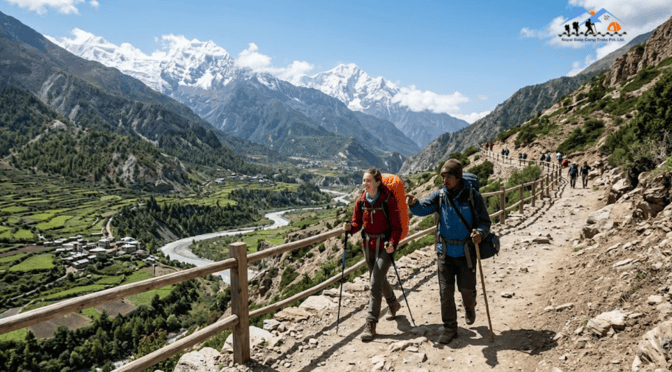
Nepal is not just a trekking destination, to start with! It’s the crown jewel of global trekking. Often referred to as the ‘Roof of the World’, the country is the place where the majestic Himalayan peaks pierce the sky with their colossal entity and ancient cultures thrive in valleys forged by ice and time.
For anyone with a pair of worn-in boots and a soul that craves raw, unfiltered beauty, a trek in Nepal sits squarely at the top of the bucket list. From the iconic Annapurna Circuit to the Everest Base Camp trail, and the remote wilds of Upper Mustang, the treks in Nepal offer a spectrum of experiences that are hard to match!
But as we step into 2026, the most pertinent question that crosses every savvy traveller’s mind is simple: How safe is it really? Let’s strip away the romanticism and have a proper, no-bull look at the real risks you need to understand before you pick up your rack-sack and step out for the mighty Himalayan trails!
The Altitude Elephant in the Room
First and foremost, let’s address the most significant objective risk. Acute Mountain Sickness (AMS) isn’t a myth, it’s a serious medical condition. The classic Nepal hiking tours push you high, often above 3,500 metres. Your body needs time to adapt. The key is a conservative ascent profile, heeding your guide’s advice, and knowing the symptoms.
Rushing an itinerary to save a few days is a fool’s game. A reputable operator will always build in essential acclimatisation days, because in the high Himalayas, patience isn’t a virtue. It’s a safety protocol.
Trail Conditions & Infrastructure Realities
The trails themselves are generally well-defined, but they’re not a paved walking path. You’ll encounter rocky sections, suspension bridges, and paths that can be affected by weather. Landslides can occur, particularly during and just after the monsoon season. This is where your choice of Nepal trekking organisation matters immensely. A professional outfit continuously monitors trail conditions, has contingency plans, and uses experienced local guides who know the terrain like the back of their hand. They don’t just lead you, they assess the path ahead for you.
Weather: The Unpredictable Game-Changer
Mountain weather is notoriously fickle. A sunny morning can turn into a white-out blizzard by afternoon, especially as you gain elevation. This is a critical risk factor that impacts visibility, trail safety, and temperature.
The solution? Proper preparation and expert guidance. Packing for all eventualities, including sub-zero temperatures even on a sunny-day trek, is non-negotiable. A trustworthy guide’s decision to turn back or hold position due to weather isn’t a disappointment. It’s the sign of a professional prioritising your safety over the summit selfie.
The Non-Negotiable: Your Guide & Agency
Here’s the absolute cornerstone of a safe trek in Nepal: who you go with. The difference between a DIY budget trip and a professionally organised journey is profound. A licensed, experienced guide is your translator, your cultural bridge, your navigator, and your first line of defence in an emergency.
They carry a satellite phone for communication where mobiles fail, are often trained in wilderness first aid, and understand the logistics of getting a client to safety or medical care if needed. Opting for the cheapest option here is the single biggest safety gamble you can take.
Health, Hygiene & On-Trail Smarts
Let’s be pragmatic about health. Traveller’s diarrhoea and common colds can derail a trip. Drinking only purified water—whether bottled, treated, or boiled—is law. Hand sanitiser is your best mate. Furthermore, getting comprehensive travel insurance that covers high-altitude trekking in Nepal and emergency evacuation is not an “extra”; it’s as essential as your passport. Ensure your policy explicitly states it covers the activities and altitudes of your chosen Nepal treks.
Cultural Sensitivity & Personal Security
Nepal is overwhelmingly safe and its people are famously hospitable. Personal crime on major trekking trails is very low. However, exercising general travel smarts—securing your valuables, not flashing large amounts of cash—is always wise.
A more pertinent “safety” aspect is cultural respect. Understanding local customs, dressing modestly, and asking permission before taking photos fosters goodwill and ensures you’re seen as a respectful guest, not just a passing tourist. This respectful approach enhances your entire experience on your Nepal hiking tours.
FAQs
What is the single biggest health risk when trekking in Nepal?
The most significant and common risk is Acute Mountain Sickness (AMS), which can affect anyone regardless of fitness. It’s caused by ascending too quickly to high altitude. Recognising symptoms like headache, dizziness, and nausea, and having a conservative itinerary with acclimatisation days are crucial for prevention.
Are the trekking trails in Nepal dangerous?
The classic trails like Everest Base Camp and Annapurna are well-travelled and generally safe. However, they are mountain paths with inherent hazards like rocky terrain, steep drops, and occasional landslides. The risk is managed by using experienced guides who monitor trail conditions and choose the safest routes daily.
How safe is the weather, and what if there’s a storm?
Mountain weather is highly unpredictable and can change rapidly. A clear morning can turn into a blizzard. Reputable agencies employ guides trained to read weather signs and make conservative decisions, such as delaying a pass crossing, to prioritise client safety above all else.
Is it safe to drink the water and eat the food on the trail?
Food and water hygiene is a key concern. The risk of gastrointestinal illness is present. We mitigate this by eating at recommended lodges, drinking only properly purified (boiled, treated, or filtered) water, and avoiding risky foods like unpeeled fruit. Hand sanitiser is essential.
How reliable are communication and emergency services on a trek?
Mobile networks are spotty, especially at higher altitudes. Responsible trekking companies equip their guides with satellite phones for reliable emergency communication. In case of a serious medical issue, helicopter evacuation is the standard procedure, which is why evacuation insurance is mandatory.
What are the risks of travelling solo or without a guide?
Trekking solo or without a licensed guide significantly increases your risk. You are more vulnerable to getting lost, misjudging trail conditions, missing AMS symptoms, and having no reliable communication in an emergency. A guide is your essential safety net.
How safe are the flights to remote trekking starts, like Lukla?
Mountain flights to airstrips like Lukla are weather-dependent and involve unique topography. While statistically very safe, they carry a higher perceived risk. Airlines use specialised pilots and aircraft. Schedules can change at the last minute due to weather for safety reasons.
What is the risk of crime or theft on a trekking route?
The risk of personal crime on major trekking trails is very low. Nepal is known for the honesty of its mountain communities. However, exercising general caution—using lodge safes, not flaunting valuables—is always wise. The bigger “risk” is often unpreparedness for the physical challenge.
Are natural disasters like earthquakes a major risk?
Nepal is in a seismically active zone. While the probability of experiencing a significant quake during your trek is low, preparedness is high. Reputable agencies brief their teams and clients on safety procedures. It’s important to be aware but not deterred by this very low-likelihood event.
How do I choose a trekking company to minimise these risks?
This is your most important safety decision. Choose a company that:
- Employs licensed, experienced guides trained in first aid.
- Has clear safety and acclimatisation protocols.
- Provides proper equipment (e.g., medical kit, comms).
- Insures its staff and requires client insurance.
- Has transparent operational practices and positive safety-focused reviews.
The Straight-Talking Conclusion
So, is trekking In Nepal safe in 2026? The answer is a conditional yes—it can be very safe, but safety is not a guarantee provided by the destination. It’s an outcome created by smart choices. The risks are real but overwhelmingly manageable. They are mitigated not by luck, but by preparation, respect for the environment, and most critically, by partnering with a professional, reputable local operator. Your safety hinges on their expertise.
Do your homework, book with a responsible agency that prioritises its staff and clients, prepare your body and gear thoroughly, and listen to the professionals on the ground. Then, you can fully immerse yourself in the awe that is a Himalayan trek in Nepal, one of the most profoundly beautiful adventures on the planet. Now, get planning. What better name can you opt for than Nepal Base Camp Treks for a safe trek to your favourite destinations in Nepal? Dial usif you are to conquer your Himalayan dream. Let us craft your legendary adventure.