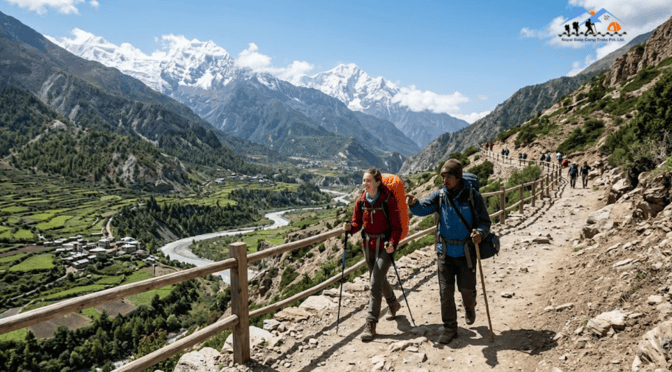
Dreaming of prayer flags fluttering against snowy peaks, warm tea in mountain lodges, and trails that feel straight out of a postcard? Trekking in Nepal is less about ticking off a bucket list and more about timing your journey right. Nepal changes its personality every month, and knowing when to go can turn a good trek into an unforgettable one.
Let’s walk through the year, one month at a time, so you can choose the season that fits your trekking style.
Spring (March to May): Why Is This the Most Popular Trekking Season?
Spring is when Nepal truly comes alive. Forests bloom with rhododendrons, skies are clear, and temperatures are friendly for long days on the trail. This is when most classic treks in Nepal feel their most vibrant.
Why trekkers love spring:
- Clear mountain views, especially in the mornings
- Comfortable daytime temperatures
- Lively trails with fellow adventurers
March is slightly cooler, April is colourful and festive, and May brings warmer days with fewer crowds at higher altitudes.
Monsoon (June to August): Is Trekking in Nepal Worth It During the Rains?
Yes, if you know where to go. While heavy rain hits many regions, rain-shadow areas like Upper Mustang shine during this season. Choosing the right trek in Nepal during monsoon means lush landscapes and quieter trails.
Things to keep in mind:
- Expect leeches and muddy paths in lower regions
- Flights can be delayed due to weather
- Trails are peaceful and less crowded
For trekkers who enjoy solitude and greenery, the monsoon can feel surprisingly magical.
Autumn (September to November): When Does Nepal Look Its Absolute Best?
Autumn is widely considered the best time for tours in Nepal, especially trekking-focused ones. The monsoon washes the air clean, leaving crystal-clear mountain views and golden hillsides.
What makes autumn special:
- Stable weather and minimal rainfall
- Major festivals like Dashain and Tihar
- Excellent visibility across all regions
October is peak season, November is cooler and calmer, and September offers a beautiful post-monsoon freshness.
Winter (December to February): Can You Trek in Nepal During Winter?
Absolutely, but with a little planning. Winter trekking offers quiet trails, snow-dusted villages, and a raw Himalayan atmosphere. Many Nepal trekking companies recommend lower-altitude routes during this time.
Winter trekking highlights:
- Fewer trekkers and peaceful lodges
- Crisp skies and dramatic mountain views
- Ideal for shorter or cultural treks
Just be ready for cold nights and possible snow at higher passes!
Month-by-Month Snapshot: Which Month Is Right for You?
- January-February: Quiet, cold, scenic
- March-April: Blooming trails, balanced weather
- May: Warm, less crowded at altitude
- June-August: Green, adventurous, offbeat
- September: Fresh landscapes, fewer crowds
- October: Perfect conditions, busiest month
- November: Clear skies, cooler days
- December: Calm, snowy, soulful trekking
No matter when you go, trekking in Nepal always offers something unique; all you need to do is match the month to your mood.
Ready to Plan Your Himalayan Adventure?
Start your journey with Nepal Base Camp Trek Pvt. Ltd! From seasonal insights to personalised itineraries, we help you choose the perfect time and perfect trail for your adventure.
Call or WhatsApp: +9779851111874
Let’s turn your dream trek into a real Himalayan story.
Frequently Asked Questions
- Why do some treks feel completely different even when they’re in the same region?
Because altitude, trail direction, village rhythm, and even sunlight angles change the experience. Two routes in the same region can feel like entirely different worlds – one social and lively, the other meditative and remote.
- Is it possible to enjoy trekking without being “super fit”?
Absolutely. The key is choosing the right pace, altitude gain, and rest days. Many routes are designed for steady walkers, not athletes, making trekking in Nepal far more accessible than people assume.
- How do locals influence the trekking experience more than the mountains?
Villages, teahouses, and shared meals often leave a deeper impression than peaks themselves. Conversations, local stories, and simple hospitality shape memories just as much as the landscapes.
- Are there treks that feel untouched even in popular seasons?
Yes. While famous routes attract crowds, there are still quieter treks in Nepal that remain peaceful due to limited access points or cultural restrictions – perfect for trekkers seeking solitude.
- Does the moon cycle really affect a trek?
Surprisingly, yes. Full-moon nights can transform the trail experience, offering soft illumination, quieter wildlife, and an almost spiritual atmosphere during evening walks or lodge stays.
- Can trekking help with mental clarity, not just adventure?
Many travellers describe their trek in Nepal as emotionally grounding. The slow rhythm, minimal distractions, and mountain silence often lead to deep reflection and renewed focus.
- Why do some people return to Nepal multiple times to trek?
Because no two journeys feel the same. Different seasons, routes, and companions change everything. Many tours in Nepal are designed to highlight this diversity rather than repeat the same experience.
- How important is food in shaping a trekking journey?
Extremely important. From dal bhat routines to regional specialities, food becomes part of the trail culture – fuel, comfort, and connection all in one plate.
- Do experienced trekkers still use guides?
Yes, often by choice. Knowledgeable guides add cultural depth, safety awareness, and hidden insights that even seasoned hikers appreciate. This is why reputable Nepal trekking companies remain relevant even for repeat visitors.
- What’s one thing first-time trekkers usually underestimate?
The emotional impact. Many expect physical challenges but are surprised by how deeply the mountains, people, and pace of life stay with them long after the trek ends.