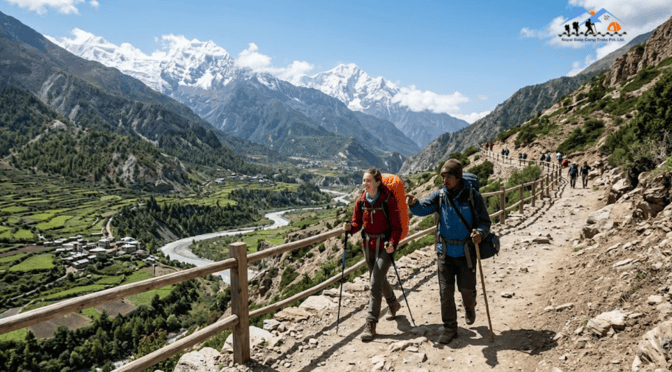
Nepal is home to eight of the world’s fourteen 8,000-metre giants and countless lesser-known summits. Meanwhile, if you’re planning for peak climbing in Nepal, you’ll quickly face one big question: should you choose a trekking peak or an expedition peak?
Understanding the real difference is essential, not just for safety, but for budget, preparation, permits and overall experience.
Let’s break it down clearly.
What Is a Trekking Peak?
Trekking peaks are lower-altitude mountains (generally 5,800m to 6,700m) designated by the Nepal Mountaineering Association as suitable for climbers with basic alpine skills.
Popular examples include:
- Island Peak (6,189m)
- Mera Peak (6,476m)
- Lobuche East (6,119m)
Key Characteristics:
- Usually combined with classic trekking routes
- Shorter climbing duration
- Fixed ropes are often installed on summit sections
- Suitable for fit trekkers with basic training
Most climbers’ first experience of high altitude is through trekking in Nepal, building stamina and acclimatisation before attempting a summit. Trekking peaks are the natural progression.
What Is an Expedition Peak?
Expedition peaks are serious mountaineering objectives. These include 7,000m and 8,000m mountains that demand advanced technical skill, longer timeframes and significant logistics.
Examples include:
- Manaslu (8,163m)
- Dhaulagiri (8,167m)
- Ama Dablam (6,812m, technical)
Key Characteristics:
- Multi-camp rotations
- Glacier travel and crevasse navigation
- High technical ice and rock sections
- Larger support teams and logistics
- 4–8 weeks duration
Unlike introductory climbs, expedition-level peak climbing requires significant alpine experience and high-altitude adaptation.
Trekking Peaks vs Expedition Peaks: The Core Differences
| Factor | Trekking Peaks | Expedition Peaks |
| Altitude | 5,800–6,700m | 7,000–8,848m |
| Technical Skill | Moderate | Advanced |
| Duration | 2–3 weeks | 4–8 weeks |
| Cost | Lower | High |
| Support | Guide + porter | Full expedition team |
| Risk Level | Controlled | Serious |
If your primary goal is adventure combined with cultural immersion. If you’re for trekking only, opting for a trekking peak might be ideal. If your goal is elite mountaineering achievement, expedition peaks are your arena.
Permits and Regulations
The Nepal Mountaineering Association manages trekking peaks, while expedition peaks fall under the Department of Tourism.
Permit costs vary significantly. Expedition peaks can cost thousands of dollars per climber, while trekking peak permits are comparatively affordable.
Physical & Mental Preparation
For trekking peaks:
- Strong cardiovascular fitness
- Basic crampon and ice axe skills
- Prior high-altitude trekking experience
For expedition peaks:
- Advanced rope systems knowledge
- Ice climbing proficiency
- Rescue skills
- Previous 6,000m+ summit experience
Many climbers begin with Trekking in Nepal. So they choose routes like Everest Base Camp or Annapurna Base Camp to prepare physically and mentally.
Which One Is Right for You?
Ask yourself:
- Have I climbed above 6,000m before?
- Can I commit 6+ weeks to a mountain?
- Am I comfortable managing objective hazards?
- What’s my budget and risk tolerance?
If you’re new to mountaineering, start with structured peak climbing in Nepal through trekking peaks. They offer real alpine exposure without the extreme demands of an 8,000m expedition.
The Experience Factor
Trekking peaks blend culture, teahouse trekking, Sherpa heritage and Himalayan panoramas. Expedition peaks are more remote, intense and isolated.
Both provide unforgettable Himalayan memories, but the style of adventure differs dramatically.
If you’re passionate about mountains and progression, combining trekking with a summit objective creates the perfect stepping stone into the world of high-altitude mountaineering.
In Summary: Choosing the Right Adventure
The beauty of Peak climbing in Nepal lies in its progression. You don’t have to leap straight into an 8,000-metre giant. Many climbers build their foundation through trekking peaks, then advance towards more technical climbs as confidence and competence grow.
Ultimately, the “right” choice depends on your experience, time, budget and appetite for challenge. Nepal offers both accessible adventure and world-class mountaineering.
Choose Nepal Base Camp Treks Pvt. Ltd. for iconic Himalayan adventures with experienced local guides, personalised itineraries, and unwavering commitment to safety. We ensure a hassle-free, authentic, and unforgettable mountain journey from arrival to summit.
FAQs
1. What is the safest way to start Peak climbing in Nepal?
Start with a recognised trekking peak under licensed guides. Combine it with gradual trekking for proper acclimatisation.
2. Do I need prior experience for trekking peaks?
Basic alpine training is recommended. Previous high-altitude trekking experience significantly improves your success rate.
3. How technical are expedition peaks?
Expedition peaks demand advanced rope handling, glacier travel and high-altitude survival skills beyond standard peak climbing in Nepal.
4. How long does Peak climbing in Nepal take?
Trekking peaks take 2–3 weeks. Expedition climbs may require 4–8 weeks, including acclimatisation rotations.
5. Is Trekking in Nepal enough preparation for 8,000m peaks?
No. Trekking builds endurance, but expedition peaks require advanced mountaineering expertise.
6. What permits are required?
Trekking peaks require NMA permits, while expedition peaks require Department of Tourism approval.
7. What is the best season for Peak climbing in Nepal?
Spring (March–May) and autumn (September–November) provide stable weather and optimal summit windows.
8. Are trekking peaks dangerous?
All mountains carry risk, but trekking peaks are managed and structured to reduce hazards compared to expedition climbs.
9. How expensive is Peak climbing in Nepal?
Costs vary widely. Trekking peaks are significantly more affordable than expedition-level climbs.
10. Can beginners try Peak climbing in Nepal?
Fit beginners can attempt trekking peaks after preparation and prior to trekking in Nepal, but expedition peaks are not suitable for first-timers.